Showing posts with label Pineward. Show all posts

3/7/23

Treacle (Pineward)


Nicotiana, Photo by Markus Hagenlocher

I'm under the impression that Nicholas Nilsson released Treacle and Steading together, like Hayride and Hayloft, and Christmas Wine and Glühwein. Of the two, I consider Treacle the far better fragrance, and I think it's one of the finest tobacco perfumes in existence.

Like Steading, Treacle is a bit sweet, but it's not sugary-sweet, not gourmand. Steading is loaded with intense notes of graham cracker, gingerbread, molasses, honey, and maple syrup, but Treacle has only a beautifully balanced interplay of fermented tobacco leaves and raisins, with the gentlest hints of molasses and honey tying them together. Oh, and I almost forgot to mention the breathtaking smoke-dried camellia sinensis top note, which, while fleeting, ushers everything in with decadent aplomb. The fruity-caramellic side of honey swirls in the air with the caliginous savour of molasses, until the duo succumbs to a stunning burnished tobacco, which smells simultaneously rich and expansive. When it comes to notes, tobacco leaf is one that I want rendered as clearly and simply as possible, with precious few complementary embellishments. Treacle delivers. 

The mark of a great perfumer is his or her ability to render subjective interpretations of the world around them in olfactory terms. When I smell Treacle, I know what Nilsson thinks of tobacco: he adores it, and he wants me to enjoy it with him. Invitation accepted, good sir. Invitation accepted. 

3/6/23

Autumnal (Pineward)

Photo by An Basova, color & contrast adjusted by B. Ross, Creative Commons Attribution

One of the knocks against all-natural perfumery is that it tends to yield things that resemble herbal teas. I don't know if Autumnal is all-natural or not, but it smells like I'm wearing an herbal teabag. It's like I stuck my head in a barrel of herbs, mostly peppermint. In fact, all I smell with any clarity is peppermint. It's rich and spicy and not unlike Twinnings peppermint tea, or perhaps a peppermint-herbal potpourri. You get the idea. 

I've never associated autumn with peppermint. I can barely detect other notes in the composition, and they're crushed by its Manhattan-sized menthol monster. There's a whisper of chamomile, a dusting of cinnamon, and terpenic fir needles tucked under all the menthol. After a few hours, the chamomile asserts itself more, and its gentle sweetness pairs well with the sharpness of mint. By day's end of wearing Autumnal, all I smell on myself is a quality chamomile-mint tea, the kind that costs $10 a box. 

Autumnal smells good, but I should be drinking these aromatics, not wearing them. I close my eyes, and I'm in the spices-and-herbs aisle of my local health food store. 

3/5/23

Velvetine (Pineward)


I happen to
like "trashy" ambers, those cheap kitchen-sink amalgams of resinous materials, softened with vanilla and given lift and sparkle with aldehydes. A good example is Tabu by Jean Carles, an intense oriental with zillions of abstract notes, all sandwiched between a metric fuck-ton of aldehydes on top and a massive sassafras/patchouli/benzoin accord below. Spraying it on is like attempting to time travel back to 1932, with an exponential increase in mass accompanying the lightning speed of your migraine setting in. It turns out that perfumery, like all forces, is subject to the laws of gravitational physics. You really can have too much of a good thing. 

Pineward's Velvetine is one such amber, of the trashiest variety. It presents as the brand's real "core expression" to me, more so than Fanghorn II, in that it embodies the pedestrian "candle amber" that imbues more than half of the range's offerings with its pervasive and amorphous sweetness. It's as if Nicholas Nilsson took a pair of tweezers to the line, extracted that essence, and called it a perfume. If you're into that sort of thing, Velvetine is for you. I'm aware of two elements when smelling it: a beautiful ambergris accord in the top that lasts about ten minutes, reminiscent of a similar handling of ambergris in YSL's original Kouros, followed by a perpetually incipient amber of vanilla, clove, cinnamon, incense, and labdanum, with a hint of the ambergris sweetness adding some dimension to the vanilla. Compact, dusky, semisweet, rather warm and fuzzy. Not bad, except it doesn't develop much, and you can get this kind of thing from classics like vintage Cinnabar, and the aforementioned Tabu. (These vintages are available in abundance on eBay.)

Perfumers usually fail not from a lack of talent, but from a lack of vision. Velvetine is a work of great talent, but a failure because it courses haplessly after an ideal fragrance "type," the classical oriental, without ever gaining purchase. Wearing it feels like an exercise in nostalgia that doesn't build on itself, but instead collapses under its own weight. It is as if Nilsson saw vintage Cinnabar and Tabu, but not his own versions of them. He used no brighter notes of citrus or white florals to balance the resins. There are no aldehydes, which keeps everything earthbound. And the dry-down remains linear for hours, reminding the wearer of what could have been. 

3/4/23

Revelries (Pineward)


Evening Revelry by Benjamin Vautier

Revelries should be, at least judging from its notes list, an easy thumbs-up from me. Stewed fruity notes blended with spiced rum? Hazelnuts, raisins, and a bit of oud? Sign me up! If there's anything I've learned from wearing this range, it's that Pineward's nose shows immense talent with fruity-woody compositions. Yet Revelries perplexes me. 

It opens with a sharp barrage of spicy-fruity things, very clovey, cinnamony, appley, but after a few seconds of legibility, these notes blur together to form something olfactorily analogous to bitter-green angelica, with all of its celery off-notes. Eventually this effect gives way to an oddly dank amber, a phase I struggle with the most. Everything in it feels ponderous and affectless, with only the twang of cinnamon rum lending texture to an egregiously flat synthetic oud. Occasionally throughout the day, I catch pleasant whiffs of a familiar Pineward apple note, but the accord is like cider that's half-turned to vinegar. 

With time and tears, this tightly-clenched arrangement loosens up enough to allow the mellow sweetness of raisins and the sugary afterglow of apples and rum to shine through. Sadly, this is not until its murky oud heart has burned off, by which point I've asked myself a hundred times why I didn't just wear Apple Tabac or Pastoral instead. 

3/3/23

Christmas Wine & Glühwein (Pineward)


Detail of Saint Nicholas by Robert Walter Weir, c. 1838

Nicholas Nilsson opted to give his customers the full concept behind Glühwein ("Mulled Wine") by releasing its base as another perfume, Christmas Wine. Glühwein smells rich and robust, while Christmas Wine is dry and pallid, and I think they're terrific fragrances. Both are gorgeous; both are contemporary masterworks. 

First, the base: Christmas Wine is to be lauded for having a rare cranberry note that permeates its entire structure and remains legible (and beautiful) for hours. It is predictably brumal and bitter, and is closely mated to an equally brusque blood orange, which imbues its heart with an arresting shimmer of warmth, a flame flickering in the snow. Touches of nutmeg and balsamic notes round things off and provide balance. The fragrance dwindles down to little more than sour cranberry with the ghost of woody-citrus parsing its glittering edges. It's the clearest and perhaps the most unisex fragrance in the line, with a rimy concision that is eminently modern, fresh, and original.

Glühwein is obviously related, and has the same fruity underpinnings, but with sturdier notes of chocolate and honeyed champaca in its heart. Not nearly as fresh as its template, but perhaps all the better for it, this evolved variation isn't particularly complex, but at least feels like a festive affair. I waffle on whether I like the chocolate note. There are times when it feels right, but also moments where it's a bit too gastronome for my style. Then there are times still when Glühwein's darker notes coalesce into a velvety dessert wine, which is when it makes me smile. I'd say Glühwein is the friendlier fragrance.

Both compositions are reminders that the most engaging innovations in niche perfumery are spurred by uncomplicated ideas. Unlike many of Nilsson's other creations, these two elucidate a simple pleasure, the smell of holiday cheer. While they may occasionally feel a bit raw, I find them endlessly interesting, and well worth a year-round sniff. 

3/2/23

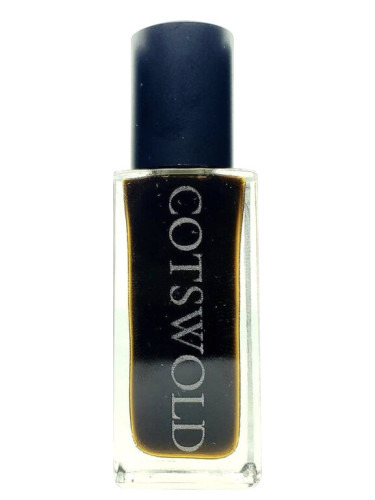
Cotswold (Pineward)


When I approach
a niche fragrance, the first thing I consider is cost. Why am I spending in excess of one hundred dollars on a perfume? What is it offering me that I can't get from something for half the price? I expect to experience heightened legibility (discernible notes that coalesce into a distinct structure), superlative materials (sturdy synthetics that include captive molecules), and efficient design (structurally beautiful at all stages). 

Pineward perfumes are relatively expensive. Seventeen milliliters will set you back eighty dollars. For that kind of money, I want all of the above. Cotswold doesn't give me any of it. Aside from a fleeting phantom of woody pine in the top accord, it smells entirely of some banal dessert-flavor Yankee Candle. It's a sweet, foody, ignoble, and overtly synthetic fragrance, overwhelmingly driven by vanilla and stale buttery notes, evocative of those Royal Dansk cookies that come in a fancy blue tin. 

3/1/23

Eldritch (Pineward)


Photo by Hypnotica Studios Infinite

Patchouli is commonly associated with hippies, and for good reason: its potent aroma is ideal for camouflaging body odors, sex smells, and marijuana vapors. This made it pretty handy in the years between 1963 and 1975. In 2023 it is still kindred to its free-love roots, but now belongs to a sort of postmodernistically open interpretation of human experience, where its facets can be tweaked and comported to fit an individualistic fracturing of society. Think Urs Fischer, not Yayoi Kusama. Enter Eldritch.

"Eldritch" is an adjective for "weird and sinister or ghostly." As a fragrance, it is definitely weird; those unwashed naked bodies on Hawaiian beaches in black-and-white photos are now thrown into a digitally color-corrected American inner city, given pink hair, and plopped amidst a field of NPCs on their smart phones. Eldritch adopts a viciously aggressive profile, throwing the crispness of a properly dusky oolong tea, a leathery opoponax, a super-dry oakmoss, and a camphor-heavy patchouli into a designer woody-amber that smells intentionally 2020s ("THIS IS A CHALLENGING PERFUME") and serious. 

There are things I like and don't like about Eldritch. I like its conifer top accord. I also like its base of artfully minty aromatics, all moored to a woody dock. And I enjoy how the camphor-like aspects of the patchouli wed themselves to the mineralic elements of smoky tea to create a biting, marine-like ambergris effect. I find it unbearable as an extrait, but it would open up in an EDT concentration and allow itself (and its wearer) to breathe. 

2/25/23

Murkwood (Pineward)


An AI-Generated Image

When I want clear, concise evergreen notes, I reach for inexpensive colognes. Things like Acqua di Selva, Pino Silvestre, Agua Brava, Yatagan, Quorum, One Man Show. Most of these can be had in the 100 ml size for well under $100. I don't expect to smell anything hugely dynamic or beautiful, other than a brisk, earthy greenness supported by some tangible structure of either fougère or chypre origin. 

Pineward's Murkwood is supposed to be a straightforward Christmas tree pine (fir balsam is the first note, black hemlock the second), with supporting notes of lapsang suchong tea, incense, and myrrh. It opens with a bright burst of minty pine, very literal and with a slightly pissy off-note, and eventually it adopts a sweet "candle amber" quality, akin to that nondescript sugariness of Yankee Candles. The far drydown reveals incense, but I get absolutely no lapsang suchong or myrrh. It's all quite literal and one-dimensional.

What can be said about a fragrance like Murkwood? My girlfriend says, "It's an inoffensive muddle, and I wouldn't want you wearing it." I'm ahead of her there, because I have no desire to. But why not? It smells of naturalistic pine for the first thirty minutes. It's potent as hell at sixteen-hour longevity. It exhibits quality materials. But it's also a bit of a "blah" fragrance. There's no lavender to give it lift, no bergamot or labdanum to cast warmth. Murkwood is the murky silt of a forest floor: lightless and lacking contour. 

2/24/23

Hayride (Pineward)

Haymakers (Detail) by George Stubbs, 1785

Of the two "hay" fragrances from this house, this is the winner. While Hayloft struggles to find its form, Hayride coalesces within seconds and maintains its sturdy and enjoyable profile for hours, signaling good vibes all around. It's an indelible amalgam of coumarin, cocoa, and dried fruits, all brushed with a thin coat of filtered honey and grains, the sort of ambery oriental that doesn't move much, and doesn't need to. It's the olfactory equivalent of a waltz, and remains linear, legible, and genial for ages on skin and fabric. 

Of interest is how Nicholas Nilsson makes his hay (no pun intended). He insists that he labored intensively to distill the rare essences of "10 pounds of hay" and "bison grass concrete" for both, but I smell a marked difference in Hayride, and it's a little too obvious to go unmentioned. Hayloft smells "natural" in that it doesn't work; its jagged angles are an unfortunate byproduct of using purest-of-pure essences with thousands of stray molecules and off-notes, which are collectively impossible for even the best nose to tame. Yet I'm to believe that the same stuff fell neatly in line for handsome Hayride? I'm not buying it. 

The more plausible explanation, and an intriguing one, is A/B testing at work. Well, not true A/B, but a training wheels version of it: Nilsson may have opted to go halfsies on his perfumers organ, and split his "hay" category into one "natural" (A), and one "synthetic" (B). In doing so, he would likely see which one sells better, and eventually discontinue the loser. My guess is there would be multiple data points, with the extra expense of A's tinctures (in both time and money) eclipsing its profits in the long term. 

If I were advising him, I'd tell Nilsson to consider perfumery a design enterprise in the same vein as the automobile industry. When a company produces two different but very similar cars (same wheelbase, drivetrain, dimensional specs), they cannibalize their sales. Cut one, and see the other's bean pile shoot up. And in regards to the whatever-grass-concrete-co-absolute nonsense, I'd recommend he ditch it and use the ready-made stuff that smells good instead. Why try to reinvent the wheel? 

2/23/23

Hayloft (Pineward)

The Hayloft by John William North, 1867

Pineward offers two "hay" themed fragrances, Hayloft and Hayride, and both are interesting. Of Hayloft, the perfumer writes: 
"This summer I co-distilled about 10 pounds of hay, bison grass and sweetgrass to create a rough and gorgeous hay/sweetgrass/bison grass concrete, which was then filtered and evaporated to create a rich co-absolute."

Why he went to all of that trouble instead of just using a high-quality coumarin is beyond me, but the result is an unsettling ambrosial effect of dry-nutty and semisweet essences. There's a skanky bit of honey blended closely to a soft lavender note. Both are intertwined with a sort of amaretto (bitter almond liqueur), and something grassy-vanillic, which is probably saffron, if the notes list is anything to go by. 

Hayloft's opening is garrulous. Hayloft has a lot to say, or at least it seems to, at first. Eventually its barrage of notes coalesce into a linear accord that smells at once edible and earthy, the kind of weirdness I haven't sniffed since Thierry Mugler set A*Men loose on the world. By the middle of the day, the animalic twang of honey amplifies the sweetness of the saffron to form a Franken-hay more evocative of a Yankee Candle from Hell than anything you'd find in a barn. The balance is off; there's the strange liqueur-like thing vying for attention amidst the din of "hay/sweetgrass/ bison grass concrete co-absolute," and a desperate lavender trying to be heard. Save yourself the money and the migraine, and just get Serge Lutens Chergui instead. 

2/22/23

Gristmill (Pineward)

A gristmill grinds grain into flour, which raised the expectation that Pineward's Gristmill would smell grainy and powdery. It is hailed in fragcom forums as the "mainstream" masculine of the line, apparently for smelling conservatively woody. Weirdly, Nicholas Nilsson cites "Edelwood oil" from the fictitious tree in the TV miniseries "Over the Garden Wall"as part of the formula, and I have no idea what it's meant to smell like. 

What Gristmill actually smells like is a brief bust of cinnamon and woody sweetness in the top accord, followed by a restrained assemblage of cedar and oak, with the pertness of natural labdanum welling up between the floorboards. Eventually cedar and labdanum struggle for dominance, and the heart stage is unavoidably good (these materials smell great), but also a bit too simplistic to be taken seriously. By hour three, all I can smell is the ambergris-like twang of brutish labdanum wearing a victory crown of cedar twigs. It's an accord searching for a perfume, and unfortunately there isn't much of one here. 

Despite my reservations about Gristmill, I would still recommend it to anyone who seeks a pleasant woody niche frag for daily wear. I wouldn't buy it myself, but the materials are high quality, the composition is inoffensive, and the end result is a comfortable fragrance that fits most occasions. For once, the cinnamon in the top is well-judged, and despite the cookie-crumble drydown, this stuff always smells pleasant and civilized. It's just too bad its gigantic labdanum wasn't mated to a more sophisticated chypre structure -- Nilsson might have made a good fragrance into something great. 

2/20/23

Brokilän (Pineward)


Some perfumes are designed to misdirect the customer. Consider Irisch Moos, ostensibly a masculine barbershop fragrance. Get to know it and you find that it's Mitsouko done on the cheap, little more than a blaring bergamot resting on a ton of sweetened oak moss, and as manly as Catherine Deneuve in "Belle du Jour." Or lay your schnoz on Chrome Legend: supposedly an XY aquatic, but really an XX tea floral pitched to XY buyers. 

Companies use briefs to meet perceived market demands, and the things they settle on aren't always a true match. Brokilän is Finnish for "Broccoli," which raises questions about what Nicholas Nilsson, Pineward's perfumer, had in mind. The fragrance is marketed as containing exotic materials like "black hemlock" and "Vietnamese oud," none of which correlate with anything in the cabbage family. I think it's all hooey; Brokilän smells only of octin esters and methyl heptin carbonate (violet leaf) mixed with an excess of cheap galbanum resin and a smattering of pine. $80 for 17 ml is a bad joke. 

2/19/23

Fanghorn II (Pineward)


An AI-Generated Image

When I think back on the "green" fragrances I've owned and worn over the past ten years, the greenest of them was probably Tsar by Van Cleef & Arpels. Every spray of Tsar was like a handful of glittering emeralds, the scent of woods and leaves and mosses and pine needles, with an expansive breath of lavender, juniper, and rosemary whistling through the branches. It smelled lush and was almost formless in its abundance, a fragrance of regality and heraldry befitting its name. I rue that I wore every last drop of it and then discarded the empty bottle, for now Tsar is long discontinued and priced at $150 an ounce.

Wearing Fanghorn II reminds me of that intense greenness, although there is something pleasantly "off" about how it smells. It opens with a bitter blast of piney greenness that practically glows in the air, a dense, textured, intensely woody buzz of evergreen needles, sappy woods, and bright terpenes. No wonder it was voted "Best Artisanal Perfume" of 2021 in Basenotes' North American category. It's very hard to ignore something this focused and full-throated. As it dries there are shades of artemisia, juniper, sweet black hemlock, and a mineral stoniness, which is suggestive of a craggy landscape under all the heavy branches. Everything gets dustier and drier with yet more time on skin, and I get a weirdly antiquated vibe of sixteenth century cedar closets and timber cottages nestled in the wilderness of Renaissance Europe. Mysterious stuff.

Nilsson achieves a balance between crisp green needles and sticky woods by using a saccharine hinge of caramellic hemlock to connect them. At times its sweetness threatens to turn Fanghorn II into a candle, but it's complex and dynamic enough to skirt the realm of functional fragrance. This is Pineward's "core expression" and signature accord, and it's great if you want "green," but I still prefer the sunnier elegance of White Fir. 

By the way, what does "Fanghorn" refer to? It sounds like an Old Spice shampoo, not an upscale niche fragrance at two dollars per milliliter. In the age of Proctor & Gamble, let's be a little more careful with our names.  

2/18/23

Funerie (Pineward)


An AI-Generated Image

Funerie is probably Nicholas Nilsson's most artistic composition. It's tempting to give it a bad review; it is so challenging that it is nigh unwearable. Its "morel mushroom" top note is stale and mushroomy and will likely repel people. And even when that burns off, what remains is so unilaterally plangent that only the peppiest optimist could experience it unscathed. Yet despite all of this, it impresses me. I think it achieves everything a good perfume should: it transports the wearer to a different time and place. 

Nilsson suggests on Pineward's site that he intended to impart a gothically funereal vibe here, and one sniff sends my imagination to a foggy graveyard. I'm immersed in mushrooms, followed by the bitterness of synthetic isoquinolines, tinged in the periphery with pinewood and a very remote dried rose. Eventually the terpenes of desiccated pine needles and a weirdly camphorous quality permeates the air, evoking the sense of lying supine in a coffin, which is itself laying in a cracked and craggy mausoleum nestled somewhere in a patch of old pine woods. Cold air drifts through the broken stones, and its icy fingers weave through the coffin's splinters, carrying the essence of its wood and a bouquet of dead flowers on the lid above my chest. 

Longevity here is nuclear: one or two sprays will last well over twelve hours. Funerie is a perfume that will intimidate and irritate most of the noses out there, especially those that are accustomed to "fresh" and "sweet" fragrances. But there is a phalanx of people who are into the whole Black Phoenix Alchemy Lab "Goth" aesthetic who will enjoy it. It's a perfume that reminds the wearer of his mortality, while conjuring a moribund fantasy of the afterlife. The fragrance is also legible and concise, with a technical precision not often found in contemporary perfumery. Very nice work. 

2/12/23

Chandlery (Pineward)


Pineward, an outfit 
that is ostensibly focused on pine fragrances, seems to excel when it avoids pine altogether. While the use of evergreens is commendable, they work better when approached from reflex angles that are wide enough to allow for other modalities to fill out the plane. The hissy terpenes of crushed fir needles smell best when surrounded by diverse notes of varying textures and volatilities. It brings me pleasure to tell you that Nicholas Nilsson's Chandlery embraces this ideal.

Chandlery is only barely dusted with the vaguest hint of pine, a tiny dollop near the edges to lend it a rustic aura. That touch of green rests on a robust aromatic fougère, the kind that hasn't been offered to men in any serious way since the 1970s. But its DNA goes deeper than Paco Rabanne territory; I smell Caron Pour un Homme and even Trumper's Wild Fern in there. It opens with a breathtaking lavender and anise accord that is so focused and easy on the nose that it's all I can smell for fully thirty minutes after application. Its crystalline timbre then mellows into a repose of green champaca, hay-like coumarin, jasmine, sandalwood (Australian), and a mildly animalic musk. Every note fits neatly into the others, and every accord feels sturdy, fresh, natural, and invigorating. On a technical level it's an olfactory expression of F.L. Wright's Fallingwater, and artistically it's akin to wearing a Milton Avery, all languid lines and limitless color fields. 

This is the only true fougère in the range, and it succeeds by offering simple and well-balanced accords comprised of high quality materials. Nilsson meets a very basic luxury standard with a fragrance that is antithetical to tech-hoodie Tesla-driver chic. Chandlery is worn by folks who are reluctant to surrender their flip phones and eager to spend their Sunday afternoons fishing. It is what all fougères should smell like: a summer breeze carrying a whiff of adventure through the open wilderness.  

2/9/23

Katabatic (Pineward)


It turns out that cinnamon is a difficult note for perfumers to work with. The notes list for Katabatic looks like trouble: ruby cypress, camphor, birch leaf, ravintsara, cinnamon, cloves, star anise, bitter almond, red fir, cedarwood, sandalwood, orris root, dragon's blood resin, oakmoss. Cinnamon, cloves, and star anise? Better have some wicked contrast to offset all that fetid spice. My qualm with fragrances like this is that they're usually going for some sort of "hi-fidelity" cinnamon that quaintly skirts the pitfalls of winding up like Red Hots or toothpaste via superior materials and blending. The problem is that pricy chems and a deft touch do precious little when the idea behind them is lacking. 

Nicholas Nilsson's idea for Katabatic may have been to laser-focus on cinnamon, to make an "ode" to cinnamon, to render the spice with mind-numbing woody dimensionality, to be to cinnamon what Nahema is to rose. It's rather unclear, because the cinnamon is certainly intense, but it's a burning ruby nestled in a plastic setting. Right out of the atomizer, the fragrance smells overwhelmingly of Close-Up toothpaste. I let it sit on the strip for an hour, and returned to it expecting to smell a different animal. Nope, it still smelled like Close-Up toothpaste. I walked away and went about my day, and when I returned hours later, I told myself, "Okay, this has surely evolved." It had not. Close-Up. Toothpaste. Like I'd smeared it everywhere but on my teeth. 

It's an unfortunate reminder that indie brands need evaluators and range editors, just like everyone else. Pineward's range is too large. There are simply too many perfumes, and while some of them are clearly inferior, none beg to be rejected the way this one does. There's no room for something like this in a crowded market where thousands of overpriced perfumes are competing for that key moment when a euphoric sniff sends a man's dollars fluttering from his wallet like little green butterflies. I'm embarrassed for Nilsson, and worse, I'm offended that anyone thinks this is worth real money. Perfumery has lost the plot; there's no story here. Cheap toothpaste smells nasty. I don't use it. An ounce of Katabatic is $135. Only an idiot would buy it. 

2/2/23

Ponderosa (Pineward)

Some perfumes succeed by conjoining the known essences of things in nature into new and unforgettable accords. Picture the gaunt lemon aldehyde and intense woody-mossy experience of Halston Z-14. Yes, the notes all jump forward at various stages to announce "I'm cinnamon," or "I'm pine," but the nose can only interpret them by assessing the novel entirety of Z-14. Then there are perfumes that are olfactory advertisements for the bountiful spoils of pulchritudinous lands that aren't found on any map. Their beauty is abstract but familiar, the paradoxical effect of taking known notes and composing them into a hauntingly alien tune.  

Ponderosa is one such fragrance, a strikingly smooth and binate accord of cedar and burnt vanilla that smells expansive and salubrious, yet also feels warm and comfortable in its raw simplicity. Perfumer Nicholas Nilsson attempts to pontificate on its connection to actual ponderosa by claiming it contains the resin absolute, but I'd be more impressed if he said it was a reconstruction, which would at least align him with greatness. It smells like one to me, a robust but unassuming assemblage of woody and sugary notes that coalesce into the general impression of pinus ponderosa. Very good stuff, made all the better by a mystical wisp of fruitiness. A natural beauty that does not occur in nature. 

1/28/23

Icefall (Pineward)


Nootkatone is a
grapefruit ketone, and one of the main components of the smell of grapefruit. It has an acidic, bug-sprayesque vibe, and not accidentally, it's an effective tick and mosquito repellant. One of the dangers for perfumers who work with it is winding up with something that smells more appropriate in a camping bag than in someone's fragrance wardrobe. Nicholas Nilsson manages to avoid this pitfall in Icefall by pairing an intense grapefruit note with a gentle smattering of pine. 

Icefall is Pineward's one and only "fresh" fragrance, and I think it's one of the brand's simplest as well. This all falls in its favor. Unlike others in the range, this one is direct, easy to wear, utterly unisex, and perfect for all seasons. The grapefruit note is crisp, juicy, and a little salty with the pine. The citrus gets woodier and duskier as it dries down, but never collapses into something tritely musky or fetid. The base emerges within four hours, and I think it's a bit bare. Then again, the wearer would likely experience it in warmer weather, and sweat reanimates nootkatone (hence its usefulness against bloodsuckers). 

I get the impression that Nilsson intends for Icefall to be a dumb-reach fragrance, and not a grand statement-maker, and in this respect he succeeds. There are moments in its evolution where it reminds me of vintage Old Spice Fresh, which had a dry grey-marine quality, and was appealing to wet-shavers. There are other moments where I'm reminded of Adam Levine for Men, which stands out in memory as being a great inexpensive grapefruit fragrance. But with its dusting of woody pine, Nilsson managed to inject a bit of soul into what might have otherwise been a soulless exercise. Very nice work, and probably better on a woman than on a guy.

1/26/23

Steading (Pineward)


If I've learned anything about postmodern perfumery, it's that there's a Great Olfactory Divide between the two sexes. Men smell things one way, and women smell them another. A good male perfumer is prone to enjoying animalic and deeply woody (nudging into "urinous") notes of tobacco, unfiltered "raw" honey, maple syrup, stale grains, and decayed woods. His girl, on the other hand, may not share his enthusiasm. 

This poses an existential dilemma: should men wear things that they like, or should their fragrances be unerringly in sync with feminine sensibilities? If they cater to themselves, they risk eternal bachelorhood, but at least they enjoy what they're wearing. If they attend to their partners' tastes, they may eschew the impracticality of owning their favored "challenging" perfumes to better maintain happy relationships. This has never been more true for me than it is with Steading. I can attest to the allure of Steading. It smells intense right out of the atomizer, and remains so for fully seventy-two unwashed hours. And it smells challenging. Oh man, does it smell challenging. One-two punches of maple syrup, gingerbread molasses, waxy honey, and cigar tobacco assaults every nasal orifice within a three-mile radius, and the onslaught doesn't ease up. Eventually the maple, honey, and tobacco form a core accord of sweet and direly woody ("peat smoke," supposedly) machismo. Move over Havana. Step aside, Tobacco Vanille. Outta the way, Molton Brown Tobacco Absolute. Steading is here. You think you're an aggressive, king-making masculine tobacco fragrance? Hold Steading's beer.

I like it. But I'm sure I'd never wear it, because it's a nose-crinkler, even for me. I enjoy smelling it. I just couldn't wear it all day, or even for a couple of hours. Imagine the smell of raw, straight-from-the-hive honey, that intensely sweet, borderline stinky smell of almost-pee bee vomit, mixed with the wax they wiggle in. Now imagine wearing it. Now imagine wearing it in the car. Now imagine wearing it in the car, next to your girlfriend. 
Mine said, "Uh, no." Case closed. 

1/22/23

Alfiryn (Pineward)


The house of Creed is known for taking the commercial perfumes that have found resonance with the public and "upgrading" them using higher quality materials in similar but more elegant compositions. They are not unique in doing this, as Nicholas Nilsson makes clear with Alfiryn, the only blatantly feminine perfume in his line. Pineward's website states, "Deep white florals grounded in creamy massoia and sandalwood, vibrant enfleurage gives this inverted floral perfume a softly textured halo." I find this description strange but rather accurate, although I can't help but smirk at the suggestion that the painstaking and commercially unviable technique of enfleurage (the use of odorless fats to extract floral essences) was used to create Alfiryn. Why? Because it smells like an upscale copy of Wind Song by Prince Matchabelli. 

Wind Song dates to 1953, and it smells like the logical next stop after Chanel No. 5 (1921) and Tabu (1932). It's a smooth, lactonic woody-floral, its scent a mimicry of its bottle in studding a crown of carnation with jewels of Damask rose, jasmine, and lilac. It smells mostly of a clovey carnation brushed with a buttery lactone that is deeper and woodier than the milky peach lactone in Mitsouko, rounded off with the warmth of rose and jasmine, and tinged with cool lilac for a nuanced green finish. This describes Alfiryn to the letter, with the only difference being that Pineward's scent smells a bit richer, stronger, and warmer than its airier drugstore predecessor. Alfiryn's use of massoia lactone is evident in the balmy-coconut smoothness undergirding its florals, and there is perhaps a dollop of peachy Nectaryl in the top notes, lending a bit of sunshine to the duskier affair thereafter. 

Eventually a clovey carnation reconstruction dominates, and I smell the same three florals in the periphery: rose, jasmine, lilac. To my nose, the rose and lilac are noticeably larger in Alfiryn than in Wind Song, ten carats to Matchabelli's two, but they assume the same roles as supporting acts. So, do I like this fragrance? Although Alfiryn lacks originality, it succeeds in taking a classical floral perfume and giving it the "niche treatment" of better materials at higher concentration. I'm inclined to like it, but it gives me pause. Its only faults are that it's a little too dead-on, and I would argue that because it's so strikingly similar, the people who would spend $135 on a one-ounce bottle would do better to spend $10 on twice as much of Wind Song. Nilsson made Alfiryn richer and stronger than its template, but I think he took it in the wrong direction; this stuffy room-filler was begging to be lightened and modernized instead.