Showing posts with label Azzaro. Show all posts

7/21/24

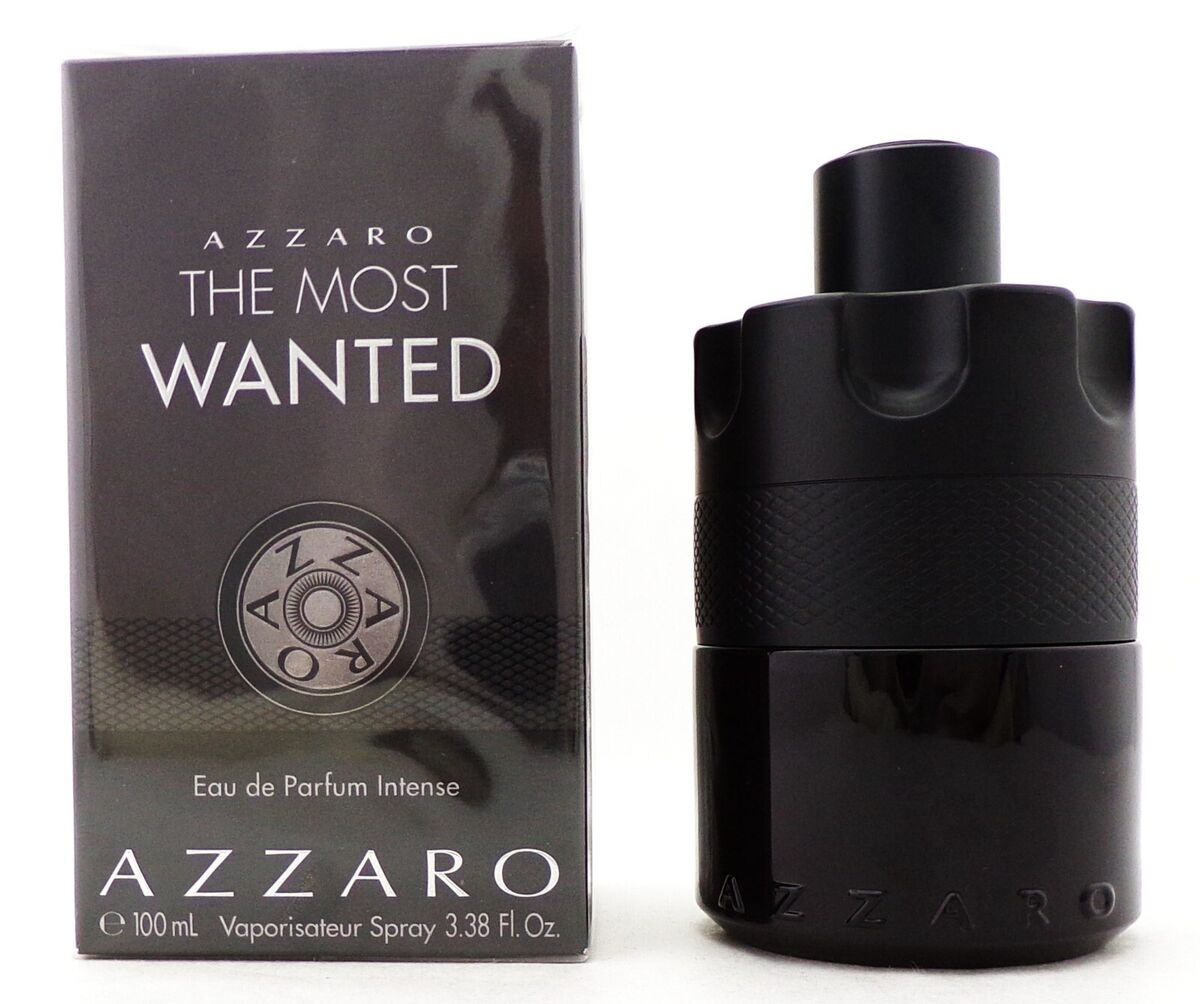
The Most Wanted Eau de Parfum Intense (Azzaro)


This is a
perfume that does not warrant any long exposition in a review; the fragrance is as generic and by-the-numbers postmodern as it gets. I like it a little more than The Most Wanted Parfum, but only by a hair, and while I enjoyed Quentin Bisch and Nicolas Beaulieu's original parfum concentration, I had hoped that Azzaro would eschew the twenty-first century tendency toward unfocused mish-mash. In this case, the brand offers customers a more conventional ambery oriental with less ginger-citrus and more powdery-sweet lavender, which eventually coalesces into a toffee-liquer accord resting on amberwood, Ambroxan, and a few detergent musks for volume. 

Many have bemoaned the death of what fragheads call "generalist" fragrances, which are one-size-fits-all releases that cover all bases of occasion, season, and seduction, without veering too far in any one direction. An example is Polo Green (1978), which feels formal and yet works in casual settings, fresh but also rich and woody, bright enough for summer and deep enough for winter, and abstract enough to attract either sex. The Polo Greens of the world have faded from the zeitgeist, and in their place are what I dub "specialist" fragrances. Where once I could reach for a Polo Green or an Allure Homme or a Dolce & Gabbana Pour Homme, and wouldn't have to worry about where I was going, what I was doing, or who I was doing it with, now I must select a specific fragrance for a specific milieu of life, be it work, play, dinner at a restaurant, dinner at a bar, an evening at a nightclub, a day at the beach, a few hours at the library, a run to the corner store, sexual encounter with my partner, etc. You get the idea -- there's a perfume for each. 

Why this has occurred is beyond me. What made the market stratify? Is there more money in it? Azzaro's The Most Wanted Eau de Parfum Intense comes in a black box and bottle, with an image of "night time" darkness, bordering on gloom. There's a bit of a Batman vibe. The scent's smoothness, its approachability, its loudness, and its sweetness all imply it is a clubbing fragrance. Yet perfumers Bisch and Michel Girard have perhaps accidentally created something that feels rather "generalist" to me. I find the cardamom and lavender top notes to be standard "guy stuff" in the nineties mold; the toffee-like heart is sweet but only invitingly so and not overbearing; the amberwood base is as standard all-seasons as it gets, feeling lush in heat and dry in the cold. If you're looking for a basic and inoffensive work scent that will come home ready for dinner and a movie, look no further. 

2/10/24

The Most Wanted Parfum (Azzaro)


Postmodernism is a bitch. It's an eclectic shit-show of pseudo-intellectual mumbo-jumbo that strives to delegitimize social value hierarchies by disassembling objective meaning in the name of individualistic elan. Think of a water-driven wheel for grinding wheat, stopped by the invisible hand of solipsistic justice to allow for the factory workers to uselessly gawk at how the opposing forces produce the negligible byproduct of chaff. Meditate on the chaff. Obsess over the chaff. If we dare deign to enjoy the wheat, we must blame the wheel and its maker for the chaff, and only the blamers deserve the wheat. 

One of the unfortunate but inevitable side effects of postmodernism is the blurring of identities. This creates a lethally effective fog of war, you see. Where once people and objects enjoyed definition, now nothing does. In 1978 we had Azzaro Pour Homme, and a decade later we had Cool Water. One was an anisic lavender fougère in the modernist mold; the other a new-wave dihydromyrcenol-fueled fresh fougère. Then postmodernism kicked into a higher gear, and in 2016 we got a weird mishmash of them both (with a few other things) in Wanted, Azzaro's bizarre postmodernist fougère. It is both fascinating and terrifying in equal measure, and was followed by the even more Deconstructionist 2022 flanker, The Most Wanted Parfum. So how does intellectual nihilism smell?

Weirdly good, as it turns out. Luca Turin wrote, "Touch your nose accidentally with the smelling strip and you will be followed around by Virtual Guido all day." That may be true. But Virtual Guido got lucky in this fragrance after he culled together the best parts of the greatest contemporary classics into one obnoxious olfactory hair slick; the sweetness of A*Men's tonka, the forceful clarity of Azzaro's old-world lavender, the fizz of Envy's ginger, the gleam of Pierre Bourdon's imagination, the musks of Le Male. The Most Wanted is an apt name, as it is a gathering of the twentieth century's most wanted accords, poured into a kitschy Dadaist bottle by a brand with nothing to lose. Loris is spinning in his grave. 

12/7/13

Chrome Legend (Azzaro)


I am certainly not a huge fan of the original Azzaro Chrome - not by any means. It's not the worst fragrance I've ever smelled, but it's close. It smells like someone sprayed down actual chrome metal with Garnier Fructis shampoo. Pretty revolting. I expected to find this 2007 flanker by Christophe Raynaud and Olivier Pescheux to be just as bad, if not worse. It isn't. Chrome Legend is better, much better, and although it maintains its progenitor's fresh-metallic identity, it never succumbs to the same banal-soap approach. I classify this fragrance as a "floral aquatic," because there's a major jasmine factor here, with a brisk sea-spray note, and an "amber" accord that smells remarkably similar to the huge ambergris note in Proctor & Gamble's Old Spice Fresh.

Just imagine the smell of soapy white aldehydes on top, followed by a little green apple peel, some black pepper, a dry greenish note (purportedly green tea), a synthetic jasmine-like molecule, an incredibly one-dimensional, Polaroid-like analog of mandarin orange, a smattering of cedar chips, a tidal wave of salt, a pinch of anise, a dollop of ambergris, and a smidgen of white musk. Got that? That's Chrome Legend. It may not sound very good, and indeed it's not the greatest fresh scent in the universe, but I think it's a hell of a lot more interesting than regular 'ol Chrome. Unlike the original, this version smells like a true aquatic, featuring an ocean-watery element with surprising boldness and clarity. It reminds me a little of Bvlgari's more successful Aqva PH, but it's lighter, fruitier, sweeter, and more directly floral. Bvlgari's treatment of this theme features sharper jasmine and orange blossom notes, with distinctly indolic facets, but they're eclipsed by a few briny, low-tide elements. Legend never gets indolic, but it does have a little marine quality of its own, due to the mixture of salt, cedar, and anise, plus that subtle greenish thrice-boiled tea.

I'm usually not one to praise aquatics, but Chrome Legend is a nice sea-spray scent for the conservative guy who just wants to smell casual, classy, and clean. For you young bucks out there, I don't have to tell you how much girls love fresh scents like Chrome and Chrome Legend. For the rest of us, these types of fragrances are olfactory reset buttons, to be worn between the Lagerfeld Classics and Z14s of the work week. Apparently Azzaro discontinued Legend a few years ago, but I can't remember the last time I browsed a Marshalls or TJ Maxx without seeing at least three bottles on a shelf. If you know someone who enjoys aquatics, this one is the perfect gift.

9/13/13

Azzaro PH: The Finest Aromatic Fougère?


Recently there was a thread posted on basenotes, entitled "Your All-Time Favorite Fougère?", where the OP asked which fougère you would opt to wear, if you could only wear one. There was a very broad range of fougères listed in the responses, with Azzaro Pour Homme cropping up here and there. It certainly was not the most popular answer, and it didn't seem that there was a "most popular" answer, but several felt that the basic aromatics - Paco, Azzaro, Drakkar, Jules, Kouros, Lauder for Men, Rive Gauche - all fit the bill of being very desirable ferns. At some point in fragrance history Azzaro Pour Homme became legendary, and whenever there are discussions specifically about aromatic fougères, its name is uttered more than most. When put up against the first contemporary aromatic fougère, Paco Rabanne PH, Azzaro wins the popularity contest hands-down. Views on this fragrance trend toward unanimous love, with dissenters complaining that it's your garden variety "old man fragrance," and some just feeling that it's overrated. This one is highly regarded by us fragrance fanatics.

I happen to like Azzaro PH. I've always liked it, although earlier incarnations of it were too strong for me. The current formula has a smoother balance to my nose (although it does lack moss), and the anisic lavender smells wonderful against Gerard Anthony's arrangement of citrus, woods, and musks. Azzaro PH is also one of the few fougères that uses cardamom in a way that I don't mind. Jazz also uses cardamom, and I don't mind it in there either, but YSL's approach treats the cardamom with a spicy-fresh focus, whereas Azzaro's treatment is subtler, better integrated, and is actually used to enhance the lavender note. Despite the purported notes lists for this fragrance, it comes across as fairly simple, and therefore deserves its fougère status, perhaps more so than flashier fragrances like Cacharel PH, Safari for Men, and Tuscany Per Uomo. I tend to think of fougères as being successful by taking a broad palette of notes, and using them to simple effect. Pour un Homme de Caron is the best example of this, which is why I always come back to it as a favorite. It smells simple, with just lavender, vanilla, and the smallest dab of musk. In truth, it is a complex creation, with several musks, a very carefully balanced herbal coumarin, and the finest lavender grade you'll find in a fragrance south of $50.

Luca Turin wrote in The Guide:
"Some, I among them, believe that the finest aromatic ever was Azzaro Pour Homme (1978). This fragrance is so good and historically so important that I have met to date six perfumers who claim to have composed it . . . "
That was published in the first edition, which goes back five years already. How time flies when you're having fun. After those words hit the fragrance community, Azzaro PH returned from the dead, and was suddenly on every guy's radar screen. It went from being forgotten and quietly admired by a select few, to being an "important" and "faultless" fougère that every connoisseur should own, or at least experience. I think that's a good thing, because there aren't many great aromatic fougères still in existence, and Azzaro's entry is definitely a masterful piece of design work.

It does beg the question, though: Is Azzaro PH really that great? To say that it's "the finest aromatic ever" is pretty deep. That means it's better than all the others. Paco, Drakkar, Jules, Kouros, Francesco Smalto, Boss No.1, Third Man, Lauder, Xeryus, GIT, Zino, Lapidus, Salvador Dali PH, Cool Water, Jazz, Tsar, Eternity, Polo Sport, Tommy, and the list goes on and on. Is it really possible to seriously consider the individual merits of all of those fougères, and still conclude that Azzaro PH is the finest of their ilk? In broad strokes, I'd have to say that Azzaro PH fares well, but loses market share to real stunners like Kouros and Third Man. Whenever I wear Kouros, I experience moments of wondering how on earth something so nice is still being sold. Ditto for Third Man. I break things down by notes, and it gets equally contentious. Azzaro's treatment of citrus in the top notes is very interesting, because the fruity bite of bergamot and lemon is totally dried-out, yet also very loud. Instead of popping and fizzing and then disappearing, it acts as an olfactory cleansing agent, clearing the sinuses of contaminants to allow a startling accord of lavender and anise to step forward and stake its territory.

If you compare that to the citrus notes in Paco Rabanne PH, you find that Jean Martel's fruitier, more-traditional approach is arguably not as effective at framing the fougère accord, especially after the first five minutes have passed. However, Paco's citrus top accord is so strikingly beautiful that it exists as a mini-fragrance of its own, and is just as satisfying as all that comes after. I can say with unwavering certainty that anyone who dismisses the importance of top notes in a fragrance has either forgotten Paco Rabanne PH altogether, or made the grim mistake of intentionally avoiding Paco's top notes while waiting for its drydown. If you close your eyes and picture an elevated plain of wild lavender and weedy flowers, with their sod perched on a cold and wet shelf of stone in the Himalaya mountains, you have visualized the olfactory sensations of Paco Rabanne's citrus notes. It's much harder to generate that sort of wild and free (and earthy) visualization while smelling Azzaro's citrus notes, because they're much more muted and functional, serving mostly to support the lavender. Indeed, supporting the lavender is what Azzaro is all about. The anise supports the lavender. The spices support the lavender. It's one hell of a lavender.

What about the lavender in some of these other fougères? Is Azzaro's lavender the best there is? Is it even the most interesting? It's a traditional lavender note, probably English, although its sharpness sometimes makes me wonder if it isn't Spanish. Pairing a conventional lavender with then-unconventional anise was a good idea in '78. Yet Drakkar Noir had a more novel approach to this aromatic, minty herb. Instead of using highland English, Wargnye opted for lowland spike lavender, and emphasized its eucalyptic/camphoraceous characteristics for maximal "fresh" effect. I find that to be far more interesting than the straight-up lavender of Azzaro. It's a lavender curve-ball, and it's pretty ingenious. Even the lavender of Kouros (particularly the most recent, chrome-less formula) feels lustier and more dynamic than Azzaro's (it's paired with citrus, clove, and musk, which outnumber Azzaro's lone anise note). It's all about lavender in Azzaro PH, and it's a very, very good lavender, with all notes working in unison to emphasize its crispness and overall quality, but perhaps in the end it's . . . cruder than the others. Not by much, mind you, but just enough to raise eyebrows at the suggestion of its being "the finest aromatic." Crudeness and fineness are on opposite ends of the spectrum.

The woodsy notes in Azzaro PH - vetiver, birch tar (undoubtedly replaced by synthetics in the current formula), patchouli (very subtle), fennel, sage, juniper - all work together to form a coherent, cohesive bond of crisp, manly freshness. How do they rate against other "woodsy" fougères? They're fine, but the lack of artemisia in Azzaro is one strike against it. Wormwood just smells amazing in these kinds of older, busier compositions, and its absence is noted here. Not so in Jazz, Tsar, and Salvador Dali PH. The artemisia is integral to the aromatic effects of those ferns, and it's hard to imagine them without it. Azzaro was made with a steady hand, and none of its notes try to steal the show, so I have to believe that Gerard Anthony could have found a place for some wormwood, without upsetting the balance. This is not a case of smelling an inferior rendition of something, or comparing something in another fragrance, but simply wishing a note were there. Unfortunately it isn't, and that's frustrating to me.

Azzaro rates very highly with me, but I can't say it's the finest aromatic fougère I've ever smelled. It's a good one, and it's something I will always have a bottle of, but there are too many other fougères that give me just a little more pleasure. I think it's strange that Azzaro PH became a sensation among lovers of the old-school, because it has been around since the Carter administration, and from that time to at least 2008, it wasn't really a name that people were shouting from the rooftops. It's always been a seller and it's always been somewhat popular, but I can't help but wonder if the enthusiasm for it would be different if it were 1995, and Luca Turin had quit biophysics to become second violin in the New York Philharmonic Orchestra.
7/15/12

Chrome (Azzaro)


One of my chief annoyances with The Guide is its Four-Star review of Nautica Voyage, because it's an awful fragrance. That Turin also addresses Azzaro's far-superior (and still terrible) Chrome with One Star adds to my ire, and fleshes out the theory that The Guide is troubled by a number of hypocritical biases that nullify its overall effectiveness as a road map to perfume. Chrome is the progenitor of Voyage in every manner, possessing the same "fresh," semi-aquatic '90s masculine scent profile. To anyone who isn't a fragrance fanatic, the only perceptible difference between these two is that Chrome is a conceptual metallic sport scent, while Voyage is a pretentiously abstract "floral-aquatic" with no concept beyond smelling chemical and harsh.

To say that Chrome is inferior to Voyage is like saying Peugeot is inferior to Ford. Some may see significant differences in quality, and have a distinct preference, but in the end you're still getting the second-largest fragrance type, from either of two major countries, that today's male reaches for before hitting the nightclub circuit. The premiere fragrance type is the dreaded aquatic, and I'm unfamiliar with many of those. I wish I was unfamiliar with Chrome, but I'm not that lucky.

Chrome smells like freshly-washed sheets of stainless-steel plating. The sort of thing you see on the sides of factories and on roofs of airplane hangars. Close your eyes, and imagine yourself sniffing a piece of steel that was just vigorously scrubbed with a fruity shampoo, like anything by Garnier Fructis. There's a shrill citrus top note, reminiscent of a cold sheen of metal, followed by a vague suggestion of watery sweetness, replete with fructose molecules and broken simple sugar proteins. It's immediately repulsive, and I recoil at the thought of it, let alone the smell.

12/11/11

Azzaro Pour Homme (Azzaro)


If Green Irish Tweed is the best fougère of the last quarter century, then Azzaro Pour Homme is the best of 48 years, and counting. I used to dislike Azzaro PH because of its overwhelming intensity, but the recent reformulation has solved that problem, no doubt to the chagrin of its fans. I prefer the new version because it doesn't give me headaches the way the original did. In fact, the top notes resemble a high quality sport fragrance, with bracing lemon and sweet lavender dominant. It does lack the depth of its predecessor, but the core components are still very much a part of the scent. This is still a woody, anise-laden fern, full of freshness and life.

Luca Turin wrote that a man's scent should never be more traveled than he is, but I disagree. The world is a tough field in which to play, and one needs every possible advantage at his disposal. A few years ago I was hobnobbing with an elderly gentleman who ran an excellent vintage perfume shop. He told me, "perfume is an illusion. You apply it, you go out and about among people, and they get a sense of something special around you, but it should never be in their face." This perfectly describes the reformulated Azzaro Pour Homme. It is ephemeral, natural, green, masculine, and alluring. Some reviewers have challenged its status as a "barbershop fragrance," asking what barber in the world sprays Azzaro on customers. This fougère smells like a high quality Barbasol shave foam, the stuff that comes in a can and costs $3 at the corner store, only Azzaro makes it smell expensive because the notes are clearer and enjoy a better blend. To be honest, I think that's what the original goal of this fragrance was. They wanted to emulate the smell of a clean-shaven man. True story: One time I was wearing Azzaro at work, when a coworker walked in and said, "Man, it smells like a barbershop in here!" He had no idea what I was wearing, but I know he was referring to me because he was four feet away when he said it. The aura around me simply smelled like a barbershop. 

Like GIT, this fougère is useful at any time, in any place. I find the use of anise to be a tad challenging, but that's okay - I like it. For the times I want something different, I have plenty of other options. My only complaint about Azzaro PH is that it isn't something I can wear every day, or even two days in a row. Something about the intensity of the anise and lavender accord makes it a once-in-a-while wear for me, but I know many guys who love this as their signature scent, so it's possible you might try it and decide you can't get enough of it. It's a fragrance for free thinkers and unique characters. For the times I want to attract unconventional people, I have Azzaro, and I'm thankful.

10/2/11

Acteur (Azzaro)


Acteur was a hard-sell for me at first. Azzaro fragrances tend to be that way. The spicy Azzaro "house note" is one I don't care for, a strange blend of oakmoss, cedar, rose, and carnation that appears in most of their masculines. This one is getting harder to find, and there's a perception in the blogosphere that it's discontinued. I've read that new bottles are available at the Azzaro Boutique in Paris, but their numbers are limited. 

Acteur opens with a nice burst of fresh bergamot. The citron is a little green, thanks to calamus. The fruit is spiced by the bitter entrance of mace and cardamom. This spicey accord smoothly transitions into a unique heart of rose and carnation. The carnation meets the cardamom head-on, and establishes a nice floral piquancy. Touches of muguet and jasmine sweeten things, creating an olfactory illusion of apple cider. The cidery aura emanates from Acteur for a few hours, before sliding into a rosy, mossy, musky-sweet base. As the fragrance evolves, the rose accord steals the show, tempered only by darker cedar and moss. It's all very well-balanced, fresh-smelling, and dry.

Acteur conveys that sense of elegant and masculine adroitness. There's something about its expression of greens, spices, and flowers that brings class and ruggedness into the same room, sits them down, and negotiates a truce. At first it seems like a spicy-woody monster, but when worn in early autumn it smells much lighter, airier, and not nearly as serious. It is a perfectly autumnal fragrance, and a masterpiece.