Showing posts with label Christian Dior. Show all posts

6/25/24

Fleurissimo (Creed, 2005 Batch), and An Open Question: Is This Creed a Blatant Christian Dior Clone?


First I want to review Fleurissimo, and then I'll get into some other stuff. This is the first proper Creed fragrance review I've done since Aventus Cologne, but that's a "new" Creed (2019); the last time I critiqued one of the brand's "originals" was my 2014 review of Windsor, which I totally panned. Let's talk about an older Creed that I do like, and then get into why the fragrance is such a bizarre mystery. I'll leave comments open to anyone who wants to chip in on Fragrantica. You can PM me and let me know your thoughts. 

Fleurissimo is one of Creed's more scrutinized classics. I say that because Olivier Creed has stated that it was released in 1956, which ties it to the whole Grace Kelly, Princess of Monaco narrative (one of the few Creed stories that even I summarily dismiss as utter bullshit), yet after Gabe Oppenheim's awkward little exposé on the house, Basenotes and Parfumo quietly changed the release date to 1972. I vaguely recall reading something a long time ago about it being released to the public in 1972, following the conclusion of its sixteen-year stint as a bespoke fragrance, but I'd have to dig up the receipts on that. I still haven't read Oppenheim's book, so I'll suspend judgment there as well. I've known Fleurissimo since 2015, when I gifted the body lotion to my mom. It was wonderful; creamy, floral, a little green, which also describes the EDP. 

Fleurissimo opens with a lick of bergamot, one of only two non-floral notes in its composition. The citrus is tempered by something mildly warmer and sweeter, which I suppose could be a bit of orange zest for balance, but hard to say. The 2005 vintage has a hint of an indolic whirl bridging its citrus to its heart structure of white florals. It only lasts for thirty seconds (perhaps longer when it was new), and I like that it lends the perfume some quirk. Then its core floral ensemble appears, and I must confess a lack of familiarity with the various exotic white floral essences that your big-city florist takes for granted, so it's hard for me to authoritatively say exactly which blooms are represented here. To me it resembles hyacinth and lily-of-the-valley, but many people say it's tuberose, which I haven't smelled in real life (I live in Connecticut and tuberose isn't popular here). 

The fragrance is typical of classical Creeds in that it doesn't attempt an abstract, not-found-in-nature effect, and instead renders its notes quite literally and directly, merely presenting them together. If Creed were a crappier brand, this wouldn't work so well, but of course Fleurissimo smells like money. Its citrus is a freshly-sliced piece of fruit; its florals are literally growing on my skin; its simple ambergris base shimmers with a bitter and vaguely marine sparkle that only natural ambergris has. I take pleasure in finding a robust clutch of warm rose notes tucked under the white florals, and they actually lend the bouquet a richness and heft it would otherwise lack, as its fresher and sweeter notes are often used in antiseptic/functional applications, like scented toilet paper. The perfumer for Fleurissimo folded the florals over each other, letting some smell distinct and others play supporting roles, with all coalescing into one brilliant bouquet.

Overall, Fleurissomo is a light, natural smelling, and cheerful floral, fairly simple in construct, fairly stupendous in execution, and unfairly mired in Creed's stuff. Let's talk about Creed's stuff. I want to point out that there is surprisingly little written about this perfume online, outside of Basenotes and Fragrantica. Almost no surviving fragrance blogs have written about it. There is very little information to read, outside of the limited scope of Creed's own marketing and the copycat pieces echoing it. The only notable detail is the change in release date, and here's where the stuff is -- oh, the stuff! I find myself wondering about Creed's critics, just a little bit, especially when it comes to Fleurissimo. How is it that none of them have ever accused Creed of cloning Diorissimo, Edmond Roudnitska's 1956 lily-of-the-valley magnum opus for midcentury Christian Dior? 

I mean, the clue is right there in the two names: Fleurissimo/Diorissimo. Maybe I'm off on that one, as I have yet to experience Diorissimo, so I'll withhold an opinion until I smell whichever iteration of that fragrance I can get my nose on. I've been wanting to pick up a bottle for several years now, and just never got around to it. But the dates: Diorissimo was released in 1956, and Olivier claimed that Fleurissimo was also released that year, which is now disputed. As I said, I'm not sure where 1972 came from, and I'm unaware of Olivier or Erwin ever directly mentioning it. Their perfume is unattainably both fresh and modern, yet paradoxically rustic, with its own softly vintage vibe. It smells very fifties. It's also impeccably structured, with distinct phases, clear notes, and superlative materials, a standard maintained by the brand until the BlackRock sale. Everyone calls Olivier a liar, yet Fleurissimo is perhaps the greatest example of what I call "The Grey Cap Mystery," as it falls squarely into the brand's unlikely and mysterious era of "first releases." 

Who is the perfumer for Fleurissimo? How did Olivier commission something as poised, restrained, and perfectly representative of his brand's dual antique/modern olfactory aesthetic, and do it without pissing someone off enough to blow his cover? Did he use Pierre Bourdon? Was the hook for the young perfumer a limitless brief that sought to imitate the greatest perfume of his father's tenure at Dior? Was the allure compounded by the fact that he had learned everything he knew from Dior's best perfumer? If those were the circumstances, how could he possibly resist? 

There's one little problem with this: the result of Bourdon's labor would most certainly not have been Fleurissimo. Roudnitska's formula for Diorissimo reputedly contained a smidgen of Calone 1951 (watermelon ketone), which put it forty years ahead of its time, and which Pierre Bourdon definitely knew about. Bourdon built his career on using novel synthetics, and was a student of Roudnitska's, yet Fleurissimo contains no Calone. We're to believe that the young Bourdon resisted the temptation to build on his teacher's method when Olivier asked him to copy Diorissimo with price as no object? This puts him and Olivier uncharacteristically behind the curve, especially considering that the latter could have claimed credit for pioneering the use of Calone. It doesn't wash.  

Fleurissimo isn't an inaugural fragrance. It has none of the hallmarks of a twentieth-century debut (a gazillion notes crammed into ponderous accords, concentration too loud, feeble naturals stop-gapped with aldehydes and synthetics), and instead feels like a masterwork by someone who had been doing Fleurissimos for quite a while. Olivier commissioned it, smelled it, and was like, okay, I wanted Diorissimo, but this is tuberose decked-out with muguet, rose, hyacinth, and a little lilac. It's too good. I can't say no. It's my Diorissimo clone, but I can't call it that, and I want customers who like it to make the subliminal connection. If only I could integrate 'fleur' into the name . . . 

He did all of this in 1972, when his brand was a complete unknown. Fleurissimo was one of his debut perfumes, with no perfume heritage to draw from. Fleurissimo. One of Olivier's first releases. Beautiful, disciplined, near-flawless. 

Do you see how impossible that is? 

It doesn't add up. With Creed, nothing ever does. 

5/28/24

It's a Big Club, and You Ain't In It.


I was sitting at the dinner table thinking about why niche fragrances are so boring, when a certain designer frag caught my eye: Dior's new Sauvage Elixir Baccarat Limited Edition. If niche is boring, let's talk designer for a moment, shall we? 

Dior decided it was a great idea to hire Baccarat craftsmen to make two hundred 16.91 oz crystal bottles with palladium painted on them. The lettering and the trim around the bottle necks are treated to a spider's-skein thin coat of palladium, which is probably worth a total of seventy-five cents, given that a gram is $32. The whole thing is housed in a solid oak case in a dark finish, worth about $60 per cubic foot. I can buy a Baccarat vase of roughly the same size for $1K, and heck, that's practical. The price for this Elixir? $8,200.

This may seem ridiculous, and it is ridiculous. Naturally, it's aimed at millionaires, and the sort of millionaires with hundreds of millions, because even your garden variety rich boy with two or three million would think twice about dropping close to $10K on something as vapid as this. Hilariously, Dior says that the crystal is so clear that it allows the fragrance's color to show through. Rich people get clear glass. We get colored glass. Since they get the clear container, the liquid needed coloring. Makes total sense. Tack another buck onto production. Add it to the two bucks needed for the lead mixed in with the glass (about 33% of the finished glass content) and we're up to somewhere around $63? Factor in the man hours and people's pay, which Dior says were "at least a dozen" workers, and if they're making $50 an hour, for ten hours of work, that's $6K, just for labor.

What niggles at me is why it would take twelve people to make one of these things. Twelve people? It seems like four people could handle the job just fine, even if one of them was strictly the palladium painter. The other the oak carpenter. Two people for the glass. And the perfume is just delivered from the factory with its twenty-five cent color job. And are they making $50 and hour? Why do I doubt that? At that rate, the workers are all making $100K per year. Doesn't seem realistic. Baccarat is probably paying them something like $35 an hour. That's $70K per year, as a specialist in crafting hot crystal into perfume bottles and throwing oak boards together into boxes. That's $1,400 for labor per bottle. That yields five times Dior's cost per bottle. That makes more sense. 

This assumes a lot, of course. I have no idea if it takes ten hours to make one of these things. Maybe it only takes five hours. Maybe six. Maybe they only use three guys and grossly exaggerate their labor scale. All I know is, eight grand for this is obscene, and it speaks to the culture we're living in. It's a big club, and none of us are in it. 

4/19/24

Dior vs. Chanel: Which Brand I Prefer, and Why


I think of Dior and Chanel the way I think of Toyota and Honda: they are competitors, and one is a better deal than the other. Whenever I meet someone who is considering buying a new car, I usually tell them to look at Toyota and skip Honda. This raises the ire of my fellow car enthusiasts, who insist on the superior engine builds of Hondas, but I have reasons. Without getting too crazily in-depth about cars here, yes, Honda does make the best engines in the world. However, Toyota makes the best transmissions money can buy in the average-Joe car market, and their engines are only negligibly inferior to Honda's. 

Meanwhile, Honda's transmissions are markedly inferior, and while their engines are indeed a bit sounder and speedier, they require valve adjustments every 150K miles, while Toyota's require no such onerous (and pricy) maintenance. Also, Toyota isn't tempting fate by jamming turbos onto every tiny engine they make, which speaks better of their long-term potential compared to Honda's penchant for spooling speed. Lastly, Honda has always been the more expensive brand, and for what you get over Toyota (better "styling"), I think saving a few thousand and buying a Corolla is smarter all around. Sure, Toyotas are frumpy looking, but if getting you from points A to B is the priority, it shouldn't matter. 

Dior and Chanel are both luxury designer brands, meaning that while their popular ranges are firmly at mid-tier designer, they also offer ancillary top-tier "niche quality" perfumes that will set you back a few hundred a bottle. Both are old brands, with fashion labels driving their businesses, and both enjoy long legacies of commercial success. Both are historical game-changers in the perfume realm, both are excellent in terms of quality and variety, and both are wins, so regardless of which you prefer, if you own a bottle of something from either house, you've got something worth wearing. 

With that said, I do view them very differently on a subjective level. My perceptions of these brands are mine alone, so I encourage you to come away from this article with only a superficial interest in how my opinion tracks with your own. I have relatively limited exposure to both brands, so I don't claim to be an expert on either one. I simply have my thoughts on them, and what I think are some interesting reasons why I prefer one brand over the other. It bears mentioning that I'm 42 years old, so I'm of a generation of borderline Gen-X/Millennials that tends to view anything from the eighties and nineties through rose-colored glasses, so take that for what it's worth. 

I'm judging these brands using three metrics: Quality, Wearability, and Innovation. In terms of quality, I'm referring to the quality of materials, design aesthetic, and the overall conception of fragrances. With wearability I'm strictly considering which fragrances are "friendlier" or "easier" to just pick up and wear without having to worry about pissing anyone off. With innovation, I'm considering which brand is more forward-footed in style. There are some crossover winners in each category, but ultimately one brand of the two is a bit ahead of the game, and it might not be so obvious which it is, just from guessing. 

Let's start with quality, and Dior. Lately Christian Dior's marketing has been hyperfocused on Sauvage, their new flagship masculine. I say "new" advisedly; Sauvage is nine years old. For almost a full decade now, this fragrance has been the sun around which their other perfumed planets orbit. It is in their mid-tier line, priced at $120 for 100 ml, which is reasonable. What do you get for your money? I've never been all that enamored with Sauvage's aesthetic. The faded black-to-blue glass, the simple no-frills bottle, the black magnetic cap, all seem drab and uninviting. I don't see Sauvage on the counter and think, "I want to smell that." I think it's as dull and neutral as a brand can get, shy of putting out an unmarked tin. It's as anticlimactic as Clinique's Happy. was back in the nineties. "Savage" stuff, with all the savagery bled out of it. 

Sauvage is a blatantly synthetic fragrance, but that isn't surprising. Most of Dior's frags are blatantly synthetic. LVMH has access to the most expensive materials in the world, yet Sauvage smells like anybody could have cobbled it together. When it was released in 2015, the talk was about its intensive Ambroxan base, which was considerably louder and brasher than most of what came before. In Dior's case, the Ambroxan was clearly meant to be a "trendsetter" material, and indeed it was: after its release, Sauvage wound up spawning dozens of imitators, be they competitors (Luna Rossa Carbon), clones (Ventana), or just frags that wanted to cash in on what had become an Ambrox Craze (Office One). I found Sauvage to be a surprisingly unorthodox designer masculine, simply because the intensity of its accords and perversely traditional note structure (bergamot, pepper, lavender, cedar) seemed weirdly novel. 

Like it or hate it, the original Sauvage EDT of 2015 was well made, but not a standout in terms of material quality. It has that decidedly "designer" feel to it, of brash synthetic peppers comingling with equally loud woody ambers and fakey-fake ambergris/Ambrox, and at no point does wearing the original fragrance (the only version I mean to comment on here) make me want more. This isn't something I need to own. I'm not impressed with the "feel" of Sauvage. Yes, it's good. I get why guys love it. And yes, it works. This is a solid clubber scent, classier than most per its avoidance of trite caramel cliches. But Sauvage is something that endures in spite of itself, a fragrance that survives on the unlimited incomes of greaseball playboys who think every Thursday night is college night for the rest of their lives. This isn't a fragrance that serious fragrance connoisseurs think deep thoughts about. 

If the bergamot were a little less piercing, if the herbal/floral notes were a bit softer, if whatever chem is responsible for all that peppery "fizziness" were dialed back, and if the Ambroxan weren't so keyed up at the end, I think Sauvage would feel like something I could own. This gets us to wearability: Sauvage EDT is loud (the EDP is apparently not much better). Go easy on the trigger with this stuff. It fills rooms. It precedes its wearer. It's one of those things that sticks around long after you've left the building. Sauvage is wearable in that it's not a bad composition, but it's a bit tricky in the sense that you have to gauge how much is too much, and base that in part on weather conditions, temperature, and whatever activity you intend to partake in (indoor/outdoor). You can wear one spray with confidence, but two sprays might be too much. 

Is it innovative? Here's where Dior excels: Sauvage joins the esteemed ranks of older titles like Poison, Fahrenheit, Dune, and J'Adore as a marquee name that invented a new approach to synthetics. Here, the approach was simply to overload on Amroxan until your nosehairs hurt. But it worked, and it influenced literally every brand from here to Qatar in the years since. Here I am, nine years later, still writing about Sauvage. That says something. But like I said, Dior has always been avant-garde. Poison was terrifying in its intensity in the eighties, a floral nightmare in a black bottle that lasted for eons and boasted sillage that traversed city blocks. Fahrenheit was a novel accord of mown grass mixed with petrol and a hint of sweet florals. Dune was dry and fresh and weird. J'Adore was sweet and dusky and sultry, and all of these Dior fragrances are of a kind that are never forgotten once they've been smelled. Try them once, and you've irrevocably advanced your understanding of modern perfumery. 

This means Dior is the more stylish brand, the "edgier," faster label. If you want to play it safe, you don't look to Dior. Even Dior Homme, which is ostensibly their signature masculine, is a metrosexual homage to iris, a powdery lipstick kiss branded as a masculine. It doesn't get any more subversive than that. Yet Dior Homme's material quality isn't a heck of a lot higher than something like Michel Germaine's Deauville, which was a trailblazer in 1999 for having an intense iris note front and center in a mainstream masculine. Don't get me wrong, Dior is using better materials, but they're not so much better that spending the extra hundred dollars for a bottle of Dior Homme is a slam-dunk. I could just as easily spring for a ten dollar bottle of Deauville and get a satisfying iris fix, even if the material quality might be noticeably inferior. 

This brings me to Chanel. If we take a look at Chanel's flagship masculine, Bleu de Chanel, we find ourselves with something comparable to Sauvage in both presentation and scope. While it is just as muted in packaging style, a simple dark grey-blue glass square with a black magnetic cap, Bleu has something that Sauvage lacks: it is a true "remake" of a classic Chanel fragrance. The original Bleu de Chanel was released in 1931 alongside the accompanying "Rouge de Chanel" and "Beige de Chanel," and was a product of Gabrielle Chanel's salad days.


This fragrance smelled nothing like the current version, which is merely a revival of the name and not the fragrance, but it ties into a full-circle evolution of Chanel's branding, which by 1940 was largely limited to Chanel N° 5. Here we see that Bleu was indeed a smaller fragrance that was probably limited in release, and sat untouched in the archives at 31 Rue Cambon for decades before a brief ever crossed Jacques Polge's desk. Polge has divulged that his inspiration for his revival of Bleu was gleaned from years of shaving in airport lavatories, surrounded by men and their aftershaves, with a distinctly herbal-fresh glow following him all the way to the little square blue bottle we now know to be Chanel's modern masterpiece. 

The quality of Bleu de Chanel eau de toilette is leagues above that of Sauvage. This is inarguable. Where Sauvage's bergamot bites like a hungry wolf, Bleu's silvery lemon caresses the air in an aldehydic fizz, smelling life-like and rounded. Where Sauvage's peppery ambers ensconce the wearer, Bleu's minty ginger and vetiver ensemble settles into a refined hum. Where Sauvage's scratchy Ambroxan base bellows from the rooftops, Bleu's iso E Super and incense/patchouli base accord simply states that it is present, smelling crisp and civilized. Every note is accounted for, every element is crystalline, clear, and yet integral to the whole experience, the mark of a truly beautiful perfume. It may not win awards for being the world's most natural fragrance, but Bleu de Chanel EDT smells significantly better and more natural than Sauvage. 

Chanels are, in general, very conservative fragrances. Where Dior pushes the envelope, Chanel pushes the past. Traditionalism, civility, and maturity are all inherent to the Chanel brief. Look at what they offer: Antaeus is the most daunting of the line, and it is simply an animalic woody-floral chypre with an abundance of castoreum, which at this point has been neutered down to being barely there anyway. Beyond this one aberration, Chanel's range is unremittingly "safe," with things like Allure, L'Égoïste, Cristalle, and Chanel Pour Monsieur filling out their catalog. At no point in the Chanel lexicon does anyone think, "This shit is crazy." You might think that if you're not used to smelling gasoline in your grassy masculines and you've just sprayed Fahrenheit for the first time. Not so much after a spritz of liquid kitchen spice-and-sandalwood L'Égoïste. Even Platinum L'Égoïste is simply a familiar Cool Water-inspired freshie with your expected lavender and garrigue motif. 

Thus Chanels are intrinsically more wearable than your average Dior fragrance. When you really think about it, Diors aren't typically the safest perfumes out there. Conceptually speaking, their edginess is pretty established. If you're someone who wishes to smell unique, you wear Dior. If you're someone who wishes to smell unmistakably good, you turn to Chanel. This isn't to say that Dior's offerings smell less than good -- many Diors smell incredible -- it simply says that smelling incredible is a "maybe" with Dior, while it's virtually a guarantee with Chanel. I can't think of a single Chanel fragrance that doesn't smell indulgently beautiful. Sure, they may not be "exciting" per say, but if you appreciate beauty, you might find your heart flutters a bit faster upon smelling a Chanel. 

Pour Monsieur in its EDP form is yet another starched and buttoned-up offering, and I think it's a very good, albeit somewhat secondary fragrance. I was never one to jump on the Pour Monsieur bandwagon, as I consider it little more than a landmark masculine from an age when most houses did not offer masculines (but were starting to, 1955). Here is where Dior may have an advantage. Eau Sauvage, released eleven years after Pour Monsieur, took the fresh citrus chypre idea and one-upped it with Edmond Roudnitska's genius insertion of Hedione, which smells like liquid sex. Give me a bottle of the original Eau Sauvage over Pour Monsieur any day of the week. Eau Sauvage is simply the better fragrance, and it stands the test of time, smelling just as elegant and alluring as ever. 

Pour Monsieur, in contrast, smells dated and a bit stodgy, simply because Henri Robert had modeled it on classical eau de colognes without looking to modern tech, which was more Roudnitska's bag. Edmond Roudnitska's name is inextricably tied to Dior, as he was the author of the famous "Dior Twins," starting with Diorama in 1949 and ending with Diorissimo in 1956. Roudnitska wasn't wedded to "naturals" and standard synthetics. He was pioneering in his embrace of novel synthetic molecules, famously adding Calone 1951 to Diorissimo, in perhaps its very first mainstream application in perfumery. If we look at Dior through the Roudnitska lens, we see a brand that achieved greatness. 

But while I appreciate the past foibles of its pioneering nose, I view the Dior of today as the Honda of perfumery, i.e., more style than substance. Yeah, Dior is stylish and edgy and "fast" and fun. You can better handle sharp turns wearing Fahrenheit or Dior Homme than you can in the languorous Allure Homme or L'Égoïste. But the truth is, Fahrenheit and Dior Homme (and Sauvage) will wear out faster. You don't see many guys who wear Fahrenheit as their "signature" fragrance, their daily driver. There's a reason for that. You don't see a lot of guys in the real world (outside our fragcom bubble) who actually wear Dior Homme to work every day. There's a reason for that. Even Eau Sauvage, as lovely as it is, isn't really in the rotation on the regular anymore. There's a reason for that. Dior is the brand you take for a test drive when you want excitement, but you don't take it home. 

Chanel is the take-home house. Chanel is the Toyota of perfumery. Rounded edges, no sharp curves, all fuzzy and soft and comfortable, but nothing so amazingly sexy or seductive as J'Adore will ever grace Channel's range. The Chanel girl is classic. She fashions herself after Marilyn Monroe. She wears pearls and N° 5, and it's the "nothing else" part that makes you perk up and notice. The Chanel guy is dependable, sturdy, the rock you lean on in hard times. He wears Bleu, or if he's really testosterone-laden, Antaeus. He rolls up in Allure Homme or Allure Homme Blanche, and he smiles, and he waves, and his teeth gleam, and you feel better knowing he's in the neighborhood, because there are still American men living here. You know you'll get there with Chanel. You're pretty sure you'll get there with Dior. It's not a fair trade, if you actually sit down and look at the specs of these two brands. One gives you excitement, but some of that excitement might be from getting stuck in the driveway at six a.m. with a dead battery. You thought you wanted to wear Sauvage, but the Ambroxan is already giving you a headache, and it's almost not too late to head back inside for Tylenol. 

Of the two, I prefer Chanel. Let's face it, people: Chanel manages acre after acre of its own fields of flowers, just so it can get natural yield of distillates and butters to use in their products. This is a brand that, despite the knocks it takes for being unadventurous and "safe," takes perfumery seriously. It continues in that direction, despite the more recent anodyne approach of aftershave-inspired Bleu. At least Chanel sticks to what it does best, and keeps its aesthetic timeless and "chic." Not once has the house jumped the shark. 

Dior is a little less dependable, a little more synthetic and abrasive, and perhaps even a bit less serious in overall scope. While I don't think the perfumers at Dior are phoning it in, I do think its LVMH corporate overlord is more interested in plastering Johnny Depp's face everywhere than it is in releasing a truly great perfume. Chanel remains privately owned by the Wertheimer family, and is thus not beholden to a larger conglomerate with all the potential conflicts of interest that can arise when a parent company has "visions" for brands in its portfolio. That's a better baseline, and helps me sleep better. 

10/23/16

Dior Homme Eau (Dior)

I never understood the appeal of the original Dior Homme. Its powdery and bittersweet iris pastiche never felt convincingly dimensional, lacked the fundamental warmth of classical orientals and chypres, and Dior created flankers for it, which seemed akin to flanking liver and onions with tripe. If ever there was a challenging, "stand-alone" composition, it's Dior Homme. Although I'm not sure what makes it popular, I appreciate it as a mature, competently crafted work that I do envision as acceptable fare to a funeral, or perhaps a brit milah. It says plainly, "I'm not smiling today."

I approached the "Eau" flanker with trepidation, but I needn't have, because it's lovely, a crisp, Mediterranean interpretation of the original. Where the first employed a strange, almost waxy iris note, Dior Homme Eau lets the heaviness go to the breeze, allowing iris' inherently cool and powdery freshness to shine. It still evokes the makeup counter at Dillard's, yet also brings me to the beach with splashes of pert citrus, smelling at once nondescript and unfamiliar. Here the alien strangeness of its progenitor touches down on friendlier terrain, yielding a fragrance not as challenging as the original, but quite interesting in its own right, and much easier to wear.

The unusual "lipstick" aspect of this line is not an outlier in masculine fragrance, or fragrance in general, with parts of Mitsouko and Miglin's Pheromone for Men employing a similar quality during various stages of their drydowns. Refined chypres aim to soften their balance of otherwise harsh components (bergamot, oakmoss, labdanum) via sweet florals, precious woods, and musks. What sets Eau apart is its ability to meld an ambitiously classical and dated chypre idea with an unexciting and contemporary woody-amber drydown, while always smelling cheerful and original. A solid effort from Demachy.


9/7/15

Kouros, September, My Readers, & The Danger of Trusting Others Over Yourself


It's September, that weird month where summer sees its end, and the bridge to autumn is raised (yet intense, July-like heat simmers on interminably). I used to hate September because it was "back to school" month, but I found a solution: just wear Kouros.

For the last six years, I've been wearing Kouros strictly in September, and loving the hell out of it. This year I ran out of my white-shouldered version of the scent, and had to seek out a new bottle. I decided to skip the most recent formulation (which lacks the term "Eau de Toilette" on the front entirely), and opted instead to find an older, chrome-shouldered vintage. I'd already sourced an incredible deal at a brick and mortar shop in Connecticut, $37 for the 3.3 oz size, so I just drove on over, grabbed it, and bought it.

The code on the back of this "new" bottle reads: 51AA, which puts its manufacture date at January of 2004, arguably making the actual vintage of the juice itself autumn of 2003. Which makes it the oldest version of Kouros I've ever owned. As such, I expected the fragrance to be incredibly dense, long-lasting, and viciously strong, the sort of frag you can only wear two or three spritzes of to take you through the day, twelve hours and counting. After all, most written accounts on the internet suggest as much:

"I have a bottle of vintage (pre-L'Oreal) Kouros and once splashed on the skin it opens with that fantastic sweet civet urinous scent which is like nothing else out there. For me this is well balanced with hints of pine (I see why some think or urinal cake when they smell this) , balsam and toluene in the background. As anyone who smells Kouros will know, the sillage is MONSTROUS (again, a reason to love it, not fear it) and its longevity is the stuff of legends (24 hours+ on my skin)." - scotrob

"I am smelling the vintage and oh- what a stunner! So rich and opulent." - Labaloo

"I have as good a vintage collection of this Legend as anybody...absolutely stunning stuff. The complexity, depth, power, and sex appeal of vintage Kouros has no comparison in the history of male fragrances." - Jude1321

"I had this bottle of Kouros (Sanofi-era/Vintage) . . . The barbershop vibe with the aldehydes, citrus, white florals, smooth honey, pungent herbs & spices, warming musk and pronounced civet (as well as costus root in the early formulations)...with smooth amber, rich oakmoss, and leather with a beautiful incense accord in the base is very different from the powdery talc infused with some of the original notes in the current. Everything is dialed down now." - ericrico

So imagine my surprise when I found that my pre-L'Oreal vintage smelled surprisingly smooth, mild, and tame in comparison to my 2009 and 2011 vintages. Instead of a monster, I got a mellow, super-smooth, relatively low-sillage fragrance that resembles a restrained seventies barbershop splash more than an intense eighties powerhouse.

Now, this isn't to say the scent doesn't have complexity, depth, or legs. It definitely has throw, it's as complex as can be, and much richer than the L'Oreal version. But judging from the reviews, I expected more. I figured an older bottle would be that much better, to the point where bothering with the new version is pointless. Unfortunately, this proved not to be the case, and I've actually needed to use the 2011 version to help bolster the longevity and intensity of the older Kouros, literally layering them before going to work in the morning.

I also noticed something troubling about the reviews for vintage Kouros - none of them mention ambergris. I think a really old review on Now Smell This points it out to readers, but on Fragrantica the word isn't used at all (except in my review). And there happens to be a huge ambergris note in the 2004 version that is lacking in subsequent versions that I've smelled. If you're familiar with ambergris, you know it's a very salty/metallic sweet smell, with a clear mineral quality, and a decidedly musky edge, a note that "sparkles" when it is conveyed with good raw materials, as it is here. This is why it's so popular in Creed scents. In truth, vintage Kouros smells more like a Creed than Creed's own Orange Spice, which uses a rather pale ambergris in comparison.

This highlights my point about Dior's new fragrance, Sauvage. The point is that you really can't know whether or not you'll like or dislike something, or why you'll like or dislike it, until you've tried it for yourself. Reading other people's impressions, and going by them alone is a sure way to be led astray. Now, you may be able to glean some half-truths from reading reviews. You may be able to get a good idea of what you're in for, and they may take the element of surprise away from your sampling experience. But until you've judged for yourself, no real judgment can be leveled.

An experienced reviewer that I sometimes read recently wrote the following:

"Therein lies perhaps the biggest problem with a release such as Sauvage – what does it have to offer someone like me, and after looking at the list of notes, none of which is compelling to me, why wouldn’t I think that the reviews, which seem to be as uniform as I can remember for any new release, are good enough for my purposes? . . . I would be very surprised if I didn’t like Sauvage, but that’s not what I’m seeking, and for someone to presume to know what I’m seeking (as some seem to) is laughable, considering all that I’ve written on the subject on this blog and the major fragrance sites!"

The question as to what it has to offer the writer can never be answered, as long as he refuses to try it. There can be some "good guesses," from impartial reviewers who are simply describing their experience with Sauvage, and there can be some misleading statements also, particularly from those who only try it on paper.

Pointing out the banality of the notes listed, presumably the Fragrantica notes list (and/or Dior's own notes list) is nowhere close to enlightening. Lately Fragrantica's note pyramids have been ridiculously inaccurate, leaving dominant notes out, and inserting notes that don't exist. An example of the former practice can be found in their pyramid for Old Spice, which inexplicably leaves clove out, even though it's the dominant drydown ingredient, front and center, rather loud and going on for ages. An example of the latter is in the pyramid for Mitsouko EDP, where lilac is inexplicably listed. There is no lilac element in this, or any version of Mitsy. So trusting Fragrantica's pyramids is a bad idea.

And Dior's pyramid is the very thing that this writer often rightfully touts as being untrustworthy "marketing," which shouldn't be taken that seriously. Popular ideas are going to be described, and not the actual fragrance sitting on the counter.

Then there's the curious fact that this person seems to view the collective reviews as being "uniform," which is shocking, since they're anything but! Many hate it, and many really like it. Sauvage is polarizing. You can see that for yourself in this basenotes poll on whether or not people like it. Opinion is practically split down the middle. Plus, on Basenotes alone, literally dozens of perfumes have been compared to it, most of which have nothing to do with each other at all in terms of their scents! Here's an imcomplete list of the masculines that Sauvage has been compared to on BN:

1. MFK Pluriel Masculin
2. Bleu de Chanel
3. Eau Sauvage Parfum
4. Platinum Egoiste
5. Acqua di Gio
6. Mont Blanc Individuel
7. Franck Olivier Sunrise for Men
8. Fierce
9. Mont Blanc Legend
10. Nuit D'Issey
11. CK Contradiction for Men
12. Dunhill Icon
13. Invictus
14. Fahrenheit
15. L'Occitane Cade
16. Aventus
17. Green Irish Tweed
18. Dior Homme Eau
19. Bottega Veneta Pour Homme
20. Prada Luna Rossa

That's just the first twenty. There's easily another twenty fragrances this thing is compared to on there! So if anything, Sauvage is the sort of fragrance that a reviewer worth his salt should try for himself, because there is no stable reference for it outside of that. If I believe Sauvage is truly comparable to even half of the fragrances in the list above, that means I believe it is the most complex fragrance ever released in the history of masculines, ever. Show me how Eau Sauvage Parfum and Invictus compare. Oh, wait a sec, nevermind - let me just smell Sauvage . . . not!

The last part of the writer's comment, about "someone [knowing] what I'm seeking," IS laughable, because nobody in the blogosphere has presumed as much. In fact, the encouragement has been for this person to not trust reviewers, and to trust himself only. But alas, this is what happens when you paint yourself in a corner with faulty logic. You wind up boxed into the idea that you shouldn't do something that might enhance your knowledge because your knowledge doesn't need enhancement.

I've reviewed the better part of a thousand perfumes in my time on From Pyrgos, and my readers have their own expectations. I get messages on Fragrantica all the time from people who enjoy my impressions, and openly thank me for them. Doubt that? Just take a quick look at this screenshot of my Fragrantica mailbox (click the pic to enlarge):


Many are spurred by my words to try certain perfumes for themselves, and thus far nobody has ever lost anything in doing so. Trying a perfume is a "nothing to lose" scenario; if you don't like a fragrance, you don't have to apologize for it, nor do you have to buy it. If you do like it, then you've found something else new and interesting to think about.

I'm glad I read all the reviews about vintage Kouros that I could find, and equally glad that I found an older bottle and bought it. Is it what I expected? No, not at all, really. I never expected a mellow Kouros with less citrusy civet and more ambergris. But I found it, because I went for it myself. It's possible that this eleven year-old vintage has aged out some of its top notes, which would be a ruefully consistent experience I've had with vintages (and I really love a fresh citrus/musk top note in this scent), but having read about vintages and tried many myself, my experience here isn't surprising - I expect some degradation, and the older a scent, the more I expect it.

But all told, trying is the key to enlightenment in this pursuit. It's the reason people read this blog. I thank you for that!

9/5/15

Sauvage (Dior)


Surprisingly, after all the chatter about Sauvage on the interwebs, I have little to say about it myself, having now worn it. I have a sample on paper also, which I think smells remarkably better than the skin tests.

On paper, Sauvage opens with an aggressive salvo of fresh, "gummy" fruit notes, a veritable cavalcade of bergamot, red apple, pineapple, and something very dry, perhaps lime. This accord is so synthetic that I wonder if I couldn't get the same effect from one of Old Spice's recent animal-themed colognes. Wolfthorn is in the same league, for seventy dollars less. There you go.

Except that roughly thirty minutes in, the "gummy" notes fade, leaving a crisp, bright, realistic bergamot, which drones on for a while, and smells very good. On skin, the bergamot remains far more restrained, but seems to accompany an equally fresh musky amber, presumably the slug of Ambroxan that many report as a primary element in the formula. Sixty or seventy minutes into the drydown, this aspect dominates with its vague hints of black pepper and creamy suede. Anytime suede is a note, it bodes ill for the overall wearing experience in my book, and it doesn't take long for the reality to set in: Sauvage is a fresh leather scent. That's unfortunate, because as anyone who has worn Calvin Klein's recent masculines can attest to, there's nothing more trite than a "suede" cologne.

The best notes here are the bergamot and the Ambroxan, and I appreciate the tiny butyric dab of sweetened red apple on the fringes, which lends the fruitiness some depth and character, but unfortunately there isn't much else to do with Sauvage. Longevity is good, but that's not saying much. Two hours in, the fruitiness has faded to a bland sweetness with no distinct qualities, and five hours later I'm left with just a clean muskiness, with perhaps the softest touch of pepper, that incredibly mild woody accent, which Dior had to include. I'm a bit disappointed that the composition is so simple and clean, little more than a well-made soap smell.

I'm also annoyed that the comparisons on fragrance forums have been so far off. Some have said it smells similar to Creed's Aventus. There's absolutely no similarity to Aventus here. Others mention Bleu de Chanel. I've mentioned that scent in the context of Dior's commercial strategy, but here I'll compare the two by saying that Bleu is a much nicer and more distinguished fragrance. Acqua di Gio, Mont Blanc Individuel, B*Men, and a dozen other fragrances were also mentioned elsewhere. There is zero similarity to the Armani, only the faintest hint of a connection with Individuel (mainly in how the sweetness is handled), and perhaps a passing similarity to B*Men in the loosest way possible. I can't say I had an "Aha!" moment when I initially smelled Sauvage, as no other popular scent came to mind.

In some ways, this makes Sauvage rather special - I can't say I've ever smelled a fragrance quite like it. Its combination of notes creates an accord that is very unique, and whether it smells good or not is as subjective as can be. There are no comparatives online that reliably classify this scent.

But maybe that's also the problem with it. Bleu at least resembles old-school aftershave, and the other scents have their niche in the high wall of famous masculines, but nothing in particular connects Sauvage to its progenitors. It's as if the facelessly bland freshness of its structure exists in a sad vacuum, pleasant enough to wear on the weekend, but entirely alone in its banality. A shame.

10/19/14

The Dust Collectors: Why No Sales?


In the previous post, I wrote at length about the odd nature of Patou Pour Homme's "legacy" among collectors and would-be collectors. My thesis here is simple: if people didn't buy it then, there's no reason to believe they'll buy it now. Defenders of those astronomical Ebay prices like to roll out the usual arguments about the normalcy of capitalism in these matters, and how "fans" of discontinued fragrances are the ones contributing to their posthumus commercial success. But as I pointed out, those arguments, while semantically feasible, are purely examples of stupidity in action. These arguments, when transposed upon the filaments of 2014's fragrance economics, simply don't align. The "Capitalism Explains The Price" argument is a "one size fits all" contention that is entirely impossible to generalize into all markets.

To recap what I mean by this, just look at the car market. Remember the Yugo, also known as the Zastava Koral? When it was first released in 1978, it was handmade by the classier brand Fiat as the Fiat 127, and was intended to be a bold new low-cost, low-maintenance town car (with sport potential). The joke was on Fiat; Americans created their own catchphrase for it: "Yugo Nowhere." This was followed by, "It's a good hand-warmer." Yugos broke down a lot and had to be pushed, but hey, at least the rear windows were heated! Despite its many commercial issues, the Fiat namesake had a following, the car sold just well enough to survive in the American market until 1991 or 1992, and it even has an actual fan club. Like perfume, cars are a technologically designed commodity, a product of commercial innovation, with most of their working parts invisible, yet their benefits serving a specific social function.

Although foreign production is still in progress, Yugo ceased being imported into the United States over twenty years ago, and Western models are no longer manufactured. The car we knew back then is essentially extinct. If we apply some of the false tenets of perfume economics to the Yugo, we immediately see problems. First, and like Patou PH, the car came from an esteemed lineage, a very competent background of means. It had commercial viability. It was released. It was briefly embraced by Westerners as something that might be worthy of use, but they tried it, disliked it, and rejected it. It was discontinued. It now has a fanclub. There's even talk by its manufacturers of bringing it back someday.

Yet old Yugos do not command even a 100% price increase, not even by dollar inflation standards (1987 - 2010). This article is a beautiful example of how people react to a lame attempt at tripling the inflationary value of a 1987 Yugo. The writer posits that "America's cult love-affair with the cheapest car in the market quickly dried out after customers realized that they got what they paid for with sales plundering to just under 4,000 units in 1991, the last year the Yugo was imported to the States." He also points out that this model could be purchased new back in '87 for $3,990, but now the asking price is $14,500!

As you can see in the comments, there are some reluctant defenders of this sort of price inflation, but they don't even bother to come right out and state their position clearly. They simply try to cut through the backlash, and the backlash is pretty succinct in its overall tone. One person writes:
"The dude is asking $14500! That awful garbage is worth $800 at most. Not the price of a brand new Chrysler."
That's an interesting point, because here the quality of the car can be clearly seen in the pictures, and yet this person is seeing past them, recalling that the vehicle's quality was far below average. Another person writes:
"Owned an 85 Yugo GV. First car right out of college. Had it 4 years, took care of it, and did the maintenance when it was due. Had 56000 miles on it and it never broke down. Other than tires and brakes I had no issues. Would love to find one I can work on with my son. But not for $14,000!"
This is an even better perspective, because it's clear this person owned and really liked the vehicle, and would actually purchase it again if he had the chance. Yet he feels the asking price is not reasonable. This is sanity talking. And then there's this comment:
"I want to buy this car, but it's nowhere near worth $14,500, my older brother had one brand new and only payed $1000 for it. So now I wouldn't even pay that, I would only pay like $300 for it, maybe $500.
This comment gets to the core of the issue. When a designed article is appropriated by society, and then recycled through its shelf-life, its value should remain relative to its usefulness. There is sizable depreciation. That is, of course, based on usability, being that these are DESIGNED products.

This is why chairs, plates, silverware, some articles of furniture and houseware, all appreciate in value over the years. Few moving parts. Often very little wear and tear. So time is, literally, on their side. But things like cars, which have two hundred thousand moving parts, and perfumes, with millions of volatile molecules in perpetual motion, suffer with age, and rightly their value should depreciate. If the value does increase, it should be at pace with inflation alone - the '87 Yugo in 2010 dollars would have been $7,658 new, half of what the Vegas dealer in the article was asking. Search for Yugos on Craigslist, and you'll see that the average asking price is around $1,000. Those prices are well explained by everything we know about Yugos. The Vegas dealer's $14,500 price? Inexplicable.

I find that the notion that vintage perfumes should be privy to price inflations by hundreds of percentage points contradicts two aspects of classic capitalism, the first being supply and demand, and the second being product value. In the first instance, discontinued perfumes went largely unsold, as their audience failed to warm to them, hence the supply should be inordinately large compared to the demand, which would be relatively small. In the second instance, with perfume being a volatile example of product design, the quality should dictate diminishing returns with every passing year, in any commercial setting, be it internet or brick and mortar sales. Obviously a citrus fragrance that is forty-three years old is not going to have the same quality and performance as a citrus fragrance that is three years old. So why pay three times as much for the forty-three year-old scent? Its usability is highly questionable, and its collectibility only extends to the cosmetic preservation of the bottle the fragrance is housed in (a skunked bottle can be refilled with colored water).

Why were people not buying certain perfumes to begin with? What was the reason that people rejected them? What drove them to discontinuation? What made them rare in the first place? And why are people assigning absurd values to them now?

Examining possible answers to these questions is not an exact science by any means, and probably isn't a science at all. This just comes down to being brutally frank with what we're smelling, and not romanticizing things and blowing them out of proportion. I've comprised a short list of discontinued fragrances that have become very expensive on Ebay and elsewhere, yet have never been brought back by their manufacturer, and remain extinct. Here's my take on them.

1. Relax, Davidoff (1990) This is my favorite discontinued posher, a fragrance which today only the well-funded are allowed to enjoy, it seems. Released 24 years ago, it was an almost instant commercial failure, and in some ways that actually pulls its current high prices closer to the breast of reason. One can argue that Relax never had a chance for people to embrace its beauty, as it was pulled too soon. Sometimes brands do that, pull a product because they didn't do adequate market research on it, and can no longer justify the distribution costs. Unfortunately though I think Relax was out long enough to catch on, simply because there's such a preponderance of bottles out there still, which tells me that the world's stock was extensive enough for at least one or two large countries to shine to it. That simply did not happen. It was not moving units. But why? The answer is in the scent itself. Davidoff, like Joop! and many other designer brands, has a signature synthetic accord that is reminiscent of rosewood and pipe tobacco, a very burly little number that is quite nice. Zino has it, even Cool Water has a hint of it. Relax had it too, but that was all Relax had, the basic two-chord aroma wafting gently from under a sweet mint top. What does that amount to? A good perfume, certainly, but rather like an overdone Skin Bracer. Was it worth $20 an ounce back then? Not to consumers. So should it be worth $125 an ounce now? Regrettably not. Pretty bottle, though.

2. Zino, Davidoff (1986) Davidoff discontinued most of their older scents, and Zino may have been a victim of overproduction. I would guess that what happened in the middle of the 1980s, here in the States and in Europe, was symptomatic of most problems with these oldies. Zino was an excellent fragrance in its own right, a very brisk lavender/rosewood extravaganza that smelled dark, mysterious, sexy, a little dirty. All good things, but look out! Here it comes: it's dated. I wore Zino on a weekend in Prague with a woman very dear to my heart, and she hated it. She didn't have the heart to tell me. She wasn't one of these "I Love Pink" bubbleheads, either. She loved the darker things in life, and she was extremely intelligent, and a very modest dresser. But this fragrance made her wrinkle her nose and walk out of the room every time I put it on. One has to wonder what she would have said if she hadn't been more polite, but I think it would have gone something like this: "Bryan, your cologne is not good. I mean, okay, it smells like maybe good for an older cologne, but today? No. Just wanted to tell you that, dear." Ouch. I've included Zino in this list not as an example of a perfume that now commands ridiculous prices, but to show that even a decent, inexpensive oldie had a reason for being axed, and that reason applies to many of the old ones that are now gone.

Updated thoughts, 2/15/15: I may have been a bit harsh on Zino here, as I personally think it's lovely, but I still believe it is dated - people around me tend to react negatively to it. When I read that it's discontinued, it doesn't surprise me at all. However, when I say it's dated, I'm beginning to wonder about the date in question. Is Zino still being manufactured and distributed by Coty? Are they operating under the pretense of "Lancaster," a long-defunct brand association from the nineties? Is this another "By Mennen" situation, as with Skin Bracer? In any case, pending further evidence, I'll have to keep this filed as a discontinued classic, but if availability continues to be as good as it's been for another year or two, I may have to remove this from the list. Right now the confusing aspect to Zino is that it's been, by all appearances, cut loose by Coty. Yet it continues to swamp Amazon search results at ridiculously reasonable prices. Very strange.

3. Derby, Guerlain (1985) Maybe it's my opinion of Derby. Maybe it's the fact that I don't cow to other people's bullshit when it comes to how "great" certain perfumes supposedly are. Maybe it's just that Derby really doesn't smell all that good. To this day, I'm mystified by how anyone could think this perfume is worth hundreds of today's dollars. There's one on Ebay right now, a 3.4 ounce square-bottle, for $800. This is an okay perfume. It smells fine, in a very safe, conventional, no-frills guy sort of way. The nutmeg was done before by Cacharel. The woody citrus thing? Done by many others, and most of them better. Guerlain's own Vetiver, in the older formulation, is but one example. But it's Guerlain, so shouldn't it be worth a gazillion dollars? Guerlain is notorious for having been mismanaged over the decades, as many of these older French concerns seem to be. Perhaps the discontinuation of Derby was one of those bad managerial decisions, but I think people really didn't like it. I'm amenable to this sort of breezy, Warren Beatty-esque old-school masculine, but I don't like Derby. Why don't I like it? I don't think it's very good. If I had to guess - and with its discontinuation in my corner - I'd say I wasn't alone in my assessment. Even the reissued version smells better. If not enough people were buying it in the eighties, and old stock doesn't smell very good now, why in the living fuck would I shell out $800 for it? You tell me.

4. Jules, Dior (1980) Reading the reviews of this one tells me all I need to know (I've never smelled it). People can't mention Jules without mentioning Kouros by YSL. A common meme in the world of vintage perfume fantasy is that the extinct species closely resembles a living specimen. In this case, the survivor was clearly the better perfume. Why does the world need a proto-Kouros? Every pre-war wetshaver masculine had already filled those shoes, but Jules tried and failed to win hearts with nostalgia. The Kouros family resemblance continues to bear out in the survivors with the lowest price tags, things like Lapidus PH and even smaller bottles of Balenciaga PH. Jules was always pricy, originally just under Kouros' price-point, before Ebayers ratcheted the costs up to $270, $350, and $500, as can be seen on there today. You'd be better off buying vintage Kouros for the same amount. At least you're getting the genes that nature perfected in that one, all of which are traceable to Creed's Orange Spice, if Bourdon is the author of that scent as well.

5. KL Homme, Karl Lagerfeld (1986) Prices for this one have been steadily rising over the last twelve months, which tells me that people are beginning to weed through their perfume collections to find things they can "bank" on, and make room for the shit they'll actually wear on a regular basis. I paid less than $40 for my 2 oz bottle a little while ago at a store here in CT, but the same size is going for around $75 now on that awful Bay, and larger bottles are over $100. This is a clear case of a perfume existing for no reason, other than to make money. KL Homme is a very well made, very likable powdery oriental, with a robust amber accord and very competent citrus elements on top. Yet it does nothing new, truly adds nothing to conversations about orientals, and isn't very memorable. It's just a nice fragrance to wear. But $75 - $100 nice? No. There's no doubt in my mind that KL Homme lost market share to Calvin Klein's Obsession for Men, which used to be a very rich citrus/incense fragrance, made with materials that I find to be of equal, if not better quality. I still have my vintage bottle of Obsession, and though its notes are no longer separable (time has ravaged it), the basic premise serves memory well: exciting, sexy, worth owning. KL Homme? Smells nice, but not as complex, and more than a little dull. Did guys agree back in the day? Without a doubt. Does it smell more complex and interesting in 2014? Only barely. Hey, if you want to spend three or four times more than the perfume is worth because you think it's "aged well," I can't stop you. Personally I'd wait until I spot it at a real market price ($25 - $35) in a brick and mortar, but that's just me.

6. Joint Pour Homme, Roccobarocco (1993) I almost forgot to mention Joint! Funny story: once upon a time, as in a year ago, Joint was on Ebay for astronomical prices. You couldn't get an ounce without spending at least $100, and 3.4 ounces were priced at $200, easy. At least, that's what they were asking. Then a funny thing happened - nobody bought it. Why? Because nobody's ever fucking heard of Joint, that's why. So in round six of dumbass perfume economics, let's break it down. A perfume is made. A perfume is barely marketed, if at all, and then nobody buys it because nobody knows it exists, and the few who do only buy it once because once they wear it, they realize it's just another eighties clone holdover, this time mimicking Zino, but with civet and heavy, vanillic castoreum. It has an impressive dusky, burly, animalic/woody structure for about three hours, and then the cash runs out and it fuzzes into nothing, a surprising and disappointing end, even for a clone. Come full circle twenty years later, and for whatever reason a few guys on Ebay decide to try to put the chicken before the egg, and jack the prices on Joint. They hope that people will happen upon it, find it to be very expensive, research it, and think, "Okay, this one is for 'aficionados,' and I am an aficionado, because I will spend two hundred dollars on a three ounce bottle." But no, it doesn't happen. Why doesn't it happen? Because people in 1993 didn't know Joint existed, so why the hell would they know it exists in 2013? A year later, all those greedy buggers on the Bay realized that it's better to make a little money than no money at all, and the prices were corrected down to $38 an ounce, something that only happens with discontinued perfumes that LITERALLY NOBODY HAS EVER HEARD OF BEFORE, EXCEPT MAYBE SEVEN OR EIGHT GUYS ON BASENOTES. One or two of those guys might argue, "But Bryan, don't you think that what really happened is that a 'secret stash' of Joint was discovered and disseminated to the Ebay merchants somehow, and that's the reason for the price reductions?" My very wordy, drawn-out, Woody Allen-esquely intellectually stimulating answer? No. See the above.

7. Red for Men, Giorgio Beverly Hills (1991) Last but not least is my favorite old-school frag to criticize, and for good reason, as it's a very mediocre offering. Some have said they think it's a marvel, beautifully complex, relatively natural, and one of a kind. "Better than Niche." Yeah, right. First of all, the same people who say this often follow it by saying something like, "If you want something similar to vintage Red but without the synthetic aspect of the reformulation, try Preferred Stock by Coty." This comparison cracks me up. Actually, it's the statement that "Preferred Stock smells like vintage Red for Men" that cracks me up, to be specific. Why is that funny? Because it's exactly backwards: Red was released AFTER Preferred Stock. If anything, vintage Red smells like Preferred Stock, not the other way around. So why even bother with Red? Okay, I'll be fair enough and say that Red's older formula apparently smelled a bit more complex and textured than Preferred Stock ever did, but then why was it discontinued? This brings me back to the Jules/Kouros problem - fragrances competing with themselves. When two frags smell very similar, the better smell is bound to survive, even if it came second, as Kouros did. Red for Men was never worth any more than its standard retail price, but somewhere along the way people started thinking that its demand was sizable enough to warrant doubling, even tripling the asking price for 3.4 oz bottles. In recent years there was quite a bit of conversation about it on Fragrantica and Basenotes, and indeed I believe that there was a pool of consumers who remembered Red and wanted it back. Nostalgic pinings, one might say. That was enough for manufacturers to reissue the fragrance, but only at the hilariously discounted price of $20, roughly $6 an ounce. This makes it cheaper than its template, the still going, going, going energizer bunny Preferred Stock! The irony. In the end, I think the original Red was probably very nice, because Preferred Stock is very nice, and I'm sure it warrants its reissue, although the new version is not as nice as Preferred Stock ever was. The guy on Ebay right now asking $99 for a 3.4 oz bottle of the original formula can sit and spin, although I applaud him for taking a $50 fragrance and only trying to double his money, unlike the merchant blitz that went on five years ago, with guys trying to jack prices up to $500. Unlike Patou PH, you don't see those insanely-priced bottles of Red on Ebay anymore. Why? People bought the reissued Red, remembered why they stopped buying it in the nineties, and were "Reality-Checked." The fan club learned that it doesn't pay to view the past through Red-rosy colored glasses.

Before I close, I want to add one more thing. A friend of mine likes to point out that I'm unreasonable if I think that everyone values objects the same way, and therefore I should make concessions for those who actually do feel that the frags listed above are worth what they're being priced at. That's fair enough, and I concede that people are within the bounds of reason to spend whatever they want on whatever they want. But there's a name for the type of people who spend two, three, four, even five or six hundred percent more on something that was originally not valued enough to remain on the market. They're called suckers. I wouldn't be surprised if one was out there right now, wearing Patou Pour Homme while driving his $14,500 Yugo.

6/11/14

Dior Homme Cologne (2007, Dior)


Summer is so close that I can smell its farts already. The hot asphalt/ozone smell, which gets skunky when drifts of old sand from the winter heat up on it, and all the fetid, humid vegetal odors that waft from the woods are filling the air I breathe and promising another tedious three months ahead. I'm not a fan of summer, I must confess. It is my least favorite season. There are some perks to it, but I'll take spring and autumn, and even early winter any day of the week. My biggest pet peeve is the problem of wearing fragrance during this season. There are several excellent options, but to me they all pale in comparison to their winter counterparts. Many aromatic ferns smell heavy and congested on ninety degree days, so I avoid them. Orientals are generally a big no. Even chypres seem to crap out by lunchtime. What works? On the hottest days I bite the bullet and just spray colognes with abandon. Their citrus characteristics usually provide some lift, and whatever woodiness remains in their base can sometimes carry an extra hour or two.

Dior Homme Cologne is literally a cologne-like version of the original Dior Homme EDT, a fragrance I do not like. I simply do not understand the appeal of Dior Homme. It is much loved by many a man (haven't met many women who think much of it though), and the press trends positive. I think it's in the same league as Guerlain Derby, a category of "signature" masculines from old brand names that smell dull and stodgy, yet garner endless praise for being what they are - signatures from old brand names. 

It's not cool to dump on Guerlain and Dior. And I get the feeling that guys think it's cool to say that they like a perfume with a "lipstick accord," which is supposedly what makes Dior Homme notable. To me, the lipstick idea isn't well borne out in any perfume, simply because I don't think lipstick has much of a smell at all. DH has a weird, rubbery, makeup-like note in it, but it just resembles iris and synthetic labdanum to my nose. Nothing to get all Woody Allen-in-Manhattanny about.

Then there's François Demachy's 2007 "cologne" version, where he was surprisingly successful at buffing the boring out of the original formula, and replacing it with some old-school freshness. I believe a hint of cardamom (might be the "leather" note) and some extra neroli (likely the extended "citrus" note) are the notes to thank there. Where the original was somber and muted to a fault, the cologne idea translates as being complex but airy, possessing motion and intermittent transience along with longer-term strength and depth. There's a burliness to the Dior Homme engine, that odd mixture of iris, cacao, bone dry herbs, and woods, and every note is pristine and part of a coherent whole here. 

But is it worth seeking out and buying at whatever eyebrow-raising post-Dior price it's going for now? To me, not at all. Hybrid ideas seldom interest me, and fusing parts of a weird postmodern chypre to a relatively conventional citrus-cardamom cologne is predictably less captivating than either of those two parts would be on their own.

For a much better fragrance, I recommend trying Cologne du Maghreb by Andy Tauer. It smells like Heaven in a bottle, and you don't have to suffer past Dior's insufferable infatuation with slate grey synthetic iris notes to feel the sunshine. If I have to deal with summer, I'd rather skip mediocrity and only wear the best.

10/1/13

Dior Homme Eau de Toilette (Dior)


Dior Homme strikes me as being the perfect fragrance for a church deacon. The muted, somber iris. The muted, somber "fruit" notes, if you can call them that. The muted, somber, borderline-narcoleptic cacao in the base, swept over with funereal talcum powder, and a nondescript suede fuzz. Colorless, flavorless, and entirely sober, Dior Homme is the perfect thing for a man who gives time-killing sermons about the pitfalls of avarice and prodigality. Sound sexy to you? No, didn't think so. It smells about as sexy as a backache, and is likely just as painful for anyone to wear (anyone with an imagination, that is). It is by far the most boring fragrance that I've experienced this year. It astounds me that it is so popular and widely lauded. Then again, sometimes the most popular things are also the most overrated (Breaking Bad, anyone?), so maybe I shouldn't be surprised.

My one point of admiration for Dior Homme is in its treatment of iris, rendered here by the famed synthetic Biolandes material used in every top-shelf designer chypre since 2008 or 2009. You can smell it in Mitsouko's most recent reformulation. You can smell it in Chanel's lovely 31 Rue Cambon. And you can smell it here, except here it doesn't stick out like the sorest of thumbs. Unlike the other two, this fragrance's iris note peeks out to say hello, and recedes into a complementary array of drab notes, which include a gauzy leather/vetiver accord, an unsweetened amber, cool powder, and a soft, chocolate-like musk. It's not really an unpleasant composition, because every phase has its own muffled sweetness, and nothing grizzles, growls, or shouts. The edges are all rounded here, so there's no chance of bruising. Longevity and projection are fair, so expect about two feet of quiet reach within a seven-hour time span. Believe me, by the end of those seven hours you'll want to bathe in Kouros for a week.

9/19/13

Pre-Gaming Dior Homme


Yesterday I wore Dior Homme for the first time. I've never formally worn it, although I've sampled it. I currently have a generous sample of the eau de toilette concentration, and I think it's quality stuff, with a solid composition, and very pretty notes. But I don't get the hype. In fact, I think hyping it is the opposite of what it deserves. Dior Homme, upon initial wearing, smells very average and intentionally safe.

I'm pretty sure that my feelings for this fragrance will change, and I'm also sure that my experience with it mirrors the one I had with Mitsouko about a month ago. I wore Mitsouko EDP and really disliked it. It was summertime of course, with heat and humidity adversely effecting my perceptions. I imagine my feelings will be markedly different on a crisp October day. We'll see.

Although it exhibits some fern-like qualities (with a very precious rendition of lavender), Dior Homme EDT smells like Mitsouko 2.0. It is intended to smell like a traditional chypre, but without quality citrus, oakmoss, or moss of any kind. The labdanum note is right there, dead center, but it's been embellished by a weird fruity accord, similar to the lactonic peach in Mitsy. The iris is the Biolandes molecule that I've smelled a few times now, and each time I encounter it, I like it less, although in Dior Homme it's not so bad. Its performance is identical in every fragrance - so far I've smelled it in Mitsouko, 31 Rue Cambon, and now Dior Homme. Biolandes iris sticks out like a sore thumb. It never feels fully integrated into a pyramid. It's just whatever top notes, then Biolandes iris, then whatever heartnotes, and so on. And it's fleeting - wispy start, bready middle, powdery-grey finish. It's usually gone within twenty minutes.

Is it possible I don't like the classical chypre structure as much as I thought? Tough to say. Grey Flannel is a classical chypre, but then again its proportions are so obtuse that it's hard to imagine anyone smelling it and thinking, "this is like Mitsouko." When my head cold passes I'll give Dior Homme, Mitsouko, 31, and the Flannel more comparison time. I want to love chypres the way I love fougères. I want, I want, I want.

7/1/12

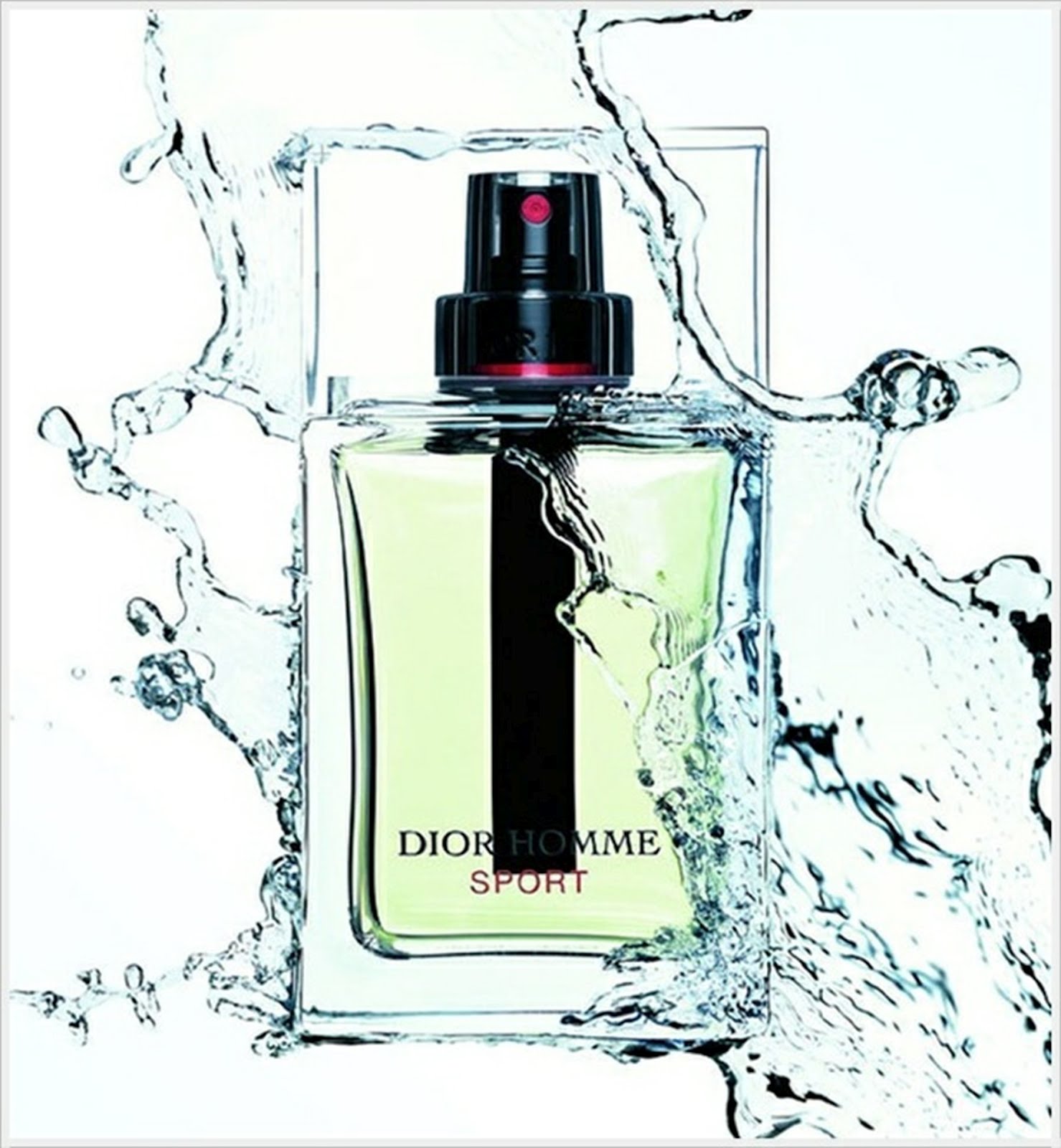
Dior Homme Sport (Dior)

I grew up in the 1980s and '90s. I'm not opposed to fresh fragrances - they defined the era in which I lived as a young person, and were instrumental to everyone but me getting laid in high school. Oh, it's okay, I've managed since my teenage years, but at this point smelling fresh isn't what gets me the girls. Personality and spiritual connections are what bond me to women at this stage of my life. I know that sounds cheesy, but what can I say? I've matured. Somewhat.

People in the perfume blogosphere seem to forget that not everyone is in their 20s and 30s. Not all perfumes are for fully mature adults. We have our sophisticated orientals, vetivers, and citrus chypres. We wetshavers have our woodsy fougères; the ladies enjoy floral arrangements and smooth vanilla orientals, ala Shalimar. But these things don't exactly appeal to 16, 17, and 18 year-olds. That 20 year-old college guy who mows lawns in the summer isn't saving up for a bottle of Oud Ispahan. The notion that a guy could wear something rose-flavored hasn't entered his mind yet, and won't for another six or seven summers, if ever. With perfume, it's all about one thing: whatever attracts girls.


Christian Dior inflated this concept when his brand hired Edmond Roudnitska to create its citrus chypre masterpieces - Eau Sauvage is still wearable by pretty much anyone, at any age. But in the 1960s and '70s, women were attracted to men with cars. If you were the guy who rode his bike to McDonalds, you were pretty much in a long-term relationship with your right hand. In 2012, girls take cars for granted. Today's girls aren't impressed by your 1998 Mustang. They're impressed if you're cool. And smelling cool is a whole big part of the package.

Dior Homme Sport is very, very cool. It boasts a neon-yellow lemon note that smells both intensely artificial and remarkably refreshing. If you use your imagination, you may detect a slight edging of lime, before a pretty ginger pulls up and keeps pace with Sport's predominantly citrus body. After twenty minutes on skin, Sport becomes more herbal, with a muted grapefruit lending the freshness a hint of funk, and a shadow of sandalwood adding depth. Beyond these light, airy notes, Sport is simply clean, a bit loud, and very unsophisticated. There's a little rosemary, a little lemon balm, maybe a hint of mint. There's nothing memorable here.

But this fragrance isn't for adults. It's for the teenagers who save their after-school job money and visit the fragrance counter at Macy's twice a year. It's for the 18 year-old guy who has a crush on Lauren in homeroom, and dreams of getting to third base with her in the back of his 1998 Mustang. It's for all those girls who associate synthetic air-freshener fragrances with being "clean," and illogically connect "clean" to "sexy," because that's what The Hills taught them to think. Does this fragrance work as a fine perfume for a 30 year-old guy who wants a long-lasting, meaningful relationship with an intelligent and mature woman? Maybe, but he doesn't need it, he has Eau Sauvage, or even Diorella for that. Does it work for the kid making milkshakes at Denmo's? I hope so: we're incredibly cruel to male virgins in the Northeast.

6/21/12

Fahrenheit 32 (Dior)


Fahrenheit flankers always receive the same response from uninitiated fumeheads: a collective groan. Those who haven't tried them automatically feel they're going to suck, long before they make it to that mall tester. The reason is unclear, as Fahrenheit isn't an extremely popular fragrance anymore, and even in its hey-day was what I call a "Prequel Perfume", i.e. a stage-setter for better things to come. Jean-Louis Sieuzac and Maurice Roger created a sub-genre template for floral-musk chypres, one that infused postmodern design aesthetics into fresh, youthful, and seductive perfumes.

Fahrenheit 32 is the logical outcome of that. It's something that requires inquisitiveness and special consideration. What does its name mean? Why is the lettering in warm colors, and the packaging done up ice-cold? Is this an ice fragrance? A sport flanker? A sheer, piddling variation of its warm, dense progenitor? Something cold? Will it freeze my face off? What exactly can I expect from Fahrenheit 32?

As it turns out, not much of anything, and everything very much. It opens with a smooth rush of soapy orange blossom, tinged with sweetness beyond natural floralcy. There's also a muted citrus note darting between the aldehydes, providing F32 with much-needed snap. I'm interested because it smells amiable, pleasant, very clean and modern. After five minutes a sea change takes place; F32's heart is floral, but not crisply so - this is a sweet, gauzy, lipsticky approach that seems oddly out of place on a man's skin. I'm reminded of L'Artisan Parfumeur's Drole de Rose, as Dior uses the same sweetly powdered violet and blush rose accord, with honeysuckle culled from the original Fahrenheit. Ten minutes in and the florals have faded, leaving pink sweetness in their wake, and out comes rooty vetiver and vanilla as cool as ice cream, two notes perfectly balanced in the Pour un Homme de Caron/Green Valley/Habanita/Colors de Benetton tradition. I like it, but due to the syrupy floral interlude, wouldn't buy it. If someone gifted it to me, I'd seldom wear it.

Altogether a pleasant offering from Dior, but do test against the original, just to see if a truly avant-garde '80s honeysuckle composition from the same line is a better bet. I'll close by saying this: Fahrenheit 32 would make a terrific feminine perfume. Ladies, you really should give this one a try. It will hold its own against your lipstick florals.