Showing posts with label Nautica. Show all posts

9/9/23

Is Nautica Life a Bleu de Chanel Clone?


If you hop
on Fragrantica and read reviews for Nautica Life (2014), you'll find that a sizable number of them compare it to Bleu de Chanel (2010). I thought this was interesting, because there are a limited number of things that get compared to BdC, despite its being a resounding success. Unlike Drakkar Noir and Cool Water, Bleu hasn't been cloned to death, with only the occasional copycat appearing over the past thirteen years. 

Nautica is one of those slightly downmarket designer brands that had one massive success (Voyage) and countless minor "meh" frags that people buy as Christmas presents for cousins and nephews. All of them are "fresh" fragrances that are either blue or blue-grey in color, and they all tend to lean in the aquatic direction. I spotted a small bottle of Life on eBay for under fifteen dollars, so I purchased it, wondering if it was indeed a sleeper clone of BdC. But frankly, I'm more interested in if it isn't a clone at all, and is merely being misrepresented as one by clueless noses on Fragrantica. It's easy to say something smells like something else, but at some point you have to show receipts. 

When I received my bottle, it was an advertisement for cheapness. The outer plastic had peeled off the box, which was dented in one corner. The cap doesn't stay on the bottle, and the bottle has a minor leak around the atomizer. It's a solid glass bottle, which in itself isn't cheap, but between the drips and the useless cap, it feels every bit like a chintzy cheapo. The juice is a very light grey-blue, almost clear, and the vaporizer stem is shrouded in a material meant to resemble sailor's rope. I actually like that little touch. I gave it a couple of spritzes, and had to prime the atomizer, which meant it was genuinely new. What hit my skin was surprising, and I had to hunker down with this scent to understand it. 

The top notes are sea salt, lime, ginger, and sage. All of those notes are evident in the first minute. The salt effect is very pronounced, as is the sage, with the citrus and ginger elements secondary. Ten minutes later, it dries down to a base that smells a lot like the top, but with a distinctly woodier quality, slightly spicy, and ensconced in lingering sage, ginger, and salt. The saltiness alludes to a marine dimension, while the sage and ginger form a weirdly woody undercurrent that Nautica claims is "hinoki wood," a Japanese aromatic wood. None of this smells blatantly like Bleu de Chanel, but the more it dries down, the more I can smell the comparison. Still, I think Life is its own thing. 

My sense is that the pairing of ginger and dry woody notes is what spurs people to compare Life to Bleu, which also pairs ginger and woods. But the Chanel is a rich, multifaceted masterpiece, with discernible layers of vetiver, incense, cedar, labdanum, and patchouli. It smells vibrant and fresh, while also smoky and dry, with its material quality obvious, and its profile unmistakable. If I have to search for Bleu de Chanel in something, it doesn't smell like it. While Life does have a vaguely similar mating of camphoraceous ginger and dry wood, the stars of the show are salt and sage, both of which push through the strongest. Life is also far simpler, and its gentle waftings of herbs and residual sea salt are reminders that whoever put the scent together had the sense to keep it basic. 

Would I recommend Nautica Life to a fragrance aficionado? Probably not, but if the subject of inexpensive "quasi-aquatics" of the last fifteen years came up, I would mention it. Aquatics really hit their stride in the 2000s, with Bulgari's Aqua pour Homme setting the bar for what would be fifteen years of Bulgari wannabes, nearly all in the designer market, and most for under ten dollars an ounce. Things like Guess Man and Montblanc Starwalker were standard woody-fresh masculines of the era, all alluding to the aquatic, but without going full-bore into it (they contain "watery" notes). Life, coming later in the game, carries on that tradition, with obvious non-aquatic notes of herbs and woods, tinged with sea salt and bitter citrus, which in this case smells a bit sour, but sort of works. 

12/27/22

My (Very Late) Quick Take on the 2018 Guide


I was thumbing through Luca Turin and Tania Sanchez's Perfumes: The Guide 2018, and I was struck by a few oddities. What really leaps out at me is the fact that the review breakdown is pretty asymmetrical compared to their previous guides. The 2008 edition featured a fifty-fifty balance of reviews by both Turin and Sanchez, with nearly every review alternating between the two. This is also true of their 2009 update, which was the same book with some additional fragrances that were previously overlooked. 

The 2018 edition is 90% Luca Turin. Sanchez barely contributes, which suggests she wasn't as enthusiastic about diving headfirst into another perfume guide. The new book departs from its predecessors by focusing entirely on expensive niche fragrances, and if memory serves me, Sanchez's impressions in the previous books weren't all that snobby. One gets the sense that while Turin sneers at anything under $30 an ounce, Sanchez is open-minded and prone to enjoying something as long as it smells good. She wrote the greatest line I've ever read in perfume writing: "The great secret of the nonluxury perfumes is that the only allure they have for the buyer is their smell." 

Another interesting thing is that many of Turin's reviews in the 2018 book were pulled from his column for Vogue Arabia, so I wonder how much work Turin actually put into writing it. He tweaked his thoughts and editorialized at length, but it's unclear as to which reviews are exclusive to the book (I am not an avid reader of Vogue Arabia). 

Some things of interest to me:
  • Roja Dove is the new Creed. Turin rates every Roja Parfums entry as "routine," and says little else about them. Reading between these sparse lines, it seems he's annoyed by the brand's pretenses and its price-to-quality ratio. As with Creed, I wonder how much of his opinion is fueled by personal bias instead of an actual distaste for the perfumes. 
  • Turin makes an interesting observation about several niche brands and what he suspects are perfumes made by A.I. (Artificial Intelligence). He concludes that some of these newer fragrance lines, which smell "samey" and bland, are being formulated by computer algorithms instead of people, and he points out that most of them don't even smell finished. If true, this is disturbing. 
  • Inexplicably, Turin rates Kerosene frags highly. This poses a credibility problem, especially when considering his history of trashing Creed. I've only tried two Kerosene frags, and they were both so indescribably awful that I remain rueful about trying any others. To call them "amateur" would be an insult to amateur perfumers everywhere. Copper Skies is an unwearable blotch of terpenic foulness, and Creature was a degraded version of Crest toothpaste. I'd rather bathe in a vat of Love in White than wear a single spritz of Copper Skies. Reading Turin's reviews of this house were the biggest WTF moments.
  • Perfumery has become perfunctory. Edmond Roudnitska, great historical perfumer, has thirteen perfumes to his name, while Alberto Morillas has over four hundred. People are just churning them out these days, and it's impossible to see how this degree of output could be worth it. The perfumery explosion has proven to be a supernova, and when it started back in the 2000s, people had no idea that it would continue into the twenties unabated. At this point the question of "newness" is worth a look, because how much of what we smell is innovative and interesting and not superfluous and conformist? 
Ultimately this new Guide is as fun to read as it is well-written, and I appreciate the new edition to my library. But I go forth wondering how much of what I've read is honest opinion, and how much is Turin trying to steer the ship, so to speak. By uptalking Kerosene and browbeating Roja, is he attempting to persuade us into exploring indie micro-brands and dissuade us from buying from larger and flashier "luxe" houses? If so, why? The folks who like niche perfumes tend to enjoy both worlds. Me? I think that a good designer, especially a vintage designer, is probably leagues better than a new niche frag any day. 

12/11/22

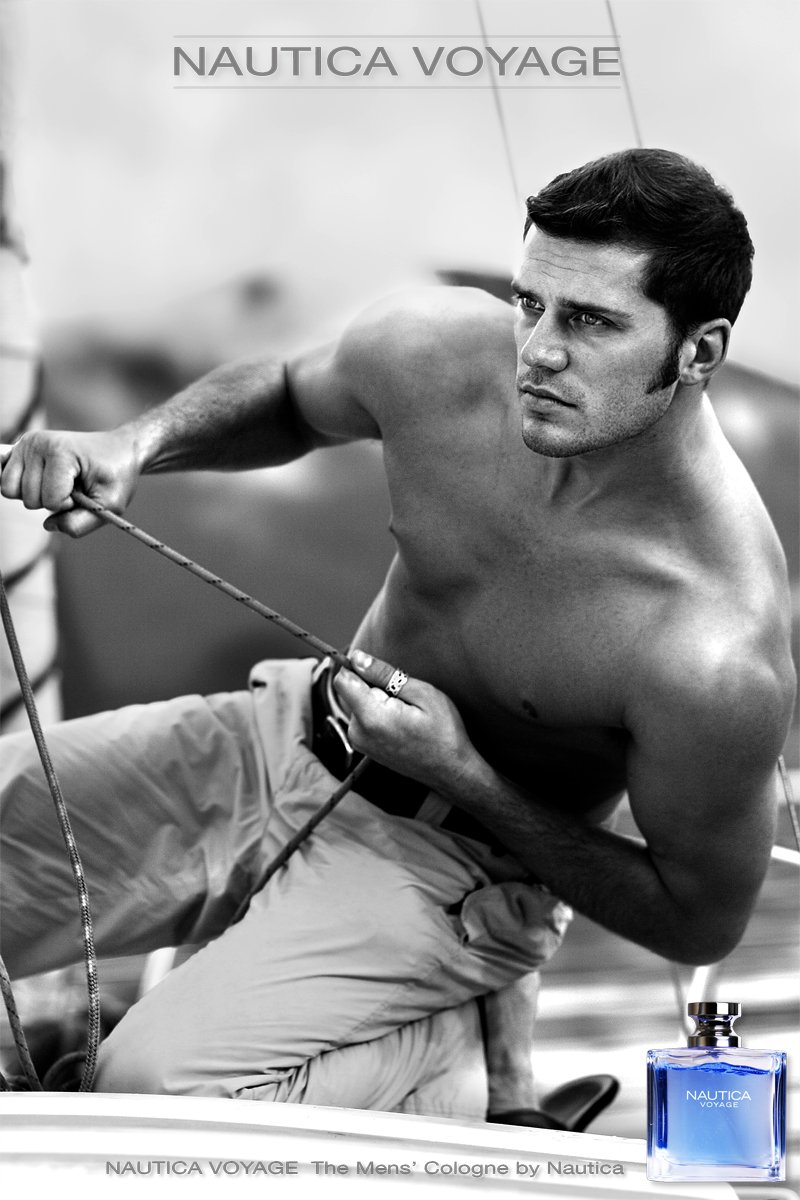
Revisiting Nautica Voyage After Ten Years


It's been ten years since I visited this one, and a lot has changed in that time. I used to think Nautica Voyage was a generic hum-drum thing, and to some degree my assessment hasn't changed. But there are degrees of prosaism, and Voyage inhabits a realm where ordinary components are made new again. Here Maurice Roucel's clever arrangement of pedestrian aroma chemicals resembles a grand floral aquatic fougère. 

The funniest review for Voyage on Fragrantica is written by "sebastiang071": "Amazing freshie for the price as long as you don't mind smelling like everyone's ex." And that's the trouble with run-of-the-mill aquatics. They usually wind up smelling more like someone instead of something. And what if that someone isn't so great? Do the unpleasant associations attributed to that person rub off on you? Can a fragrance steal your identity? Voyage has been worn to death in the last fifteen years, and at this point people will too-easily recognize its blustery array of aromatic florals and musks as a familiar trail through the sea of people. I recognize it as a thing, namely a rehash of Cool Water.

I get the same dihydromyrcenol twang, with a very similar cold-pressed bouquet of lavender, neroli, muguet, jasmine, and violet, intermingled with green apple and hints of woodiness, a requisite in a masculine. This wasn't novel in 2006, but it took the Cool Water model a few steps further into Millennial gender-bender territory. Roucel's use of crisp cucumber and sea-salty aquatic notes served to push and pull the corners of mediocrity into something that resembles "interesting." Luca Turin labels Voyage as a "floral masculine," presumably because there are recognizable florals filtered through its aquatic haze, but I struggle with the idea that it is unusually floral. Sure, it has florals, but with such a basic dihydromyrcenol accord undergirding everything, what else should anyone expect from this? It isn't going to be an earthy-woody patchouli, a spicy oriental, or a rugged chypre, so all that's left are fruity-floral and watery tones.

I'd recommend Nautica Voyage to anyone who laments Coty's reformulation of Cool Water. Roucel picked up where Bourdon left off, and used a bright cucumber note to make this segue. Cucumber notes were once unconventional, but now they're pretty commonplace, varying from smelling semi-sweet to sour-green. Voyage uses the former approach (see Paris Hilton for Men for the latter), but I like how it adds a touch of beachside highball cooler to its sea-side atmosphere. 

10/15/17

Nautica Classic (Coty)


Fragrantica attributes twenty-one notes to the pyramid of this fragrance, yet when I smell it I get roughly three: synthetic citrus, synthetic woods, and white musk. One would argue that this makes the fragrance simple to the point of smelling "cheap," but I would counter with an impression of something stereotypically nineties in the post Drakkar and Cool Water style that led the industry from 1983 to 2003. Nautica Classic doesn't smell complex or original, but it smells good in a bland handsoap sort of way.

There are fragrances for "connoisseurs" of fragrance, and then there are EDTs that people just wear because they want to wear something. Think of job interviews, informal Friday night dinners with the in-laws, taking your children to weekend birthday parties (that require you to stay), and even just doing chores around the house in your blue jeans. In these cases you could reach for any fragrance, but if you reach for Clive Christian, Acqua di Parma, or Creed, you have more money than brains.

I am reminded of Drakkar Noir and Cool Water in the same way that Passion for Men reminds me of Old Spice. All the same basic elements of this fragrance type are there, but they're tweaked a bit differently, and the result is inferior to its template. I get a blast of hand-soapy lavender, window-cleaner citrus, and a touch of that dry, smoky pine and patchouli accord found in Drakkar, but this basic woody dihydromyrcenol effect is enveloped in an opaque (and sweet) Cool Watery cloud of fruity white musk.

On a side note, people are claiming that Coty reformulated this into utter swill. It's hard to imagine that any concern could take such an abject failure to be original and make it even less original. My super vague recollection of nineties Nautica matches what I smell today, and if sharp chemical citrus top notes and scratchy chemical sandalwood basenotes were rich Grey Flannelesque citrus and Creed-like sandalwood in the nineties, I stand corrected. I suspect though that this was just as boring then as it is now.