11/18/11

Acqua di Giò (Giorgio Armani)


Just to summarize things, the prior posts are about Millésime Impérial by Creed and Unbound for Men by Halston, both of which lead up to Acqua di Giò, and all to illustrate one point: AdG is to Millésime Impérial what Cool Water is to Green Irish Tweed. Each are sets of popular designer clones and their niche originals. The difference between them is in spirit; Cool Water was the fresh fougère that defined the late 1980s, while Acqua di Giò was the fresh aquatic that defined the 1990s. Neither scent should have eclipsed their predecessors in the minds of perfume critics, but they have. Both scents are very good and likable on their own terms.

Smelling AdG is like smelling the fragrance arc of perfumery from 1990 to 1996, a period defined by this fragrance. But the nineties were stylistically divisible, with everything from 1996 to 1999 reflected by Chanel's Allure Homme, which is oddly a variant of none other than Cool Water. Allure's tonka-rich pegging point in the decade was 1995's super-sweet Le Male by Gaultier, a scent with resonance among its contemporaries. But sniffing AdG, one is pressed to find another match. Sniffing MI next to AdG yields an equally-bracing eau de cologne melon-citrus effect, with one flushing the sweetness of ambergris against a salty iris, and the other tempering cruder citruses and sweet jasmine against a base of cedar and musk. The use of fruits and white flowers in AdG is brilliant, and perfectly captures a feeling of warm Mediterranean sunshine. 

One can credit Armani with not intentionally over-exposing the AdG brand by strictly limiting its number of flankers. But really, how much more can one do with this theme? Successful aquatics inevitably spawn artless combinations of sweet fruits and flowers against salty and musky bases, with gallons of calone and Iso E Super carelessly employed to repeatedly deliver the same olfactory message. They wind up smelling generic, like soap and shampoo, and jade fans of the original into buying something else instead. Sometimes they even lead fans to blame the original for so many countless sub-par releases. It's a bad cycle to get into. I'm looking at you, Ck One.

11/16/11

Millésime Impérial (Creed)


Green Irish Tweed is one of Creed's biggest sellers; Millésime Impérial is (historically speaking) their second megahit, with a marginally smaller audience. Unlike GIT, MI does nothing for me personally, but I respect it as being arguably the most important fragrance in the history of masculine perfumery, and for one reason only - it spurred the release of Acqua di Gio. This alone means very little in the artistic sense, but on a commercial scale it's huge. For reasons that elude meaningful analysis, AdG remains the No.1 best-selling men's EDT in America, and a massive success around the world.

It's no wonder that Olivier and Erwin have snooty attitudes. Their brand is reviled across fragrance forums by every Tom, Dick, and Harry, subjected to countless slights, and labeled the "Gillette of niche perfumery." Meanwhile, two of Creed's contemporary releases spawned game-changing imitations. Luca Turin fawns in five-star fashion over Cool Water, and reluctantly shrugs four stars on GIT. AdG gets less praise, but also less attitude than MI. Generally speaking, GIT and MI are outdated fragrances with limited mass appeal at their price point. But if I were Olivier or Erwin, I'd continue raising prices out of spite. Maybe by whittling their customer demographic down with exorbitant fees, the haters will abandon ship. These perfumes deserve a little more respect.

Millésime Impérial is one of my least favorite Creeds, although this was the case before I even smelled it. The whole melony-aquatic thing does nothing for me. It's conceptually boring. Perhaps I'm jaded by the armies of fruity-fresh shampoos, body washes, bar soaps, deodorants, aftershaves, laundry detergents, window cleaning solutions, dishwashing tabs, bathroom air-fresheners, reed diffusers, Yankee candles, and "body mists" (whatever those are). I went to high school in the '90s and wore Tommy for two years straight - I don't need sweet and fruity aromatics anymore. Quality it may be, but Millésime Impérial is an unnecessary fragrance as far as I'm concerned.

11/15/11

Unbound for Men (Halston)


Before I set about reviewing Creed Millésime Impérial and Acqua di Gio, I think it's a good idea for me to familiarize you, should you need familiarizing, with the dirty little secret about these scents: Unbound for Men is the truest clone of Acqua di Gio, which is the truest clone of Millésime Impérial. Therefore, Unbound is the best choice for cash-strapped 22-year old skirt-chasers. Unfortunately, 99% of the aquatic audience are cash-strapped 22 year-old skirt-chasers, making Unbound the most useful and culturally prescient brine-themed scent. I say "unfortunately" because Millésime Impérial is more beautiful, and Acqua di Gio is more appealing, so most youngsters will miss out on this scent. Ideally, in a perfect world, 22 yr-olds could shake their Bens for 8 oz flacons of Millésime Impérial, and use them to their sexual advantage until they turn 30. I must pinch myself now and remember that this is not, contrary to what my daydreams tell me, a perfect world.

But it's good enough, thanks to Halston's cloning apparatus. An unlikely company to successfully pull off an aquatic copy, Halston somehow roped the market with their original Unbound for women, and then translated the scent into a remarkable doppelganger of AdG. At $20 for a 3.4 oz bottle, you can't go wrong. I'm the sort of person who doesn't want to spend much on aquatics, so if I can find one that does what it's supposed to for under $50, I'm happy. Unbound ticks those boxes, and - surprise surprise - smells expensive. Many aquatics employ calone as a fresh burst of heavy fruitiness which penetrates the scent's entire lifespan before degrading into a hollow white musk. The members of the board seem to think that if it smells fruity and "fresh," it's an aquatic. Uhhh, no. A proper aquatic employs truly aquatic accords, namely notes of salt, any variation of weedy brine, wildflowers, spices, and something green for balance. There should be an impression of catching misty sea air on the bow of a sailboat, with glimpses of shoreline peeking over the whitecaps. Unbound gives this impression with minimal effort, and the sort of panache found in fragrances five times its cost.

It opens with a well-blended lime, an odd juniper note, and tomato leaf. The tomato leaf dominates, and grows stronger as the scent dries down, but the juniper, presumably the "Bombay Sapphire Gin" accord listed on basenotes, is intriguing. It smells wet and hazy, like it's wafting over high tide. The top threatens to fall flat, but this note saves it and adds significant punch to the salty greenness that follows. Eventually the tomato leaf blares past a polite arrangement of pink pepper and sage, with the latter slowly trumping the former as everything moves into the drydown. The woody base doesn't try to be intense and super-masculine, but instead opts for transparency. It smells realistic, dry, and full of salted timbres. The juniper remains prominent, and I almost feel a piney aspect to the drydown, which I think puts it above that of Acqua di Gio. I really enjoy Unbound, and can respect how it develops because it doesn't do the usual thing. It stays true to its concept - sailing unfettered across salt water - while holding the integrity of each individual note.

Oddly enough, I have problems with Millésime Impérial and Acqua di Gio that I don't have with Unbound. MI is awfully headstrong for a Creed, and its heavy iris/melon top notes pierce its delicate salty ambergris base. It's beautiful, but headache material for me. AdG smells good, but I find myself wishing it were greener. It has the potential to be, yet never goes there. Unbound is neither cloying, nor lacking in greens, and illuminates the essence of being seabound as deftly as it conveys the sensation of being free.

11/14/11

Fahrenheit (Dior)


If you're a man's man, then wearing Fahrenheit is redundant to you, as you would already smell of motor oil and freshly cut grass. If you're a woman, wearing Fahrenheit would make you the sexiest woman alive. Fahrenheit, like Grey Flannel, was a fragrance that I put off trying for a long time. I felt it was right there with Cool Water and Polo as one of those "blah" scents, the kind you've smelled a million times on a million people over the course of millions of parties, pow-wows, and Pinot Noir tastings. Well okay, maybe not Pino Noir tastings. But you get the idea.

Jean-Louis Sieuzac and Maurice Roger's composition is unique; Fahrenheit opens with a highly-concentrated mixture of violet leaf, hawthorn, and honeysuckle, so condensed as to make the accord seem propellent. Gradually the floral notes drift apart, fleshing out gentle intricacies of bergamot, carnation, and patchouli, all very fresh and delicate. As green meets clean, its oily top-note slips behind a sweet violet and honeysuckle, which eventually merge on a light base of sandalwood and benzoin. The effect is one of freshly-cut grass, including oil-stained clumps from the lawnmower bag. It's this lingering petrol note that seals Fahrenheit's masculinity and wins it fame. 

Grey Flannel is considered by some to be the inspiration for Fahrenheit, and there are some similarities, notably in the use of violet leaf. To my nose, Grey Flannel is an essay on citrus, violet leaf, and oakmoss, while Fahrenheit is a more modern interpretation of mossy greens, violet leaf, and honeysuckle. Its green sweetness is attributable to several flowers, some of which are invented synthetics, but the drydown of honeysuckle, tinged with spicy carnation and sandalwood, sets Fahrenheit apart. Its warmth is its greatest asset, and ironically is what makes it a little less attractive to me. I personally prefer the aloof chill of Grey Flannel, but Fahrenheit is still a great fragrance. 

11/13/11

Red for Men (Giorgio Beverly Hills)

This fragrance seems to polarize its audience. You either love it or hate it, with most loving it. It's classified as a leather, but the scent defies labels. Those who are hellbent on categorizing it call it a hybrid aromatic fougère and woody oriental, but I think it's an aromatic fougere with hints of orientalism. Having refreshed my nose on this scent, I realize that the fougere-like aspects of it are more prominent than I thought. There's an odd minty-fresh element paired with woody spices that gives it a more fern-like appeal. If it is a hybrid aromatic/woody oriental, it's a very subtle one. 

Red opens with a very sweet burst of rose and artemisia. This accord is darkened by a subdued cumin, and blended seamlessly into a heart of juniper, dewy jasmine, peppery carnation, and oakmoss. Sometimes I catch a whiff of mint, but it's fleeting if it's there at all. I read on forums about how synthetic Red smells, but I'm inclined to disagree - I can pick apart the juniper, jasmine, and carnation pretty easily. The jasmine lends sweetness to an otherwise-spicy moss scent. The blending here is impeccable, and makes it tricky to identify everything, but that's obviously intentional. Red conveys a smoothness that few other masculine orientals of the nineties ever employed. 

Nowadays Red is more curiosity than perfume - the smoky, jazzy-cool aura of America in 1991 is long gone. Part eighties leftover, part nineties haruspex, Red occupies a rare no-man's land of masculine perfumery, the great divide between Reagan-era powerhouses and Clintonian air-kisses. It's a testament to how wearing a perfume is often a truly nostalgia-inducing experience! 

11/12/11

4711 (Mäurer & Wirtz)


On basenotes, a presumably-German critic who goes by the_good_life writes:
"I can't believe serious perfume lovers like this. To Germans it rightfully embodies the epitome of cheaply synthetic drugstore granny cologne. It's agressively sharp, short-lived and tacky and does not hold a stick to a genuine, natural-ingredient Eau de Cologne by Roger et Gallet, Berdoues, or, to stay in Cologne, the original Kölnisch Wasser by Farina. Btw. if you forget about the 4711 myths for a moment - its originator was a speculator and conman who sold it as a cheap imitation of the original Farina cologne under the same name. After decade-long court battles the company had to give up the name Farina and switched to 4711 in the 1880s. The story about the monk's gift of 4711 at Muehlen's wedding and the French officer writing the house number 4711 on the wall are PR-poppycock. To all connaisseurs of perfume I can only say: next time you're in Cologne, avoid the 4711 tourist trap and check out Farina, who are still in business (since 1709)"
Mr. Good Life's criticism is the perfect distillation of many critiques of this cologne. He has gut checked many 4711 and Creed enthusiasts in the past, and seems to know an awful lot about the history of both brands. I won't delve into the question of how he could possibly know 4711's stories are "PR-poppycock." My problem with his analysis is twofold: (1) it's based on facts according to Farina, and (2) 4711 actually smells good.

Regarding the first point, Farina goes into an extensive historical summary on its vendor site, chronicling the invention of its cologne, its impact on Renaissance Europe, and the rise and fall of its many plagiarists. Regarding the plagiarists, their site states (translated from German):
"In 1804, William Mülhens bought one license of a pseudonym for Farina. Thus began the Farina inflation. Its plagiarists mushroomed from the ground. FARINA and COLOGNE were names forfeited to the obscure copycat practices of insolvent companies. It would take too long to name everyone who has risen and gone. Individuals are singled out here: Wilhelm Mülhens' actions were speculative, and initially sold under "Farina, Franz-business", although it was not clear where he pulled his [trademark] permission. In any case, the inflation caused by "Farina, Franz-company" brought trouble and processes for Mülhens and Farina."
So in short, William Mülhens came along at the turn of the century and stole the names "Farina" and "cologne" (even though cologne is the name of a German city and cannot be stolen). Why he bothered using the Farina name is anyone's guess, but apparently his venture was purely speculative and based on profiting from the success of Farina's cologne. But Farina goes further:
"Mülhens' buyers were quite the opposite of Johann Maria Farina Jülichsplatz's. Modern chemistry made low-cost production possible, and "4711" took over the market when the second World War was underway. Cheap refreshment water took a disastrous turn and Cologne, once a city of fine fragrances, became a synonym for "cheap." The Mülhens family sold their company in 1994, Wella AG in Darmstadt, which was re-acquired in 2004 by the American company Procter & Gamble laundry detergent.

But we come back to the "Farina". . . "
And the eye rolling begins. According to Farina, Mülhens' customers were the hoi polloi, while Farina's were implicitly genteel. 4711's big break happened sometime during WWII, and their success cheapened the entire concept of cologne water, which was disastrous for the city and the industry. Eventually the 4711 brand was sold to Proctor & Gamble's laundry detergent division, which placed the cologne on Tesco's store shelves next to bottles of Tide and Gain. Puh-leese.

It is true that P&G licensed the 4711 brand for a while, and were its sole purveyors until 2006, when it was sold to Mäurer & Wirtz, a subsidiary of the Dalli Group. These are hard facts. The other facts . . . not so hard. Cheesecloth-soft, in fact. Farina overreaches in its account; not content to simply mention the old legal tussle between Mülhens and Farina over the brand name (which was probably not well-protected to begin with), and the labeling of "cologne" (not protected at all), the site goes to the trouble of parsing through which of the two brands was more prestigious, while carefully negating the overwhelming success of its competitor, calling it cheap and disastrous to the industry as a whole. 

This logic is incontinent and in pretty bad taste, if you ask me. 4711's success was arguably disastrous for Farina's monopolization of the cologne industry, not the industry itself. There's an obvious difference.


Then there's the_good_life's opinion, quoted here because I've tried Roger & Gallet's eau de cologne, and disagree with his assessment - it's unremarkable at best. In fact, it's much lighter and more evanescent than 4711. I know colognes are light by nature, but I want to get at least thirty minutes out of one, and with Roger & Gallet's I only got five. Both colognes smell nice, but 4711 wins me over.

Germans must be sick of the stuff. I can only imagine being a young German guy and smelling it on every woman over 65. Seeing it in back alley window displays everywhere. The general impression must be that it's commonplace and overrated. It may be commonplace, but that doesn't really mean it's overrated. 4711 opens with a very herbal and spiky citrus arrangement of lemon, bergamot, lime, the tiniest dash of orange, petitgrain, neroli, and basil. 

There's a very well-blended rose note supporting the acidic fruitiness, one that trends further green than red. It's like young rose petals were briefly soaked in the tonic and then removed. Rosemary keeps the bitter herbal essence alive well into its clean dry-down. I get nothing sharp, egregiously short-lived, or tacky out of it. But that's just my nose.

My beautifully-massive 27-ounce bottle is almost empty, and I know I'll repurchase when I've used the last of it. It comes in handy during summertime, especially when I'm not feeling aquatic florals and vetivers. It's also useful after work. I teach mentally impaired children, and one in particular has a habit of scratching my arms up. I occasionally douse the cuts in 4711, which eliminates any leftover germs and saliva odors.

4711 doesn't get a fair shake these days, and that's a shame. It is, in my opinion, a victim of its success. It's doing something right, though. There's a reason it's been around this long, and it ain't by smelling like cheap junk.

11/11/11

Joop! Homme (Joop!)


What to make of Joop! Homme . . . let's see here. It's an eighties megahit. It joins Cool Water, Drakkar Noir, and Obsession as one of those Ultimate Men's Fragrances of the last thirty years. It is bold, aggressive, and a little obscene. An oriental coated in Ranier maraschino cherry sauce. There's a decadent quality to Joop! that transcends the oriental genre of the eighties, and moves into a territory of its own. It conjures memories of a Python-wielding Christian Slater from the movie Heathers. This guy might be all charm on the outside, but there's something waaaaay serious going on under the facade.

Meanwhile, the tagline is Real Men Wear Pink. This is obviously something that came from Europe, as no American guy would buy it. Indeed, the Old World sees sales of Joop! regularly through the roof, which keeps it alive in overseas markets, including ours here in the States. In New England it's a curiosity worn mostly by older men and black youths. Guys in their early forties remember when it was new and cling to it; hip-hoppers clubbing at midnight appreciate that it projects for miles and rubs onto lingerie and car seats. This stuff is a territory marker. It's possibly the strongest masculine scent ever produced.

Never has packaging been more fitting for a fragrance than it is for Joop! Homme. It smells pink. The juice is purply-pink (and gets darker as it ages). It isn't often that I say this, but I'm glad I purchased this old, ultra-sweet oriental today. I've been reminiscing about the eternal sugar of Joop! Homme lately, and had to snatch up a cheap bottle (with matching aftershave). Yeah it's synthetic, and yeah it's going to wear me, but everyone needs at least one frag like that in their collection. I used to think I hated Joop!, but now that I understand that I simply wasn't in touch with my inner pink.

11/10/11

Obsession for Men & Obsession Night for Men (Calvin Klein)


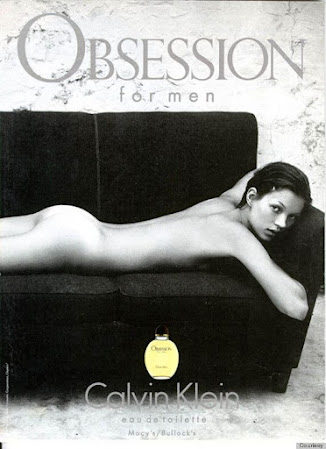
Something about Obsession for Men appeals to my dark side. Perhaps because it's named after something in the DSM, or those weirdo '80s commercials successfully worked their subliminal magic, but this "cheap oriental" is noteworthy. I only know the original formula (still have a 25 yr-old splash bottle), and cannot comment on its current incarnation, but the classic stuff made a lasting impression. Bob Slattery should be applauded for his one and only masculine fragrance contribution. 

Obsession for Men is, in my opinion, the only serious and "mature" masculine scent released by this company. Forget your Eternities (the flankers for which go on eternally), your Escapes, and your Truths. Obsession is the everyman oriental of the eighties. It has sex appeal in spades, particularly if you consider the breadth of its popularity. Its simple arrangement of herbs and spices, flushed with citrus and based on a familiarly warm amber, feels distinctly formal at first. Eventually it dries into a eugenol-fueled soapy cleanness that projects for miles and lasts for days. Obsession is like Old Spice on steroids. It isn't high art, but it has a manly aura I can appreciate. 

As for Obsession Night for Men . . .


. . . Well, things didn't quite work out they way I wanted them to. The concept is fair enough: take lemon, grapefruit, pear, and other fruity, apple-like esters; weld everything to cardamom, suede, a dollop of patchouli, inedible vanilla. Sounds nice enough, but it falls flat, and I don't know why. I'm tempted to blame the listlessness on a common issue with CK scents - their poor longevity. Obsession Night goes strong for all of twenty minutes before dropping like a sack of potatoes into the skin-scent abyss.

Another problem is that Obsession Night bears no relation to the original Obsession. Orientals automatically lend themselves to being "night" scents. One supposes a little darkening of the formula, with added spices and some burnt sugar, is enough tweaking to yield a whole new beast. Evidently the boardroom suits had their way and voted for the "safe" and genuinely cheap (not Luca Turin's cheap) formula. I don't mean to suggest that it smells bad - quite the opposite, actually. Obsession Night for Men is a very nice scent, a postmodern leather with a pleasantly fruity personality. But it doesn't smell sturdy, or serious, or like anything I enjoy in the original perfume. 

11/9/11

Rose Barbare (Guerlain)


Francis Kurkdjian is a very talented man. His range is amazing, yielding a portfolio with everything from Dior's coveted Eau Noire to Arden's easy-going Green Tea. The man also authored Le Male and flanker Fleur du Male, Acqua di Parma's magnificent Iris Nobile, and the notorious Grey Flannel clone Narciso Rodriguez for Him. In the early 2000s Guerlain commissioned him for their L'Art et la Matiere line, a series of perfumes based on different raw materials. His entry was none other than 2005's Rose Barbare.

His rendition of rose offers a smooth and well-rounded flower, dripping with honey and tempered by woody notes. I particularly enjoy how the woods fuse with the sweet rose and create a low-key, romantic, and genderless fragrance. It isn't particularly complicated, but this scent is the result of masterful craftsmanship. Thus far, after wearing several terrific rose perfumes and contemplating their strengths and drawbacks, Rose Barbare is my categorical favorite. The richness of the rose and sweetness of the honey and spiced amber is simply decadent, truly a work of olfactory art.

I haven't smelled them, but I'm fairly certain the rest of the L'Art lineup wouldn't move me. Cruel Gardenia reads like a poignant and modern white floral; Tonka Imperiale sounds like a redundant relative of Chanel's Allure Homme; Iris Ganache reminds me of how little I like white chocolate. Good thing I tried this one - it's feast or famine when it comes to Guerlain. Let's face it, this house isn't breaking new ground anymore. 

11/8/11

Green Water (Jacques Fath)


Some products are meant to be used in tandem with each other. I find this to be true mostly with colognes, as they're usually too weak to last very long on their own. A good shower with body gel conditions skin to support and project a matching eau de cologne. Green Water is the definition of something that needs total product-line deployment to achieve maximum effect.

Sadly, that's not really enough to exonerate Green Water's eau de toilette. I expect a composition to stand alone on its own merits, without a supporting cast. And Green Water isn't capable of it. The unripe citrus and refreshingly-minty herbal mix has a very fleeting eau de cologne feel, with abysmal longevity and zero projection. There's a burst of clean and bitter greenness, all awash in lemon, which evaporates into a hint of oakmoss and sour synthetic musk. I love the greenness, and its unique composition - when I can smell it. But the longevity and projection issues really kill the whole experience.

Despite its problems, Green Water still feels like a plus to me, if only for being another classic green cologne that's still in production and semi-available. I'm so absurdly addicted to green scents that I wouldn't rule out wearing Green Water, and I get a kick out of the nostalgia factor. People rhapsodize over Green Irish Tweed and how Cary Grant sported it back in the old days, but I figure it's far more likely that he wore the original formulation of Green Water. It's something to try if you're a green lover like me, and even better if your accoutrement is an Irish tweed suit.

11/7/11

Intuition (Estée Lauder)


Here's an equation all perfume lovers will recognize: Estée Lauder = Quality²

Thus far every scent by Lauder has been a quality product, with some better than others of course. The compositions are well arranged, notes usually crystal clear, and ambiance rarely lacking. Even the losers (Dazzling Gold for one) aren't really all that bad, considering what else is out there. They ooze class, even when they're oozing other things, too.

I recently happened across a mini and gave it a whirl. My test notes reflect something very rare - Intuition is extremely difficult for me to classify. I'm tempted to say it's an oriental; the spicy density of the scent definitely begs for judicious application, and preferably not at work. Meanwhile, there's a mossy greenness, a bitter chypre structure, floral and dewy notes grafted to the spices. Parsing my notes further, I see I've written the following sentence: There's certainly more to the name than just a word - the warmth of the oriental accords suggest the dregs of winter, while the greenery that sparkles within implies an unforeseen knowledge of coming change. In other words, and if I may reiterate myself here, this perfume intuits a change of seasons by straddling the best of both worlds.

The EDP opens with chilled grapefruit and bergamot. It's a good beginning to a green perfume. These notes, particularly the bergamot, are analogs of unripe or semi-ripe fruit, and have a vague greenness to them. A darker interpretation of gardenia and spicy carnation prickles through the evaporated citrus, but soon (as in within ten minutes) is tempered by sage and cool freesia. There are mysterious floral notes fluttering in this scent's breeze, but I'm not really sure what they are. I suppose one could say they're just hints of wildflowers. In the end the season goes coastal, and a mild ambergris, meticulously blended with remnants of all the floral notes, warms the base. It's complex, strong, a little astringent, a little cluttered, very spicy, yet breezy and clean. It's lovely stuff.

The oriental aspect of Intuition makes it suitable for men to wear, and I'm realizing as I try them that well-made orientals are generally unisex, despite any marketing to the contrary. However, the floral arrangement is perfect for a strong and independent woman, albeit a mature one. I see this working for the over-30 set. Anyone younger might want to consider trying Pleasures instead. I'm not as enamored with Pleasures, but I'll get to that in another review. Intuition says "I'm smart, easy-going, but serious about life." It's a simple message, conveyed in an ornately suggestive perfume. In short, it's a concise scent for winter wear, and it keeps spring within arm's reach.