11/2/12

Al-Rehab "Silver" Alcohol-Free Concentrated Perfume Oil (Crown Perfumes)


If Creed could be said to operate on the law of negative returns, then Al-Rehab, which is a trademark of Crown Perfumes, operates on bending the laws of all known returns, much as a high-quality prism bends and refracts the dullness of white light into a full-color spectrum. The feat of their magnificence isn't recognized in the quality of their products, but rather in what they charge for them: next to nothing. It's more expensive to purchase a bottle of Aqua Velva at Walmart than to buy a 6 ml roll-on of Al-Rehab perfume oil. With Aqua Velva, you get what you pay for, and not less. With Al-Rehab, you get more. Much, much more.

What amuses me to no end on internet fragrance forums is the collective need to "cheat Creed." People are always looking for a way around dropping hundreds of dollars on a Creed perfume, and they usually do it by finding a designer scent that duplicates the overall scent profile of a Creed at a lower cost. An obvious example of this is the Cool Water/Green Irish Tweed situation. Mont Blanc's Individuel has been accused on more than one occasion of being exactly the same as Original Santal. Paco Rabanne XS is, by many accounts, a better deal than Himalaya. And Mugler Cologne has no business being copied by Original Vetiver.

People's preferences are their own, and far be it from me to tell anyone what to like and not like (I review fragrances on the assumption that anyone bothering to read me cares what I think); we can only wear what we enjoy, and avoid what we don't. But it's pointless to kid one's self into believing a designer (or inexpensive niche) frag is capable of matching a Creed in quality and complexity. Even if its pyramid is fuller than the Creed's (Cool Water against GIT again), the quality of ingredients in Creed perfumes are such that individual aroma chemicals are multi-faceted, yielding their own vague "off" notes, their own facets. The depth of their compositions is not easy to match.

Many in the internet community of fragrance lovers find Al-Rehab Silver to be a dead-ringer for Silver Mountain Water, and it's very interesting because the believers are even more ardent than any of the staunchest Cool Water and Individuel fans. They don't think this smells "like" SMW - they think it smells EXACTLY like SMW. Any difference is negligible, detectable to only the most acutely sensitive nose. To quibble with the usual Creed sticker shock is criminal in the face of Al-Rehab Silver's existence, or so they suggest. This is, by many accounts, a surefire replacement for Olivier's signature scent. Look no further to smell like a Creedie.

How do I feel about all this? What do I think of the comparison? More to the point, what do I think about Al-Rehab Silver? I think the whole thing is a little overblown, but I say a little, not a lot. Quality of ingredients is not quite up to par with Creed (their Givaudan cassis-tea accord is far from easy to duplicate), and complexity is lacking, as Silver is rather linear, and SMW is not. That said, the quality of ingredients is nevertheless shockingly high, given what it costs for a 6 ml roll-on perfume oil. Three dollars? This is amazing. You could go tens times higher and still have room for price-gouging. Silver smells vibrant, alive, multi-dimensional, especially in its first five minutes on skin. I don't know how they did it, and more to the point, I don't know how they did it with inexpensive synthetics, but it's no small feat of technical wizardry, that's for sure.

How to compare? SMW opens with a crisp 7-Up citrus pop, bolstered by sweet blackcurrant and a bitter mineral/metallic accord. Depending on batch, it can either smell very citrusy and tea-forward, or very sweet and berry-strong. Eventually, SMW's synthetic element, that cold metallic thing, begins to separate into more decipherable components, yielding notes of mint, musk, petit grain, neroli, sandalwood, and ambergris. Blackcurrant stays the course, but gets very dark and "inky" before fading away. The fragrance remains sheer, sparkly, and fresh for the duration of its lifespan. It's pleasant and unique at all times, and there isn't a whole lot out there that aptly compares to it.

Al-Rehab's take is nearly identical for about five minutes. The top is a magnificent dance of lemon, blackcurrant, tea, and something metallic and redolent of hairspray. It's criminally close to SMW for this limited period of time, and all the better for it. Once that first pop subsides, things become significantly less remarkable, and diverge greatly from the Creed. The blackcurrant strengthens, nearly eclipsing the tea and the metal, and becomes almost cloyingly sweet, although it never quite crosses the line. For a good three hours, there's isn't much else to be had. If you're not wild about blackcurrant, you're not going to love this. Fortunately the tea note is just strong enough to balance things, and the metallic vibe fades in and out during the drydown, reminding me of the unique and indescribably modern characteristics to this type of fragrance.

Hints of sweet musk, just a little skanky, and the vaguest hint of jasmine accompany the far drydown, and to Silver's credit it remains fresh and well-made to the very end. If you're someone who appreciates this scent profile (Tommy Girl by Hilfiger is yet another option), but don't want to commit to something as egregiously expensive as Silver Mountain Water, then Al-Rehab's concentrated oil is the way to go. Aside from SMW, it does not get any better than this, and since SMW isn't a hugely popular fragrance, those who smell Silver on you won't have a clue that you're sporting a Creed clone. You're doing everyone a favor by sporting a great one. And if you insist on considering perfume an art form, it bears mentioning that some of France's greatest art forgers command incredible levels of respect from critics and collectors alike, so there's not necessarily any shame in flagrant imitation.

But if you're someone who truly loves this kind of scent, appreciates all the fragrances that cover its territory, but still feel that only the best will do, Silver Mountain Water is, in the bitter end, still superior, and still worth the money. It has suffered from batch variations in recent years, and isn't quite as reliable as it used to be (am I getting more berries, or more tea this time?), but its design is flawless, its execution is unparalleled, and its originality is a trait that can never be taken away. Silver is what happens when a talented nose wishes to pay homage to such greatness without sacrificing the integrity of his product. While it's not exactly a winning battle, I can certainly respect the effort, and the end result.

11/1/12

Andy Warhol Lexington Avenue (Bond no.9)


Franco Scalamandré's "Zebras" wallpaper, seen in the iconic and now-defunct restaurant "Gino" on Lexington near Sixty-First Street.


This fragrance is one of the prettier things I've worn, tucked neatly between the usual designer fare and some better scents (Creed, Guerlain). Let me say this about Bond: their image is all that stands between me and fandom. I've heard all the horror stories about their lawyers ganging up on a poor little indie niche label for daring to use the apparently-trademarked word "peace" in a fragrance name. I've read the possibly-scurrilous accounts of Laurice Rahmé's allegedly racist ways with customers and employees (anyone need a light bulb changed?), although the word "hearsay" keeps popping into my head whenever I ponder these tales. It isn't their bad rep, but rather their entire design aesthetic that holds me at arm's length and prevents me from purchasing. The sometimes tacky names. The downright awful bottles. The gaudy colors. It's all a major turn-off.

In fairness, other brands are guilty of the same crimes. I mean, seriously now, Royal Water? Really? Doesn't get more vulgar than that, even for Creed. And Guerlain's bottles go down in history as some of the ugliest things ever placed within the immediate vicinity of Catherine Deneuve. I once saw a vintage container for Derby - two Tylenol and several eye drops later, I was still traumatized. So it's not like the external design sensibilities are an anomaly. One could reasonably argue that Bond's bottles are beautiful, or at least easy on the eyes. I'd agree that their shape isn't so bad, but still get queasy at the idea of a star-like thing showing up in my luggage. And the graphics are generally abysmal. Lexington Avenue's "boots 'n shoes" theme is no exception. This isn't class, this isn't style, this isn't chic. This is just wrong.

Fortunately, the fragrance is oh-so right. It opens with a lovely lemon-citrus accord, which swiftly shimmers into crisp star anise and cypress, a sweet, camphoraceous, green, and utterly delightful feeling. They maxed out the budget on those top notes, allowing for natural materials and top-shelf synthetics to provide extra "pop" and depth. This simple two-note opening gradually melts into a warm and spicy patchouli heart, full of pink pepper's fruitiness, cardamom's zinginess, an amber touched by fleeting hints of peach and vanilla. Different people smell it all differently, and come away with various interpretations, but I smell the archetypical Christmas candle here. Even after it fades into a soft melange of precious woods, Lexington feels rich and cozy. Applied judiciously, and you get a sexy-by-the-fire come-hither effect. Overdose it, and you may as well wear the word Yankee somewhere on yourself and carry a wick. 

Despite the ingredient quality, the excellent note separation (all things accounted for, but working together successfully on the bigger picture), and the cheerful vibe, there's still something a tad off-pitch here. It's a bit too much, like the olfactory equivalent of Phil Spector's famous "Wall of Sound." If Creed did Lexingtin, it would smell a little more transparent, a touch weaker, and probably just a few hairs better. They'd likely use slightly better ingredients, or perhaps just fewer synthetics. If Guerlain did it, the citrus top would be more vibrant by a few shades. Still, it's good stuff, and something to look for when the holidays draw near, which they're doing as I write.

10/28/12

Amber (Prada)

Hurricane Sandy is almost upon us, and this may be my last blog post for a while as I wait for the restoration of internet and power to my area later this week. I’m hoping the storm isn’t as “perfect” as the ratings-hungry TV forecasters claim, and that perhaps we in Connecticut will be spared the worst of it. Unfortunately, it’s already quite windy outside, and the storm is still 500 miles away. This begs the question: how much windier will it get when it’s only 50 miles away? The outlook feels decidedly grim, with severe flood warnings blanketing the entire state. As Tom Petty once sang, “We’ve gotta get to a higher place.”

Ambery orientals, I’ve decided, are inherently unisex. Whether this has always been true or is a byproduct of the twenty-first century’s forgiving, multicultural zeitgeist, I’m not sure. But nowadays, it seems both men and women can wear them effortlessly. Floral orientals, and even some spicy orientals, can be trickier, but the smooth, warm, and diffuse nature of a well-crafted amber allows each gender its own interpretation of the genre. Prada’s Amber, for instance, is a solid contender: a thoroughly patchouli-amber-sandalwood composition that, while not groundbreaking, excels in affability and comes housed in a brilliant bottle. It bears a resemblance to Shalimar but with less citrus on top and a woodier base.

This isn’t to say Amber’s citrus notes are inferior. Its bergamot is bright and very pleasing. However, Shalimar’s citrus notes are unparalleled within the oriental category. From Amber’s citrus emerges a cool vanilla, grounded by earthy patchouli and transitioning into a woodsy-warm amber resting on a lush sandalwood foundation. While some detect prominent floral notes of ylang-ylang, jasmine, and rose, I experience none of these. Perhaps it’s a matter of skin chemistry. Either way, Prada Amber is a lovely little amber, well worth every penny.

10/25/12

Royall Muske (Royall Lyme Bermuda)


The brilliant post-Impressionist Paul Gauguin lived a fantastic life, full of contrasts, exotic adventure, and darkness. His biography could have been penned by Thor Heyerdahl, so packed is it with lusty exploits and read-it-to-believe-it failures of character, a true hooligan's daydream writ large. Whenever I stand before a Gauguin, I feel the Tahitian heat shimmering off the canvas, hear the island chatter in the air, unintelligible but still meaningful, and smell the naked skin of the native women wading in the rushes. 

The artist understood their allure; men are men, and they respond to natural pheromones secreted by skin (even through years of sand and salt), and palm-oiled hair. This human musk, commingling with spices, is sure to be intoxicating. Enough to stay away from civilization and slip into decadent obscurity, to die alone with little more than an unfinished winterscape of home on your easel.

When slipped into this context, the idea behind Royall Muske is uncomplicated but compelling, as it's just a sweet, nicely-rendered musk, with a faint touch of spice in the far periphery. It suffers a bit from excessive soapiness, especially in its first few minutes, and almost becomes a handsoap formula, but its balance and strong presence gives it a finer feel. The musk powders sweetly, clings to skin, and takes on a vague barbershop quality, before fading away. There isn't much complexity or movement beyond the one-step, but it smells good, and with the island allusions that accompany this brand, is capable of transporting the wearer to someplace southeast of wherever he may be. 

Don't wear Royall Muske as a serious signature cologne, but do give it a splash every now and then during the winter months, to relieve seasonal affective disorder. Following that thought, I'd say it also goes well with a Malibu bay breeze and a copy of Fatu Hiva.

10/21/12

360° Blue for Men (Perry Ellis)


Drakkar Noir is an incredibly underrated aromatic fougère that gets almost no air time on the blogosphere these days, but it's a very "serious" scent, all business and no fun, loaded with dark aromatics and a uniquely postmodern lavender note. This isn't the naturalistic lavender of older fougères like Caron's Pour un Homme, but rather a precursor to the synthetic, air-conditioned lavender of Cool Water (Green Irish Tweed contains linalool, but has no overt lavender note). It's a thick, chewy byproduct of a hybrid lavender called lavandin, which is made by the crossing of true lavender (Lavandula angustifolia) and Spike Lavender (Lavandula latifolia). Unlike lavender, lavandin contains excess traces of camphor, smells stronger, and is longer-lasting. Its use in Drakkar is quite good, and makes the scent.

360° Blue by Perry Ellis is a Drakkar redux, taking the leathery-pine snarl of Laroche's formula and taming it into a smoother and lighter effect. The good news is that it wisely emulates the specific hybridized lavender element of its precursor, and smells very fresh and purplish-blue. It's also cheap - you can snatch a 3.4 oz bottle of this stuff for under $15 if you peruse discounters like Marshalls (I thought I also saw it once at Tesco when I lived in Prague). This version of Drakkar lacks an evergreen bite, but still contains gentle suggestions of pine and various herbs. Accompanying the pervasive lavandin top is an admirable (but fleeting) rosemary note, and if you concentrate you can smell patchouli and vetiver, with hints of amber later on.

Now the bad news: 360° Blue does not smell quite as good as Drakkar Noir, plain and simple. It's lighter, and lacks the intensity characteristic of good old-school aromatics. There's a slightly chemical edge to the far drydown, hinting at low-grade synthetics, and even for a clone, longevity isn't very good, clocking in at around three hours. Projection is equally timid, and extra application does little to remedy the issue. If you like this sort of scent profile and want the no-holds barred original, get Drakkar instead. Laroche has lightened its formula, and there's no reason to go any lighter.

10/19/12

Inspiration (Lacoste)


The further one delves into fine fragrance, the closer he is to realizing that vanilla is an incredibly versatile note. It's useful as a "warming" element to accompany rich amber orientals, but also right at home in fresh bitter-green chypres. Today's variety of "hybrid" fragrances offers several unique variations on multiple scent genres, with "sheer-fruity orientals" as one of the subsets under more traditional products. Inspiration by Lacoste is a good scent to consider from that fruity-fresh realm, as it does a few things very nicely, and rounds everything in its wholesome package out with a fitting name (one could go the extra centimeter and joke the joke to say its name is 'inspiring').

Inspiration's top is chemical and sweet, but if you use your imagination you'll get "pink pepper" and "plum" out of it. What you'll sense overall is a sweeping vanilla note that arches over everything else like a rainbow. The fruity opening rapidly assembles itself into a bouquet of white flowers, with hints of orange and some sort of berry (synthetic pomegranate I guess), but the vanilla remains soft, maintaining Inspiration's friendly soul. At the far end of the drydown is a tentative sandalwood that competently upholds the silky texture of all that came before, adding depth to whatever orientalism there is. 

This isn't the sort of fragrance you spray on and immediately think of as an oriental. Its primary purpose seems to be to smell fruity and bright, and ineffably modern. It's hard to argue with the blinding florals and fruits as being commercial stabs at contemporary hipness. Ironically, its sweetness grounds it, preventing it from becoming air-headed and dull by providing soft contrast against crisper, colder things. I think whoever put this one together succeeded on that front, but more importantly they composed a mature oriental that smells good without demanding a tux or a ball gown to be enjoyed.

10/18/12

Amor Amor (Cacharel)


It's time to take a look at one of perfumery's unintentional "creepy" perfumes, this one by Cacharel. It's none other than Amor Amor, an off-beat fruity-floral that I suppose qualifies as some sort of "lipstick floral," due to the waxy sweetness it exhibits in its heart. Bearing in mind that perfumistas take a generally dim view of fruity-florals (it's hard to say exactly why), expectations were rather neutral when I tried this scent. I liked its suggestive red bulb-bottle, wondered a little at the bloody looking rose-like flower on the box, the gothic lettering, and in the seconds before that first spritz, figured I was probably in for a standard sweet 'n sour aquatic. And then I spritzed, and smelled, and took a few minutes to think about what was on my arm.

The scent bears little relation to its packaging, which seems rather disturbing and industrial, and instead opens up as an unabashed fruit salad, with sparkling notes of mandarin, apricot, and apple. It's fairly well done, very fresh and light, with identifiable components. Eventually it blends into a chewy-sweet cherry, with darker berry and rose elements. The rose is synthetic and shrill, but tamed by the one-track mind of a scent that does "red fruit notes" as exclusively as this. Here they jockey loudly for the role of soothsayer, rounding roughly-hewn chemical contours with emphasis, not apathy. 

At the tail end is a sheer vanilla base with a dollop of cheap musk. Obviously intended for young women, I can't help but think this would go well on a sixty-something woman whose body has forsaken the concept of time, and bestowed upon her the gift of eternal sexiness, but I'm just extrapolating known variables from subjective experience.

10/16/12

Brooks Brothers New York Gentleman (Interparfum)


There's a saying in the multi-generational world of rock 'n roll: "Better to hear a good song played badly, than a bad song played well." In the case of New York for Gentlemen, we're dealing with a mediocre song played very well, which cuts both ways for the smart wearer. But before getting into the fragrance directly, I'd just like to say, take a look at that gorgeous bottle. Someone mated bottles from Maitre Parfumeur et Gantier and Christian Dior, resulting in this offspring specimen of eye-caressing design work. Put simply, and without getting into the florid language of which aroma chemicals are where, this fragrance is a rehash of a tired masculine formula: the citrus-floral chypre. 

The high priest of them is Eau Sauvage, with Diorella, Chanel Pour Monsieur, Guerlain Vetiver, and Monsieur Balmain kneeling at the altar. Yes, some came years before ES, but only two used Hedione (Clinique's Aromatics Elixir, released the same year as Diorella, was the third, and arguably only one truly intended for women), and at the time, Hedione is what propelled the citrus chypre idea into the stratosphere for perfumers and their work. The hint of decadent jasmine freshness implies that there's more to sell here than previously thought. It's not just about fruit and moss. It's about that crisp, green, romantic smell that accompanies anything that dabbles with flowers and musk. Which brings me back to NY Gentleman, a stripped-down and hastily-assembled redux of Eau Sauvage, Chanel Pour Monsieur, Monsieur Balmain, and a half dozen others of that ilk.

According to Richard Herpin, Brooks Bros. insisted on several expensive aroma chemicals and raw materials, presumably to make up for the slim formula. It has a brilliant opening of bergamot and lemon oils - genuine citrus oils - and it smells luscious, worthy of any $150 niche cologne. It segues into a pricey vetiver extract, also lovely. Standing in for Hedione is Calone, followed by a triad of musks, one of which is high-end, and the other two quite cheap. The drydown is vetiver/musk/carnation, and smells intermittently of peppery greens and clean cotton T. It's a damned good execution, but significantly clunkier, cheaper, and less compelling than most of what came before it, a categorical ideal that has yet to be truly achieved by any fragrance, and sees no threat from this one.

10/14/12

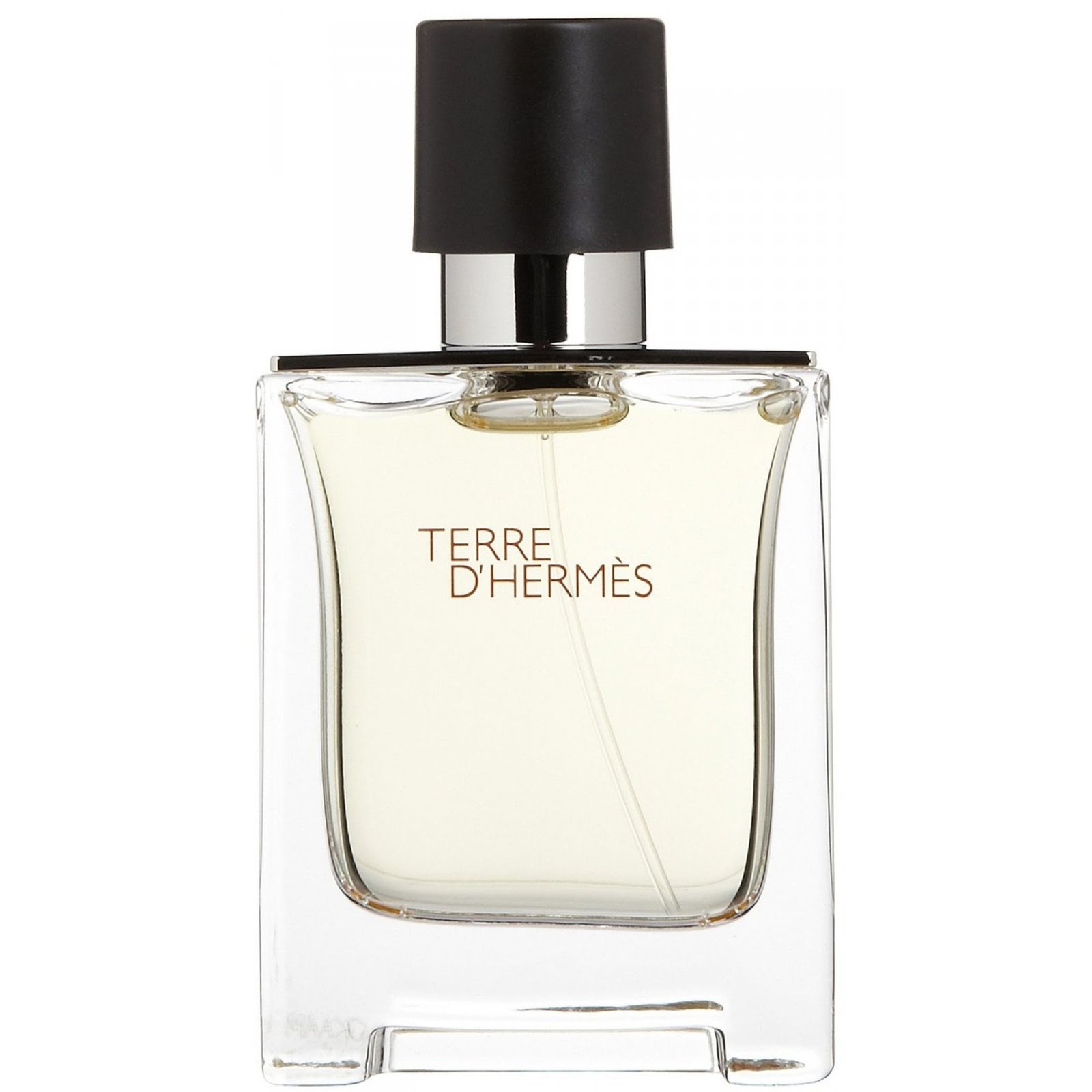
Terre d'Hermès Eau de Toilette (Hermès)


Perhaps the greatest problem with minimalist perfumery is that aroma chemicals are not easily integrated into bare compositions, and tend to "stick out." Iso E Super, a light, clean, somewhat-woody, somewhat-peppery, and always dryly-sweet synthetic, is probably every lazy perfumer's first answer to masculine constructs, as it lends an easy warmth, woodiness, and depth to the cheapest formulas. While it smells very good, there's wisdom in using it as an inner cog, rather than a showpiece. It's hard to say which older masculines contain it, as most are complex and loaded with notes, but Jean-Claude Ellena's famous Terre d'Hermès is about Iso E, front and center.

I have a theory as to why this fragrance is so popular with young men. Twenty years ago, masculine scents rotated around the Cool Water/Fahrenheit axis, with fresh, woody, dihyromyrcenol-fueled designs dominating the scene. Dihydromyrcenol is an interesting aroma chemical because it smells "almost" like a lot of things: citrus, violet leaf, acidic pomaceous fruits like apples, and even wood, yet it maintains an elusive circumference around all, yielding no definitive character on its own. This is why it was used to such great effect in Green Irish Tweed and Cool Water. The twenty-first century equivalent of dihydromyrcenol is undoubtedly Iso E Super, as synthetically air-conditioned greens have given way to clean woods. Terre d'Hermès capitalizes on the fresh-woods scent profile better than anything else in recent memory, and therefore titillates its target audience, which has grown tired of the Calone molecule.

How does Terre d'Hermès stack up with me? Just okay. Its translucent orange-grapefruit opening is synthetic, but delicately rendered, and deftly avoids the sharp-chemical screechiness of lesser citrus accords. It slowly gives way to an ashen heart and base of patchouli, benzoin, and you guesed it - Iso E Super. The triad smells very dry and cool, a little sweet, and a touch earthy, thanks to the patchouli. It's inoffensive, a little above average in execution, but nothing to write home about. Further compounding my ennui is the fact that Ellena is given to self-parody; nearly a decade after crafting the infamous Declaration for Cartier, and four years after Malle's orange-fueled Bigarade Concentree, the same nose gives us the ultimate olfactory compromise of those superior structures, using cheaper materials. The average consumer isn't complaining, though. This stuff still sells, although I kind of wish it didn't.

10/11/12

Success (Five Star Fragrance Co.)


America's richest blowhard, otherwise known as "The Donald," recently attended a Yankee game, got fed up with Alex Rodriguez, phoned the organization to express his delicate position on said batter, and Tweeted, “A-Rod must be dropped in the Yankees line-up tonight if they want to win. He simply can’t perform without drugs.” Well, as it turned out, he was right. We all know what happened. Those two home runs were not hit by Mr. Rodriguez, and the second one should have been. 

Was it Trump's killer white-collar instinct that aided his unlikely call? Perhaps his esteemed, forty-five year career of struggling against the tide to earn a profit in the real estate business helped deliver his uncanny foresight? All those summers working at McDonalds as a teenager jogged his memory, and reminded him that Americans should only be rewarded with millions of dollars after sweaty, toilsome, thankless work, the kind that snaps bones and pulls muscles like Silly-Putty. After all, if you're not carrying your share, you don't deserve the immunity of an internationally-accepted comb-over, right? Right . . .

Trump is the embodiment of yet another American success story that doesn't really involve much in the way of actual success (for the headliner in this category, see Mitt Romney), yet he perseveres against all odds as the weirdest, wildest, most outspoken celebutante of our time. Despite what he may say, his true business model was always his father's, and can anyone blame him? When it comes to perfume, however, his strategy is based on, of all things, the most recent masculine offered by none other than Creed. Success is an English-version rehash of Aventus.


The scent carries a very standard "Mens Cologne" opening that loosely mimics the sweet-fruity topnote of Aventus, which is considered pineapple by the admirers. I appreciate Aventus and its crisp top, but it's not the most faithful fruit note from this house. For an easy example of how well Creed can do fruit, give Acqua Fiorentina a minute of your time, and savor its photo-realistic plum. But Aventus? Its pineapple is clear and fresh, and doesn't actually smell like pineapple (it resembles a more literal 'pine/apple' accord, with the apple picked from Green Irish Tweed). It lacks the curdled edge of ripened pineapple flesh and juice, and takes an almost-citrus approach instead. For comparison's sake, check out Lapidus Pour Homme. Lapidus is for pineapple what Pour un Homme is for lavender. Success is much less focused than any of these fragrances, and instead offers a vague shampoo-froot accord that could be anything: berries, melons, stone fruits, whatever grows for worms to nibble at. It's nice, and it's inoffensive of course, but it's not exactly an eye-opener.

The Donald's spritz eventually becomes woodier, with an ashen birch note that approximates Aventus' inky birch/man-rose core. Ginger and synthetic vetiver stand in for oakmoss, and an airy flurry of nondescript greens closes everything out. Five Star Fragrance Co. is known for rehashing classic masculine formulas, and often proves that a downmarket brand can flog quality with the best of them. Couple their expertise with that of Tom Ford nose Yann Vasnier, and Success has a fair shot at, well, success. How does it really fare? If you take a shower and wash your hair with something good, like Old Spice's only extant shampoo (which also resembles Green Irish Tweed), and enjoy your hair-washing ritual more than you should, then Success is a fine extrapolation of that, with its portability beyond the limits of your bathroom an added bonus. And we all know how important bonuses are these days.

10/10/12

Polo Blue (Ralph Lauren)

In the words of Don Henley, "Summer's out of reach," but that doesn't mean fresh, clean, aqueous fragrances are off limits. If you're one of those people, one who likes extending your shower experience by other means, then it's likely aquatics feature heavily in your rotation. I'm always phrasing things badly when it comes to aquatics because I hold them in relatively low esteem, not for any arch shortcoming, but for their inability to transcend the basic idea of elemental water, which can smell clean, musty, briny, and even dirty, depending on how it's depicted. Some folks love the smell of water in multiple incarnations - I am not one of them. At best I like it, enough to live with it without much complaint, but I rarely, if ever, yearn to smell it, and avoid aquatics.

Polo Blue represents the middle of the road in aquatic masculines, smelling neither earthshaking or bad. It exits the atomizer with a splash of sweet melon and an ozonic, somewhat chemical rendition of cucumber, which isn't a note RL should dabble with in the future, given its lackluster performance here. Cucumber smells very crisp, a little green, with a musty-water quality, the off-note of which resembles the scent of glossy paper. As it dries down, this fruity-fresh thing gets somewhat green and piney, but only remotely, with perhaps sage or geranium gently hinting at the original Polo. It's a fleeting effect, and before two hours have passed, Blue is little more than a woody-fresh skin-scent. I should add that generous application extends the scent's lifespan considerably, and there's something of an anosmic's nightmare to Blue; this fragrance can reach an olfactory pitch that overloads the wrong sniffer, creating a white-out of little more than watery-ozone and remote woodiness, and little else.

Quality of materials is lacking here, and the packaging is as dull as it gets, but trivialities aside, Blue is a competently formulaic cucumber aquatic that could only challenge someone who has smelled nothing of other scent genres. If you're a James Bond fan who wilfully ignores James Coburn's brilliant In Like Flint, this is probably your signature.