7/3/15

Where There's Smoke, There's Fire - Part II


What doesn't kill you, makes you stronger.

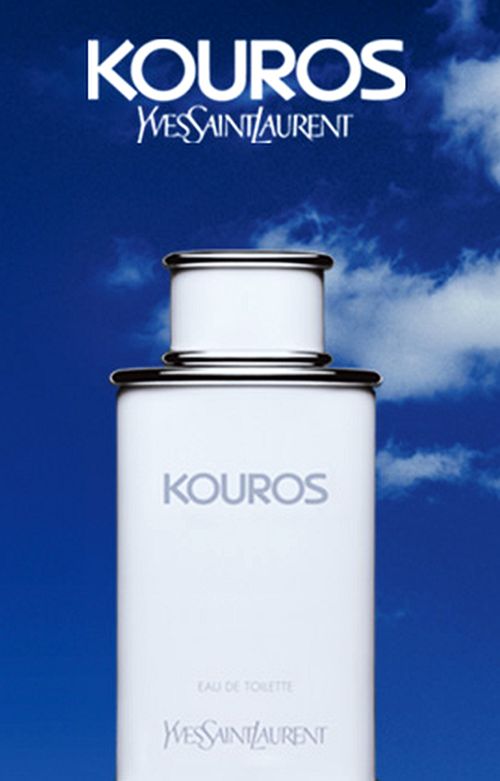
Contrary to the belief held by some that perfumes cannot grow stronger with age, current opinions about Kouros suggest that things do change. In this thread, we see some supportive anecdotes about the thirty-five year-old masterpiece:
"I sprayed one spray, and there was just the tiniest hint of Kouros to my nose, and then minutes later I couldn't smell anything. I put on another [spray]. I got up to four sprays, and for a short time I would get the faintest nod of Kouros, but then a talc or body powder scent would dominate . . . I was very disappointed. Over the next couple wearings, the fragrance seemed to be stronger, and resemble [vintage] Kouros more. It also lasted longer. I have worn the fragrance four or five times now this summer, and this scent has done a 180. Yesterday I did yard work, and before I started, I sprayed one spray to the center of my chest from a couple inches away. My skin was clean, and I had not put any fragrance on. I mowed and edged the lawn, trimmed and pruned trees, and the scent was going strong the whole time while perspiring, over the smell of the mower and trimmer. Later, after showering, I could still smell the scent. I just wanted to let people know if they purchased the white bottle like myself, and feel let down by the smell, to give it some time. The top didn't change much, but the mid and base notes are Kouros."
For those who don't know, the "white bottle" that the author refers to is the latest formula, which is packaged in a bottle that lacks the chrome trim. This account mirrors my experience with YSL scents, which funnily enough was one of the brands I mentioned in Part I of this post. It's been happening a bit with Jazz (clear glass bottle version), and it has happened time and again with Kouros. There were two responses to the comment quoted above, with the interesting reply (it also compares Kouros to Terre d'Hermes):
"Tried and worn the first time, I recalled it being a Terre d'Hermes smell alike; nowadays the juice in the bottle I have smells different. The 'aged' one in my wardrobe improved significantly, the citric notes are more prominent, and the metallic / woody notes (synthetic feeling) became more subdued, almost imperceptible. It is a gentler TdH, far less complex, but more enjoyable. As to others, I noticed they acquire something in common with vintage scents, a character that could be described as dense. I wonder if, in their efforts to improve rotation, companies are not giving blends any time for settling."
It's possible. Also possible is that the synthetics and naturals are separating at a higher rate in current formulas. My theory has always been that when air gets into a bottle, the alcohol and some of the synthetics evaporate very slowly out, leaving behind a richer concentration of both quality synthetics and natural ingredients, in turn making the remaining liquid more potent. This is not "alchemy," it's just a simple theory based on what little I know about chemistry.

My theory was confirmed the other day by a commenter responding to Part I of this post:
"My 1st degree is in organic chemistry . . . Musks, resins (myrrh, frankincense, labdanum etc.), & most essential oils can deepen & intensify over time - which may or may not be good. If you have a leak in your bottle, the perfume will evaporate naturally & of course the scent (oils) will become more concentrated & thus 'potent' in smell."

And there it is, folks. An organic chemistry major confirms my suspicions. But why is this not enough for some people to accept? I suspect that any resistance to this idea is founded more on discrediting me than anything else (I have some enemies in the perfume world, unfortunately), but their contrarian stance does them little good, because logic and chemistry are not on their side here. Fragrances that are highly synthetic change very little. Ocean Rain is a good example of this. My bottle is at least twenty-five years old. It had been used two or three times prior to my purchasing it, because I could see it wasn't 100% full when I took it out of the box. The tiniest amount of air had gotten in there and was left to mix with the chemicals of Ocean Rain's formula for up to two and a half decades. Potentially a very long time.

Yet Ocean Rain smells fresh, well balanced, and complete. Its citric fruit notes are luminescent, its musky florals are coherent, and its beachy driftwood drydown is clear. Ocean Rain was a relatively cheap fragrance when it was released, and it is likely a very, very cheap formula. My guess is that there were little to no natural materials used in it. Therefore, the likelihood that natural oils could separate from the synthetics and become concentrated with time are virtually nonexistent. The result is a synthetic mix of low-volatility chemicals that smell the same today as they did when they were bottled.

Kouros is a perfume that makes good use of synthetics, but I've always detected a considerable degree of natural materials in its formula. There are some natural floral and wood oils that seem to react with oxygen. I'm not saying these are "high quality" naturals, as there are certainly no Grade-A sandalwood or rose oils in the mix. I'm simply saying that inexpensive naturals are used to bolster the effect of the synthetics, but these naturals react to air, and grow stronger, making the heart and base notes of the fragrance stronger with time.

6/25/15

Clones Are Rarer Than You Think: The Real Philosophy You Should Adopt Regarding So-Called Copies of Popular Scents


Similar smells, or similar ideas?

Amazingly, basenotes remains an unpleasant forum to read, even after losing several dim-witted members, and having what appears to be a collective change of heart among the moderators (they now allow intelligent bickering without automatically shutting shit down and banning people willy-nilly). The problem these days isn't the mods, it's the members, or I should say, it's still the members. People just can't be civil, can't let anyone have the last word, and can't let any little thing go without an unnecessary chest-thumping session. The latest case in point is this thread.

You can read a few pages without any major static, but eventually the conversation devolves into a nitpicky sausage fest of redundant, pseudo-intellectual nonsense. The gist of the topic is that a relatively inexpensive fragrance by a relatively new brand called "Armaf" smells a lot like a relatively expensive scent by a relatively old brand called "Creed." Got it? Good. I'm not going to belabor the details of whether "A" smells a lot like "B" because it's boring, and frankly I've never smelled "A," so I don't have a dog in this fight. Then there's some off-basenotes commentary astutely pointing out that comparing "A" to "B" is not the only way to go about it; by combining fragrances that fall into the same general category, one can achieve an effect that is comparable to something else, almost to the point of smelling the same - but not quite. The act of combining fragrances captures an "idea" in another fragrance, which can be directly or indirectly related to one's perception of what is similar between them all. Think of it more as an "A"+"B"+"C" = "D," and/or "A," "B," and "C" = "A," "B," "C," or "D." According to the author, either equation works. It's "fuzzy math" thinking at work, for sure, but at least it's liberal minded and fair.

I rarely agree with him, but in this matter it's hard not to. However, I do think that he and other basenotes members are still missing the "reality" of the situation in regards to clones. First, let's back up a little, and take a look at what makes something a "clone." Usually the original fragrance is very successful. It's either a mid-shelf designer frag (Bleu de Chanel, for example), or an expensive designer-niche frag (like Silver Mountain Water or Aventus). After a year or two of the scent taking the world by storm, cheap scents by unknown brands begin to appear, and they smell suspiciously similar to the superstar. They're often available for anywhere from half the price to a tenth of the price of the superstar, and some smell remarkably close, to the point of rendering any further purchase pointless.

Okay, now that that's out of the way, let's go on to popular opinion. Currently people are claiming that Armaf's Derby Club House Blanche is a very good clone of Creed Silver Mountain Water. Armaf's scent can be found for anywhere from thirty-five dollars to sixty dollars, which makes it roughly one quarter the price of discounted SMW. Some folks are also claiming that a scent called Sun Java White for Men by Franck Olivier is a SMW clone, and it retails for twenty bucks. And of course, here on this blog, I have touted Al-Rehab's three dollar roll-on oil called Silver as being an excellent clone of the Creed. So popular opinion says there are at least three good clones of SMW, which could make spending more money on SMW pointless, if any of these three fragrances are satisfactory to you. But the question remains: what makes a clone satisfactory? More to the point, why do clones sell if they're made of cheaper materials, by less accomplished perfumers, under labelings for obscure, poorly-established brands?

You have to read. Sometimes you even have to read between the lines. In the case of these SMW clones, only one fragrance has achieved near unanimous approval - Al-Rehab Silver. One hundred and sixty-one people have made the comparison using the compare feature on Fragrantica, more votes than any other clone. When you read about the others, you find that reliable voices don't really smell a quality clone in Armaf's scent, nor do they sound quite as enthusiastic about Franck Olivier's version. Silver, however, continues to get good press. People acknowledge that it smells cheaper and more simplistic than SMW, but can't help but admit that the overall effect achieved by Al-Rehab comes remarkably close to that of the Creed. It helps that Silver also has its own original flourish of warm musk and Moroccan rose, which aids Silver in maintaining an aura of originality, despite being obviously inspired by another perfume.

Still, people will continue to seek Derby Club House Blanche, and Sun Java White for Men. Why? Because people want to smell variations of SMW's characteristics as something new, original, yet similar. And why do they want to do that? Because people don't just like Silver Mountain Water. They like the idea of Silver Mountain Water, enough to want other fragrances to play with the same idea in new and unique ways. But if people just like the idea, why do they call the fragrances "clones?" It's a poor term to use in many cases, because in reality, none of the other fragrances are clones of SMW. They aren't attempting to smell just like the Creed. They're simply trying to smell similar to it. There's a huge difference there.

In my opinion, true clones advertise themselves as such. Here in the States, drugstores like Walgreens and CVS sell discount lines of fragrances labeled as "Our Version Of (Fill in the blank)." These are cheaper copies of designer scents. You can smell someone's "Version Of Polo," or "Version of Obsession," or even "Version of Creed," if you live in a big city. Usually these clones try to smell as close as possible to their template, and any divergence is attributable to budget constraints, and not artistic license. Contrast this with scents like Derby Club House Blanche and Silver, which aren't directly copying anything, and you find there's a big difference. By not directly copying something, these scents maintain individuality, making them viable choices for people who may like the original scent just as much. If I love Green Irish Tweed, I may love Cool Water just as much. They're different enough to love both, without forgetting that they're similar.

Confused? Maybe this will help - take Drakkar Noir by Guy Laroche. This old-school fresh fougère has been "cloned" a million times since 1982. But literally none of the so-called scent copies of Drakkar Noir actually smell like Drakkar Noir, except one, also by Al-Rehab, a little oil called "Dakar," which supposedly smells almost exactly like vintage Drakkar. I haven't smelled it yet, but a few very good noses have confirmed to me that this one is different by an almost imperceptible degree. That earns it the coveted title of "Clone," at least for me.

But look at Dakar by Diamond Collection, Taxi by Cofinluxe, and Lomani Pour Homme. These three fragrances all smell very similar to Drakkar Noir in certain ways, at least enough to warrant loose comparisons. Shouldn't they be considered clones, too?

No. Let's start with Taxi. This is an early Mark Buxton scent, obviously inspired by Laroche, yet markedly different. Buxton opted to stretch the proportions of the fougère structure far enough to create an entirely new structure, one where spike lavender is nonexistent, but a spearmint note is almost overwhelming. A brisk dihydromyrcenol accord (arguably apple, lavender, and abstract citrus notes) carries the mint note through to a very blended and transparent base of synthetic "blonde woods" and musk. Remarkably, Taxi also contains a noticeable amount of oakmoss, which is listed on its box. That's ironic, because the current version of Drakkar Noir has none. Needless to say, Taxi smells somewhat similar to Drakkar in a vague, sketchy way, but it's certainly different enough to avoid being a clone.

Then there's Dakar by Diamond Collection. This fragrance is obviously marketed as a clone of Drakkar, for a third of the price. Yet Dakar smells not like Drakkar, but like Taxi! In fact, I'd say it's 95% the same as Taxi, and could be indistinguishable from it, if it actually contained noticeable oakmoss, and if it were blended as well as Buxton's scent. Unfortunately for Diamond Collection, their ten dollar cologne smells rougher than the current versions of both Taxi and Drakkar. The aroma chemicals used in its composition smell scratchy, unbalanced, and just plain crude. On the plus side, they're all the right aroma chemicals, at least as far as Taxi is concerned, and their proportions are close enough to approximate Taxi from afar. If Taxi were discontinued, and only Dakar remained, I just might consider wearing it.

But it's striking that I'm comparing Dakar to Taxi, and not Drakkar. I'd be surprised if the people at Diamond Collection even knew that Taxi existed. They probably think Dakar smells close to Drakkar. It doesn't. It smells like an idea of Drakkar - their idea! Which coincidentally aligns rather closely to Mark Buxton's idea of Drakkar, an entirely different scent! It's funny to imagine the perfumer, with his five o'clock shadow, skulking out of the lab with a test tube, waving it under his boss' nose, and beaming when the big man cries out, "Nailed it!" He's not entirely wrong - whoever made Dakar did nail one thing: a good idea. Thus, the execution of Dakar and its congeners are on the axis of a common idea, not a common note pyramid.

Drakkar Noir spawned the idea that ten percent dihydromyrcenol, mixed with smaller percentages of dry and overtly synthetic green notes, ambers, and musks, smelled very good on men and women. People agreed with that idea, and bought it. Its brisk sales drew the attention of people from smaller, less successful concerns, and they hastened to siphon the cash flow by putting their own spin on the Drakkar idea. To purchase something like Dakar or Taxi is to purchase something that makes different-but-similar use of fresh minty lavender and wood notes. If you want something exactly like Drakkar, just spend twenty dollars more and wear Drakkar.

Lomani Pour Homme is another example of the Drakkar idea, here simplified into two basic accords of dihydromyrcenol and oakmoss. If it didn't wind up smelling so bare, I'd still have my bottle of Lomani, but I didn't care for the bone-dry oakmoss note that remained on my skin after two hours, so I gave it away. It really is just oakmoss, and not much else. Clearly not the same as Drakkar Noir, and clearly not even trying to be. It tries to be similar, especially in that first forty-five minutes, when the heady "fresh" notes of lavender and spiced greens are still burning off. The idea of Drakkar only lives half as long here, before turning into something far more minimalistic. Again, people buy Lomani PH to capture that freshness. For twenty dollars more, they can just wear Drakkar.

So the philosophy should be to regard these types of fragrances as being variations of an idea, quite similar, but in no way meant to replace the original. If they're not meant to usurp their template, then they exist to offer variety instead. This means that each one must be different, even if they all remind the wearer of the same fragrance. Different means they can't really be considered clones. Or perhaps, if you must use the word "clone," you could say they're clones of an idea, but not of a scent.

This may be even easier to understand with a vaguer sort of scent, like Joint for Men. Joint has been compared to Furyo by Jacques Bogart, Kouros by YSL, and on this blog it's been compared to Zino by Davidoff. Of these, I'd say Joint smells most like Furyo and Zino, and very little like Kouros. Furyo is of much higher quality than Joint, but both scents share a similar treatment of musky wood notes, a particular type of "musty" structure that emerged in the late eighties and early nineties. Luca Turin might consider these to be "cigar box" fragrances, but to me they're very warm, woody, and rather oriental in feel. While Furyo is undoubtedly of better construct, Joint smells a bit fresher and airier, perhaps due to its being made of cheaper synthetics (white musk plays an important role). Furyo has thick civet, which actually smells somewhat natural, closely blended with distinct carnation and honey notes. If you were to ask me what I really think of Furyo, I'd say it's a perfected version of Lapidus Pour Homme. That fragrance also contains strong musks and pitchy florals, with a noticeable honey/patchouli/rose accord. Yet Lapidus never smelled finished to me; Furyo does.

Joint, however, smells more like Zino than it does like Lapidus. That's where the vaguery of Joint comes in - people vote it very similar to Furyo, but I smell much more rosewood in Joint, considerably less musk, and far more lavender. Fifteen minutes into the drydown, Joint reveals itself to be a direct clone of Zino, not Furyo. The "Furyo effect" exists for five minutes in the top accord, a simple similarity in how musk is handled. The "idea" behind the civet is the same in both Furyo and Joint. Once that note burns off in Joint, the scent takes a different direction, and the "idea" behind the rosewood, sandalwood, cedar, and patchouli aligns with the same idea in Zino. Which fragrance is better is arguable, debatable, contentious. Most don't seem to feel there's a connection between Joint and Zino. I encourage anyone to smell Joint about twenty minutes into its drydown, side by side with Zino, five minutes into its drydown. If you don't smell a similar accord, there's either something wrong with your nose, or with mine.

Another fragrance that definitely, without much argument from other noses, smells like Zino is Mesmerize for Men by Avon. Mesmerize is a fruitier, simpler, more blatantly oriental take on the dusky woods structure of Davidoff's scent. The similar idea here is in the handling of wood notes, pure and simple. You can take lavender and musks out of the equation. If you were to create a coloring book about them, kids would be drawing crayon lines between the rosewood notes in Mesmerize and Zino, and boom. It's done. Yet again, these are very different scents. Mesmerize shares the wood idea with Zino, but eschews the older scent's brisk lavender and citrus, opting instead for a more mellow citrus, paired with a sweet apple note. The idea for fruit notes in Mesmerize is markedly different from the idea for fruit in Zino. Then the drydown of Mesmerize yields a clean vanilla amber, surprisingly natural-smelling at its price-point (about thirty bucks). Zino, on the other hand, has a more complex patchouli and moss thing going on, with no vanilla to be found. The idea behind the drydown is different.

But I digress - one thing people do agree on is that Joint and Furyo are similar. But ask people how, and their answers will likely vary. I think there's a similarity between the two fragrances, specifically in their treatment of one accord. Then they diverge dramatically. Others may consider the similarities to be between other notes, but the point is that when people have different opinions on what make two things similar, they can't really be mistaken for each other. Therefore, they can't be considered "clones."

The "cloning" here is better viewed as near-identical accords, not identical perfumes. Only parts are close to being the same, but not the whole. Zino was always a better seller than Furyo, because Davidoff's visibility skyrocketed after Cool Water. It stands to reason that Roccobarocco would try to inject a healthy dose of Zino into their formula, but why would they want to copy Furyo, other than perhaps to borrow its incredibly potent and memorable top note?

So if mere fractions of perfumes are really being cloned, why do people think there are so many clones out there? Why do they argue about them? Why do conversations about price and ingredient quality and structural integrity get so heated and unruly? I think people aren't seeing the forest for the trees. It's not about ingredient quality. It's not about "copies" of popular scents. It's not about how well a particular perfume is constructed and blended. It's about the idea behind the scent. Drakkar Noir was a good idea. Green Irish Tweed was a good idea. Zino was a good idea. Furyo was a good idea. Perfumers are intelligent people, and they're going to riff off of good ideas. You're going to smell these riffs, and you're going to be reminded of the good ideas that inspired them.

My advice is to forget about price comparisons and note dissections. Enjoy what you're smelling for what it is, and consider it to be its own scent, separate from whatever it reminds you off. Let the idea behind an original perfume guide you into appreciating the many perfumes that come after it. Your reasons for wearing certain scents on specific occasions are predetermined by your taste and judgment, so why worry about things that people can't smell? You can't smell a two hundred dollar price differential. That Green Irish Tweed smells amazing has nothing to do with how much Creed is charging for it today. The fact that Furyo smells incredible has nothing to do with its obscurity and rareness, or the high prices it commands on eBay. You can't smell that one type of synthetic lavender costs fifty cents more than another. You can't smell that the perfumer behind one scent has a night job as a janitor, while the perfumer behind another is on a book tour in Scandinavia. What you CAN smell is whether YOU like something. To hell with everything else.
Unorthodox Stuff A Teen Guy Can Rock


"Smells like University of Illinois!"

Faithful reader "Bibi" recently asked me to list scents that a teen can afford to buy and wear, and still smell awesome. Teens generally have more disposable income than middle-class adults, because, you know, they usually don't have rent to pay, or mortgages, or car notes, or anything other than clothes, food, and zit cream to pay for. I wore Chanel fragrances as a teen, but then again, I worked. 

I shouldn't paint teens with a broad brush - there's still a socioeconomic range they fall into. Therefore, this quick list is divvied into three parts, the "super cheapos," the "mid-shelves," and the "top notches." The first category is stuff for ten bucks or less. The second are scents that might set you back twenty or twenty-five dollars, and the last is attainable in a price range of sixty to a hundred dollars.

So let's get into it! The "super cheapos" are tricky. Everyone knows about Old Spice, Brut, Skin Bracer, 4711, and Aqua Velva. But what about the Pinaud Line? Worthy bets for a teenage guy include:
Clubman Aftershave Lotion
Lime Sec
Citrus Musk
Virgin Island Bay Rum
Now, don't get me wrong, these scents aren't show-stoppers by any means. Of the four, I'd say Clubman is the best for a teen guy, simply because it captures a "feel" with 100% laser accuracy. That "feel" is the "just out of a barber chair clean" feeling, right after a close cut and a badger brushing of talc. It's an old American smell, something totally masculine, but far from stuffy. Used sparingly, Clubman smells better than Brut and Skin Bracer, and the nice thing is, most people have never heard of it. It costs about seven dollars at Walgreens for an eight ounce bottle. You wear it right, and you'll smell like you're wearing a toned down Rive Gauche Pour Homme, which is currently ten or eleven times as expensive.

Other super cheapies include Tabac by Maurer & Wirtz, a lovely European blend of aldehydic citrus notes and powdery herbs. This one might trend a bit "mature," but again, application is everything. Go easy on the atomizer and you'll have a unique powdery smell that is miles away from what teenage girls are used to smelling on their guy friends. Last but not least, check out Silver by Al Rehab. I've been wearing Silver this year, both the roll-on oil (about $5 off Amazon), and the spray (about $9), and it remains the best clone of Creed Silver Mountain Water out there. It even has "batch variations," because the older roll-on that I purchased two years ago smells more citric and metallic, while the one I bought last summer is sweeter, with heavier berries. Maybe they're just keeping tabs on how Creed's batches stack up? In any case, the wonderful thing about Silver (and SMW) is that nothing really compares to this sort of fragrance. It's completely original, unique, an isolated incident in the world of scent. Mixing sour metallic citrus with sweet fruity musks might sound banal, but it's not.

On to the "mid shelves." This part of the list is my favorite, because the quality and impact of these scents is tremendous for their price range. They aren't new scents, they're old classics that need reviving. Their strength, their "freshness," their tenacity, and their scent profiles are masculine, bold, unforgettable. These include:
Animale Animale
Preferred Stock
Pino Silvestre
Krizia Uomo
New West
Cool Water
These scents are definitely the height of yesterday's fashion, but they're timeless. Animale Animale is a glorious fern loaded up with fruits, resins, and musks, with a good synthetic sandalwood base that is sweet but solid, and guaranteed to impress. Preferred Stock, currently Coty's most expensive non-prestige masculine, is the original Red for Men, a warm, minty-woody fougeriental from the early nineties that smells sleeker and darker now than it did then. Pino Silvestre is simply honeyed pine needles with a blast of lemon juice to clean your palate. Italianate and classic, the scent of brisk pine isn't something many young guys sport anymore. 

Maybe Pine-Sol ruined it for people, but thankfully Pino Silvestre smells miles away from cleaning detergent. Krizia Uomo is simply an excellent lavender/citrus/pine/cedar accord, rendered with shockingly high quality ingredients. It's very cheap, under twenty dollars, and a tremendous bargain. New West and Cool Water round out the list, two late eighties Calone and dihydromyrcenol compositions that smell great.

Cool Water in particular is an excellent, inexpensive EDT that gets overlooked because you can find it everywhere. Surprisingly, this scent still smells incredible. It's classy, it's fresh, it's complex enough to make you think about it as it dries down, and it has the potential to smell ten times more expensive than it is. I've put it at the bottom of the list, but think of it as saving the best for last - this one is perhaps the most worthy of being a signature scent.

And now, the "top notches." This category is trickier than the "super cheapos" category, because it caters more to teens with full-time jobs. They're out there. They graduated high school and never went to college, and are therefore making more money than their college-going peers. Figures, right? These guys work hard, save, and have responsibilities. They can afford to spend a few extra bucks. That's why I recommend any Creed scent from Fragrancenet, after coupons. You can get amazing deals on Creeds there. In fact, if you catch them having a sale, plus get a member's discount, and the standard site-entry coupon, you can snag a 2.5 oz bottle of Creed for under a hundred dollars, especially tester bottles. But which Creeds are worthy?
Green Irish Tweed
Millesime Imperial
Original Vetiver
Original Santal
Royal Water
Silver Mountain Water
EROLFA
These are, in my opinion, the best bets for a teenage guy approaching his twenties, with emphasis on Original Vetiver and Silver Mountain Water. The nineties brought "fresh" scents to new levels, and so SMW is now considered a nineties masterpiece of youthful freshness. Original Vetiver, which was released in 2004, is quite simply the most stunning green scent ever made, and GIT marks its territory as the original Cool Water (basically Cool Water in perfume form). 

Original Santal is a well made oriental, very warm and clean, while Royal Water cools on contact, a bright citrus/juniper ensemble with excellent lasting power. EROLFA is a high-end aquatic, a little salty and woody, with a pleasant floral/herbal element.

If you're into buying on eBay and EROLFA is your type of scent, you might want to check out Mario Valentino's Ocean Rain, which is cheaper and just as good, if not better. Edmond Roudnitska's final perfume composition has a very similar briny/sandy aroma, but it's a bit darker and more floral than the Creed. Ultimately it winds up smelling like beach sand with a fruity-floral sweetness in the background, a wonderful experience.

If you want to avoid online transactions, go to the mall and check out Chanel. They're even a bit cheaper than Fragrancenet deals, and they're never a bad option. Bleu de Chanel EDP is very, very good. The EDT is perhaps closer to a standard "guy deodorant" scent, but a few cuts above Axe and "Bod" sprays. They're all under $125. Buy a bottle once every nine months, and it won't kill your presumably workable budget.

And there you have it. Teenagers should smell awesome. They're going to be wafting their way right into our futures.


6/20/15

Where There's Smoke, There's Fire


Let's say you're in the market for your very first Creed perfume.

You're a careful buyer, so you carefully peruse fragrance forums, mostly on basenotes, because after all, basenotes is where the OCD patients with a Creed habit are hanging out, discussing "counterfeit Creeds," "batch variations," "quality control," "lot numbers," and that strangest of strange things, the "Creed Bloom" effect, otherwise known as "maceration." Actually, "Creed Bloom" addresses the perfume after it has finished its chemical maceration process in a production facility, been bottled, and sent on its way. You see, people occasionally mention that their Creed smelled weak upon delivery, but after a few weeks or months became significantly stronger, and more complex.

You're ready to accept that there's something to this, especially if you're a VERY careful buyer, the type who likes to parse every single line of text ever written about something before pulling the trigger on it. But then you start to seek another opinion, a divergent view, and you read this. Uh-oh. Seems like a well framed counterpoint to the other claims of Creeds growing stronger with time. What to believe?

In that blog post, the author discusses a claim about an Amouage perfume, not a Creed, but it's simply the point from which he pivots into a general view about all post-bottling perfume maceration claims. Since Creed is the company eliciting the most commentary about this, you're concerned that your first bottle's performance may be a bit confusing. Perhaps even disappointing. You're about to drop the better part of two hundred dollars on this thing. You want to know that it's going to smell amazing, not weak, hollow, fleeting. With this issue in mind, how do you approach Creed?

I can't convince you, or anyone else for that matter, that Creeds and other high-end niche perfumes age in the bottle. Your nose will tell you things that I simply can't. The blogger linked above asks for scientific evidence, and speculates that professionals would laugh at the claims of certain fragrances growing stronger and better after use, yet his credibility is just as thin, if not thinner than anyone else's: he claims that out of roughly one hundred vintages in his collection, he has never smelled a single one "turning," i.e., "spoiling," which suggest that he's either genuinely incapable of detecting true structural and compositional defects in old perfumes, or simply lying.

This raises a second question. If Creeds age and improve, wouldn't that put them at odds with the argument that perfumes degrade and lose their luster as they reach their "vintage" status? Not at all. One of the finer points about this, something which the poor fellow cited above never seemed able to grasp, is that some perfumes, especially Creeds, but also older YSL scents, reach a maturation "peak" after a few months (in my experience, anywhere from a year to eighteen months), a point at which their strength and complexity seems optimal, and a condition that only lasts another ten months or so before very subtly beginning to lose its promise. Once the scent has peaked and begun its downhill course, the maceration has officially ended, and the degradation has begun.

In Creed's case, my theory for why this happens centers on one simple aspect - poor bottle design. Every Millesime I've owned has had a minor leak around the atomizer base during use, including bottles purchased from the Creed Boutique. (The one exception is a 2013 bottle I bought from Fragrancenet that featured Creed's "new and improved" atomizer design, which I've read has since been discontinued.) With the original atomizer design, I depress the sprayer, and oh, no! Dribbles of perfume run across the face of the bottle, and down my wrist. Perfume is getting out, and air is getting in. Not enough perfume to panic and send the thing back, but enough to make you wonder why Creed can't hermetically seal the darned things. The person who had a similar "blooming" effect happen with their Amouage scent might also have a bottle with a very small hole somewhere around the atomizer, or perhaps that particular bottle is letting air in through the hose. I had a bottle of Kouros that I would guess this was happening to. It never leaked, yet over time the fragrance got more and more potent. Something tells me the vacuum was breached. By the very end, and after five years of use, it was all bombastic musk and honey, and little else. Come to think of it, that poor old Kouros might as well have been vintage Lapidus Pour Homme at that point, not something any presumably balanced and well-blended scent should be.

With every Creed I've owned, this has been the case. I currently own two bottles of GIT, one from 2012 and one from 2013, and the older bottle is very, very slightly "off," but still quite wearable, while the newer bottle is right in its prime, and will likely never get any better. If I were to hold on to it, I'd surely notice within a year that the top notes and mid section have weakened and gone a bit off-balance, just like the other bottle, but I'll have used it up before then. In GIT, the musk note seems to get unnecessarily funky and leaden over time, but you'd never guess that could happen with a new bottle, which in most cases will smell light, crisp, citrusy, green, and remarkably fresh.

You don't have to take my word for it. There are credible comments about this to be found here, and here, and here, and here, and here, and last but not least, here. The "Official Green Irish Tweed Thread" is a good read, because if you peruse its dozens of pages, you're bound to find member after member commenting on the "Creed Bloom" effect with that scent. These corroborating accounts were found in less than ten minutes, a simple search on Google. If you really want to find many people corroborating my experience, search for less than fifteen minutes. You'll see that several veteran basenoters and Fragranticans have had the same thing happen to them. Their scent starts out weak. They use it, then forget about it for a while, then come back to it, and surprise!

Their fragrance got stronger.

It seems to be a really, really, really and truly random and strange thing to fabricate, or imagine, or be mistaken about.

But who cares? Those who scoff at this are simply not experiencing something that others are experiencing, and enjoying. Whether that experience is real or not is something I'll leave up to you, but as the saying goes, "Where there's smoke, there's fire."

6/4/15

The Curious Case of Claiborne Sport


No Longer A Bargain.

The other day I happened across my bottle of Claiborne Sport for Men, a super-cheapie that I purchased two or three years ago for a grand total of $13. I had seen this perfume often at discounters like Marshalls and TJ Maxx, and had always avoided it because it's a Claiborne product, and Claiborne products generally suck. Eventually I relented and dropped a few pennies on it, only to find it derivative, but relatively well made, and a pleasant scent.

On Monday, and just out of curiosity, I Googled this scent to see if it's still bargain basement-tagged. Turns out, it's not. No, Claiborne Sport is now on sale for up to $80 a bottle. That's right, eighty dollars a bottle. That's a 515% price increase.

Now, I have to ask myself, in all seriousness: What the fuck?

This is clearly a case where I have the direct experience of purchasing an already-cheap fragrance at an even steeper bargain, only to find, in an aspirational sense, that its value has skyrocketed in the merest span of twenty four months. Theoretically, I could take my 70% full bottle and sell it on eBay for at least a two hundred percent price increase. Ebay is claiming that its "Top Rated Seller" of Claiborne Sport sold forty-five bottles for sixty dollars apiece, a 361% price increase. Of course, assuming his sales picked up in the summer of 2013, which is around the time I noticed this scent had become scarce, that's still only about two bottles per month being sold, or $120 worth of merchandise.

Are they selling to Claiborne Sport fans? How likely is that?

Not likely. Let's consider why.

Serious fans of Claiborne Sport, people who genuinely love the perfume enough to frequently wear it, would have taken advantage of its dirt-cheap price during the five or six years that it was on sale for five bucks an ounce, and stocked up on it. At least two or three extra bottles would have been purchased. I do that with the fragrances I'm a fan of. I've read accounts by other people who do the same. A 3.4 oz bottle of Sport for $13 at Marshalls? Hard to buy just one. And you know, Marshalls, TJ Maxx, they throw a half dozen bottles of the same fragrance on their shelves at any given time.

So if you've got a handful of bottles from when Sport was still available at those prices, why would you spend four times as much for one more bottle now? I thought the point of buying a cheap fragrance was that you could buy enough to avoid worrying when supplies ran low.

But that's just basic common sense. Let's think about "supply and demand." Is the supply of Sport so limited, and the demand so high, that people are willing to shell out up to $80 for a bottle? Where does that number come from? Even $60 is ridiculous.

Another merchant selling bottles on eBay for $40 has supposedly moved thirty units so far, fifteen fewer than his competition, because he's not a "Top Rated Seller." But even $40 is too much for Claiborne Sport. It's a decent frag, but for twenty or twenty-five dollars, tops. If you like Sport THAT much, you're better off buying Curve, or maybe CK's Eternity for Men. Even Cuba Paris Grey, which is still in production and of equal quality, is a more than worthy substitute. CP Grey is arguably even a bit better than Sport, because it's a softer, fresher, "sportier" blend, and the Perfume Palace here in Waterbury gave me a one ounce bottle for free with my purchase. That's zero dollars spent, and a whole bottle at my disposal. Should I ask sixty dollars for CP Grey when that one goes extinct?

If the demand is so high, why was Sport only worth four dollars an ounce in 2013? Marshalls could have easily gotten sixty dollars for it, if people wanted it that badly. The lizard of logic eats away at its own tail.

Then there's the basic question: Where's all the internet chatter about Claiborne Sport? If this fragrance is sought after by ardent fragrance "aficionados," wouldn't there be lengthy conversations about it on Basenotes and Fragrantica? Alas, there's nary a single word about it. The last Fragrantica review was written in August of last year; the last Basenotes review was penned in September of 2013.

A last-ditch argument is that people who are unfamiliar with Sport are springing for it now, because it's discontinued. It's simply being perceived as "rare" and "collectible." If you're familiar with Sport, you know that it's neither. If you're unfamiliar with it, and spending sixty dollars on a bottle, chances are you're a complete idiot.

I can only conclude that this is a classic case of fantasy pricing in a fantasy marketplace. Whoever is buying Claiborne Sport at a 361% mark-up in 2015 is either
A) Looking to commercially resell for even more money, or
B) A complete idiot, or
C) Both A & B.
Most of the eighty dollar bottles will never sell. They'll remain up on eBay as automatically renewed ads, long after the merchants have forgotten they even tried to sell them. The illusion of value lives. Meanwhile, I still have my bottle, and it's worth about four dollars an ounce to me today, just like it was when I bought it.

Update, 9/5/15:

Another curious thing has happened with this particular fragrance, on eBay at least - prices have come down again.

I've talked about this on Fragrantica in a thread, saying the following:

"These things happen frequently. A couple of months ago, Claiborne Sport was going for no less than forty dollars per 3.4 oz bottle. Most were going for $50 to $80 per bottle. This was in June, on eBay. Also on Amazon, where there were only two or three listings for Sport, all at outrageous prices.
Then, sometime over the summer, the prices suddenly dropped again. Suddenly it's back to its usual $17 per bottle. My theory on this is simple. Sport was discontinued a while ago. It was never a big seller, and most people didn't really know about it. Those who did might have purchased a bottle once or twice, but its numbers weren't good. This kept prices low. Really low.
Then, after its discontinuation, independent sellers decided to get greedy. Up shot the prices. Close to niche level, but more on par with high-end designer, at twenty-five dollars an ounce.
And nobody was buying it. Disregard all the supposed 'sold' listings. eBay is loaded with scammers who manipulate their sales stats. There are also plenty of aspirational price-gougers who buy from each other, then relist the merchandise at even higher prices.
This is what happened for a few weeks with Sport.
Then it occurred to them - nobody else was buying the scent at these prices. Literally nobody.
So down came the prices. And surprise, surprise, the sales are moderate, and the scent still isn't that popular."

I stand by this theory, and also can state with total confidence that this Claiborne Sport phenomenon is proof of what I've been saying all along: they'll try to get away with price gouging if they can, but only until they realize they're just fooling themselves. Eventually, when absolutely nobody pays what they're asking, they're forced to reduce prices back to their correct level, and hope people haven't written off the fragrance entirely. In this case, I think it all happened within a relatively short period of time (no more than three or four months), so people may not have even noticed. With more expensive frags, like Gucci Nobile, for example, people will occasionally bite and sucker up big money, but just enough to keep the fantasy alive in the heads of greedy sellers.

5/31/15

Hype and Compliments - What are They Worth?


I've been receiving more compliments lately than I can remember ever getting before. Yesterday I was working very strenuously in close quarters with a young woman who waited a mere forty-five seconds before informing me that I smelled "really good." I was wearing Francesco Smalto PH. A week ago I received several more compliments from female coworkers on Tea Rose and Tea Rose Jasmin. And not long prior to that, I received compliments on other fragrances, with Bleu de Chanel and Grey Flannel coming to mind.

If you were to ask me what difference the compliments make, I couldn't tell you, at least not in concrete terms. But I'm willing to speculate, and then extrapolate my experience to those of millions of other guys who are into fragrances. Without a compliment, a perfume seems relegated to the "maybe" area of the brain. "Maybe" it's a good one. "Maybe" it's worth repurchasing. "Maybe" people think I smell nice. "Maybe" I'll get a compliment on this someday.

Of course, the "Maybes" come with negative connotations as well. "Maybe" I'm wearing too much. "Maybe" people think I smell bad. "Maybe" I'm annoying everyone in the room. "Maybe" I'm kidding myself. "Maybe" I should think twice about repurchasing. Getting a compliment on a fragrance inevitably erases most of these, replacing them with newfound confidence and respect for the fragrance, but the question remains: why?

One idea is that a compliment is a simple affirmation of a preexisting suspicion. If I suspect Bleu de Chanel smells really good, and two women compliment me on it within a four or five week time span, I no longer suspect Bleu de Chanel smells good - now I truly know that it does. Whether or not others feel the same way is immaterial. Someone other than myself has enjoyed it enough to actually tell me so. Naturally this can give way to some hubris on the part of the fragrance wearer. The day after a compliment is received, he may apply too much. He may choose to wear that fragrance repeatedly for weeks. He may decide that it goes with any season and any situation, simply because his skin chemistry makes it wonderful.

Examining these possibilities reveals just how powerful a casual compliment can be. But is a compliment really worth anything? If I wear Green Irish Tweed and never receive a word about it, does that mean the fragrance is not as good as I thought it was? Or does it mean perhaps that GIT is simply overrated, overhyped, not exactly the magic elixir it's been made out to be? These questions lead to the question of why I'm even wearing GIT in the first place, when Cool Water is 95% the same, and 95% cheaper. The answer here is more obvious, though. I'm wearing it because it's been hyped up. People claim it's a masterpiece, better than Cool Water.

GIT is a good example of this, but there have been comments on basenotes lately about certain fragrances being "overhyped," and they make me think about this particular facet of the fragrance collecting experience. We've all read about fragrances that are supposedly "amazing," and "masterpieces." Yet when we wear them, we don't feel the Earth shake. We don't get the "vibe" from it that others claim to be getting. It amounts to a strange feeling of ennui that somehow doesn't seem correlated to the propaganda, yet is.

Consider Rive Gauche PH. For years, basenoters and some Fragranticans considered this fragrance to be one of the best ever made. Luca Turin backed up these sentiments. I believed the hype, and expected it to smell incredible. So I bought the tin can version for about forty bucks on Amazon, and wore it for a while. Guess what? No compliments. I personally felt it smelled really good, but it wasn't something to shout from the rooftops about. Its staidness, coupled with the fact that nobody seemed to notice it, demoted RGPH from being a "masterpiece" to just being a "good wetshaver scent" in my book. If and when I run out, I seriously wonder if I'll bother repurchasing it.

Why do I wonder, though? If I think it smells really good, and consider it a nice traditional fern for the sort of guy who is into wetshaving, isn't that something worth repurchasing? Shouldn't I ignore what other people think, even if they don't think anything about Rive Gauche, and simply go with how I think?

The problem is that the hype doesn't remain normal, everyday hype. It evolves. It metastasizes into something far more dangerous than rave reviews. Instead of hype, a mythology develops. Rive Gauche is an older fragrance. It has seen some packaging changes, and some adjustments to the formula under its new licensing by L'Oreal. This fragrance, though still in production, is actually "discontinued." If you can find the version in the tin can, you're buying a "discontinued" fragrance. Discontinued fragrances automatically smell better than contemporary products, for reasons that are eternally unclear to me.

With this in mind, the issue becomes a bit narrower. Instead of just wondering if I should repurchase Rive Gauche, I now have to wonder if it's worth paying extra for the tin can version, or paying extra for the "new" imposter Rive Gauche by L'Oreal, which comes in a new box and bottle. In either case, the repurchase isn't the same as the initial purchase, and I'm coming out on the bottom, because I have to pay more, and/or work harder to find the version I've been told I should have.

But none of this should matter if I like the tin can version, right? I should just spend time and energy hunting for it. I should pay more for it, because I like it.

Except it's not the only "very good" fragrance of its type. There are plenty of other fragrances still being made that smell just as good, if not better. Azzaro Pour Homme and Tuscany per Uomo are two examples. Krizia Uomo and Jovan Sex Appeal are two more. I can buy a few ounces of Pinaud Clubman for seven bucks and achieve a high quality wetshaver smell that certainly rivals Rive Gauche. With all these competitors, why bother with YSL's scent?

Some would argue that the uniqueness of Rive Gauche makes it worth seeking out. Yet it isn't unique at all. The formula of Barbasol shaving cream that was on the market prior to the current formula smelled about 90% the same as Rive Gauche. I once had a guy walk into my immediate vicinity while I was wearing Azzaro PH and exclaim, "It smells like a barber shop in here." Green Generation for Him has a very similar lavender and anise accord as well. This type of scent is actually quite common.

And all of these are reasons why I probably won't repurchase Rive Gauche.

So with all of these clear contradictions to the common claims about "vintage" Rive Gauche, one final question persists - if I get a compliment on it, will I change my mind? Will I now consider that I've received a kind word about this scent, and not about the others? Will that elevate its status from a "Maybe" to a "Definitely?"

Unfortunately, compliments are not worth much of anything in my view. They certainly affirm a suspicion I may have about something, and they award a scent with enough merit to make me think about it in its context. In the case of Rive Gauche, that context is traditional wetshaver ferns with notable traces of lavender and anise. (What about the patchouli? Frankly, I don't give a damn about patchouli.)

They do not, however, promote a fragrance enough to alter the course I'm taking with it. Other things factor in. If it were readily available in its tin can version at reasonable prices, I'd certainly repurchase it. But because it is discontinued in that packaging, and now more expensive in both its old and new packaging, I'm not inclined to bother paying more for it. Not when a compliment on Azzaro, or Tuscany, or Krizia, or even Clubman is just as likely to come my way.

The true answers to the questions of what hype and compliments are worth lie with you and you alone, making them something very subjective indeed. This subjectivity is what keeps the fragrance world alive and well, and is why we should never assume anything about a perfume, or its wearer.

5/25/15

Alain Delon, "AD Classic" (Art & Fragrance)


Alain Delon's signature scent for men is another in a long list of examples of how people get all screwed up over minor changes in product packaging. Back in the early eighties, when this fragrance was still new, the box and bottle simply read "Alain Delon." Then, twenty-five years and a dozen fragrances later, they added the word "classic" in small print.

What follows is typical. A division of camps occurs, with invisible lines drawn in the sand: the "original" fragrance, WITHOUT the word "classic," is the best, while the newly-packaged version is a pale imitation that doesn't bear further attention from connoisseurs. How does this happen in the connoisseur's mind? Easy. He believes that instead of just adding "classic" to the product to remind older buyers (and inform newcomers) that this was indeed Delon's first foray into the world of perfume, the manufacturers opted to spend thousands of additional dollars in overhauling the formula, so that they could also make their assertion to customers a blatant lie. This is the sort of cynicism that reigns supreme in the world of fragrance enthusiasts, it seems. Very sad.

I'm here to tell you that a good friend of mine has had this perfume for the better part of two decades, and it says "classic" on the bottle. The reviews on Fragrantica date back no further than five years, yet many of them claim the version with "classic" is crap compared to the "non-classic" version. Hop on Ebay, and you'll find that the original packaging isn't available, yet the "classic" version is being billed by merchants as "rare," and worth three figures. (As an aside, I'd say it's only worth twenty bucks an ounce, tops.) What's the truth here? I think the version with "classic" printed on it is the same fragrance as the older stuff, but if it was released in the last few years, it may smell a bit softer than the vintage stuff. Times have changed, after all. Heady wormwood fougères from thirty years ago aren't the rage anymore.

How does it smell? I've always felt that AD is an unnecessary fragrance in the canon of classic masculines. Its problem isn't one of quality or craftsmanship. Its ingredients smell fairly natural, and they comprise a balanced scent. There's a pleasant pop of lavender and carnation in the top accord, followed by artemisia, juniper, cinnamon, and precious woods, with a honeyed amber base. It smells ever manly and outdoorsy, with that "refined gentleman" feel you get with conservative fougères of yesteryear. Yet fragrances like Jazz, Tsar, Francesco Smalto PH, Yatagan, and Furyo are all more interesting examples of the genre. In fact, I'd even say that AD is superfluous, and unless you're a total newcomer to classic fragrances, there's literally no reason at all to bother with it.

There have been rumors that this fragrance is discontinued, and if they're true, I wouldn't be surprised if the dialogue about it becomes even more inane. In ten years I'll be reading about how great it is, and I'll probably be seeing it on Ebay for a hundred dollars an ounce. What a life.

5/19/15

Tea Rose Jasmin (The Perfumer's Workshop)


I've been receiving compliments lately, but not on any of my expensive YSLs, Creeds, or Chanels. I've been complimented on Tea Rose and its younger sister, Tea Rose Jasmin. I think the cost for both bottles was a grand total of ten dollars. That two terrific fragrances can cost so little is incredible, but what's more impressive is that they smell of natural floral essences and rich green notes, the sort of stuff I'd expect royalty to wear, bargain prices be damned. Fact: Perfumes by The Perfumer's Workshop are beautiful, masterfully made, and as good or better than most of the niche florals I've encountered. Tea Rose Jasmin is no exception.

This little fragrance has been criticized for being more tuberose than jasmine, but I think the jasmine is front and center here. Tuberose lingers as a supporting note, with hints of muguet and rose whispering alongside it while jasmine dominates, unfurling velvety wings to catch summer breezes. This is "suntan lotion jasmine," not the hyper-realistic book pressed flower, yet its directness and delicate complexity keep it smelling fresh and luminous. Think a greener, somewhat improved Vanilla Fields. It doesn't smell cheap. It doesn't smell kitschy. It just smells very rich and clean and real. At fifty cents an ounce, you'd expect it to smell of cleaning solvents, but somehow its anonymous nose took dirt cheap materials and roped their best qualities into a lovely composition.

To receive compliments on it is heartening, as most would consider the Tea Rose line strictly for ladies. One female coworker said, "I don't usually like smelling flowery things, but that's really nice. I like that." I often fantasize that the Twenties, now just five years away, will be a decade of even more decadence and debauchery than its twentieth century precursor, and gender stereotypes in perfume will finally bite the dust. Men will smell of sweet flowers, and women will emit wafts of bitter leather and oakmoss. Maybe flapper girls will make a comeback. Short haircuts, cigarette holders, and jazz will return with a vengeance. Hey, a guy can dream.

5/3/15

The "Vintages Are All Fine" Mentality


When I entered the world of fragrance, several unusual mentalities became apparent to me in regards to how enthusiasts (not "connoisseurs") viewed perfume. An example of this is the strange desire for people to refer to themselves as "connoisseurs" of perfume, instead of "enthusiasts." To label oneself a fragrance "connoisseur" suggests there is a subset of the fragrance collecting population that understands and enjoys a level of quality and exclusivity that the average population generally misses out on, which I believe is false, and a misuse of the label. Its falsehood resides in the fact that the supposed connoisseurship of perfumes is almost always associated with the necessity to own a large quantity of expensive, hard to find fragrances. Many self-proclaimed connoisseurs own hundreds of perfumes. In my opinion, these are the very people who are not perfume connoisseurs. They are enthusiastic about a wide range of scents, yet are deeply knowledgeable about few to none. The sheer scale of their collections renders them impartial to the idea of loving just one.

If you're a man who only owns and wears one bottle of perfume at a time, you are enjoying the fragrance and its functionality even more than the person who has that same perfume in a collection of several hundred others. The man with one perfume that he has worn for years also knows that perfume better, recognizes it faster, and appreciates its structure and movements with more clarity and understanding than the guy who gets around to it once every two or three months in a wide rotation. Thus, connoisseurship of perfume applies realistically to someone's appreciation of one specific fragrance, based on an affinity and somewhat obsessive allegiance to it. It makes little sense to consider connoisseurship of fragrance as an over-arching love for only the "best" fragrances. The overwhelming subjectivity of what constitutes the "best" nullifies the meaning of the word.

I've had people tell me, "Bryan, you can't have it both ways. If perfume is a luxury, as you always say it is, then there are those who can be classified as 'perfume connoisseurs.'" Wrong. Perfume is a luxury, yes, but luxury is defined more broadly than people realize. When one hears the word luxury, visions of expensive Beluga caviar and fine mink coats swirl about. But luxury is defined by the Merriam Webster dictionary as:
• a condition or situation of great comfort, ease, and wealth
• something that is expensive and not necessary
• something that is helpful or welcome and not usually or always available
That last bullet point applies to perfume. Perfume is not necessarily expensive and extravagant. However, it is not always available, like running water, for example. Travel to certain parts of South America, Africa, and Asia, and you will find that something as seemingly basic as running water is absent from the shortlist of contemporary amenities. You can, however, live without it, as long as some form of water is available and readily accessible. Jump in a river for a wash, and boil a vat of it to drink. If you spend a few weeks or months on the road in rural India, which is currently home for over one billion people, and then return to New York City, running water clearly becomes a luxury. It is something to be enjoyed and valued, but not taken for granted. Yet no one considers themselves connoisseurs of running water.

Likewise, perfume is fairly common in the developed world (even India lays a claim to fame for continuing to produce a Shulton-branded version of Old Spice), yet we do not need it to survive. The poor would sooner install running water in their abodes than bottles of Old Spice. True poverty, a condition in which billions of people live, would place the cheapest perfume at the rock bottom of a list of wants and needs. Those of us who can afford it without a second thought, even if only a few dollars are spent, are enjoying a luxury. The classification of luxury as such does not need adjustment; it is the classification of perfume that requires close inspection.

Another strange idea that swirls about among perfumistas is the notion that perfume never goes bad. For some, perfume is something mysteriously immune to the effects of time. They feel that if you take care of a bottle of fragrance by keeping it out of harsh temperatures and direct sunlight, it can remain fairly pristine for many decades, and possibly centuries. There have been articles about archeologists finding ancient perfume specimens, hundreds of years old, which supposedly smell surprisingly fresh after countless years at the bottom of the sea, or under the Earth. However, you have to take these accounts with a grain of salt, and apply the same attitude to those who claim they have never encountered a "bad" bottle of vintage perfume.

Two weeks ago it was reported that scientists discovered 170 year-old bottles of Champagne on the floor of the Baltic Sea. According to the report, the scientists tasted the Champagne and were "amazed by how well the wine had aged under the sea." They described its flavor as "grilled, spicy, smoky, and leathery, together with fruity and floral notes." They also said that the Champagne had sugar in the amount of twenty ounces per gallon, an astounding quantity by any measure, about seven times the sugar content of a can of Coke. One can infer from this that the wine's flavor was also "sweet."

Predictably, the comments under the article were scathing. One person wrote:
"It sounds to me that this wine tastes like a 70 year old leather boot with foot sweat dragged through a flower field and then grilled. At least thats what came to my mind. And that doesn't sound very pleasant."
And another added:
"Six times the sugar of Coke? That sounds like a diabetic coma."
And yet another said:
"If that condition is 'close to perfect,' wine producers could just easily throw every bottle of wine they produce under the sea and let them age perfectly."
Which is not something any contemporary wineries are seriously attempting to do, with the exception of a few "experimental" vintages, as apparently some houses are fiddling around with the idea of salt water aging.

The Smithsonian reports that a leading scientist in this discovery tasted the stuff, and felt it was "incredible." He claimed he "had never tasted such a wine," and that its flavor - no, its "aroma" for fuck's sakes - lingered on his presumably refined palate for hours afterward. Further descriptions from this quarter include "cheese" and "wet hair," in case your mouth wasn't already watering enough. But based on this scientific report and the archeological aging of the caskets, these wines were touted as "collector's items," and several were auctioned off for up to 100,000 Euros. Others were tucked away for further investigation, to eventually become museum pieces.

One obvious problem with these reports is that they're referring to something that 99.999% of the world's population will never taste. How nice would it be if one of these scientists actually told the truth about what they were tasting? Instead of saying the brine-tainted swill is "incredible," say "this stuff tastes like clam shit," and discourage wealthy morons from wasting six figures on the rusted bottles. Not that I care if wealthy idiots blow their loads on liters of decayed garbage, but I'm frightened at the prospect of reading about the "market" for completely spoiled antique Champagne. I've heard enough about make-believe commercial markets to last me a lifetime, and do not need my attention brought to any new ones.

I have read blog posts that mention similar discoveries of supposedly well-preserved bottles of centuries-old perfume, with scientists making similar claims about their freshness. With perfume, people seemed more willing to believe the reports, despite the fact that hundreds of years ago perfumers used only natural materials, much the same as wine makers. So it is not a stretch to believe that reports of pristine perfumes dating back centuries are at best sensationalized exaggerations. Likewise, it is almost impossible and certainly unacceptable to believe at face value that 170 year-old Champagne with seven times the sugar content of contemporary soft drinks, and several times the salt content of contemporary Champagne, tastes "incredible." Last I checked, notes of "cheese" and "wet hair" were stomach-turners. No one has ever used them to describe a high vintage of Champagne. Ever.

But there's an obvious reason why the scientist in the Smithsonian report used those descriptors. One comment from a reader on Yahoo struck me as particularly prescient:
"Since we'll never taste it for ourselves, they can just lie and say it's the most amazing thing ever, and act all snooty towards us mere civilians who wouldn't be able to appreciate such fineries."
This seems to be the likely train of thought at play here. Acquire an extremely rare vintage of something extremely rare to begin with, shuttle it away to private labs, sip, sip, and render verdict: "Incredible!" Let that one word resound across the ranks of the elite few who can afford to spend almost limitless amounts on bottles of the stuff (imagine an entire market for something with only ten or fifteen dedicated buyers), and feel important for the rest of your life.

This is the mentality of many perfume enthusiasts who tout vintage fragrances as being largely undamaged by time and utterly worth whatever dollar amount you can throw into acquiring them. Find a very rare perfume, buy it, wear it, and write it up as being a truly beautiful fragrance. Then feel the boost to your ego as a sense of superiority courses through your veins. You've found something nobody else will find. You've smelled it, but you don't have any real presence in the community because you've been reviewing relatively popular perfumes, up until now. A glowing review of this super obscure thing will quickly lend your words some much-needed gravity. It will begin to make you seem important to newbies, to people without discernment.

This has happened to me as a reader. I encountered a review of Joint for Men, and considered the likelihood of its stated quality and value against the relevance of everything else its author had written. I suspected Joint was a good fragrance, but nowhere near as good as it was made out to be. Then I cross-referenced the glowing opinion against a few other opinions, which were sober in comparison.

A few years later I found Joint, bought it, and wore it. I suspect its reviewer believed I would never actually find the stuff. I wore it for a while. Unsurprisingly, the fragrance was merely "good." Its concept was excellent - a rowdy fern, full of musks and dusty woods, but its execution was lacking, with an oddly unbalanced drydown that revealed the use of cheap synthetics. Perhaps its civet note was natural, along with one or two other notes, but the rest of the construct was thinly grafted onto a basic white musk of little interest. Now, you could argue that my bottle was "off," but that would be conceding that this perfume is an example of an old fragrance gone bad. You might even argue that it wasn't taken care of, but it was boxed in ideal conditions when I bought it, so this is a difficult case to make, at least if you are trying to convince me. I think its quality was exaggerated, and I also think my bottle is a bit spoiled.

The Emperor's new clothes? Gone.

I've been accused of doing this myself, of course. My review of Nature Boy by Garner James was criticized as being overblown nonsense, because after all, how good can a perfume be? However, my critic, despite having an opportunity to try the scent by contacting the perfumer at Garner James, voluntarily passed up on the chance and basically said he wasn't interested in the scent anyway. Why one would choose to be ignorant of something they criticize is difficult to understand, but this person has never clarified their reasoning.

I'll conclude this lengthy post by saying that there's some of the conceited snob in all of us, and nobody is immune to the sin of exaggeration for the sake of self-aggrandizement. It's this very urge that creates the "perfume connoisseur" in the minds of those who would be such people. The oddballs who swooshed 170 year-old Champagne against their cheeks and called it "incredible" are the same. As someone said in a comment:
"It allows them to set themselves apart as special - the cognoscenti. If you have to acquire an artificial taste, for anything, what is the point? The point is that you can say that you, unlike most of us, can drink the most foul of anything, and smile as though you like it."
Well put. Substitute the word "smell" in place of "drink," and this defines the "vintages are all fine" mentality nicely.

4/19/15

Kouros Silver: Should Anyone Bother?

So it looks like we're in for another "summer flanker" this year, surprisingly from YSL and the Kouros line. How might people react to this, given there hasn't been a significant flanker for decades? Joy? Elation? Excitement? The beloved Kouros "Fraicheur" has been extinct for the better part of twenty years now, yet it continues to garner accolades from enthusiasts the world over. 

Body Kouros was a major hit as well, and is still in production. But after those two came a slew of lesser flankers, things like Kouros Eau d'Ete, Summer Edition, Tatoo, Energizing, Tonique, and the list goes on. The result? People are getting a little tired of Kouros flankers. None of these fragrances won anything close to the praise of Fraicheur.

But the reactions to the upcoming Kouros Silver have me rubbing my chin quite a bit. Most are blind reactions by people who haven't yet smelled the scent, but a few are from samplers, and they all share a common trait: negativity. It's a peculiar kind of negativity too, the sort that uses a shared language to describe something unfavorable, one limited to the same three or four words, with "generic" the most prominent, followed by "cheap" and "synthetic." Nobody has anything nice to say. So, in the words of Del Shannon, I wonder - I why, why, why, why, wonder - why?

Much of the reaction to Silver seems similar to the responses to Bleu de Chanel, all the way back in 2010. I recall many of the same words being bandied about. Bleu was "generic." Bleu was "synthetic" (a ridiculous charge to make of any Chanel), Bleu smelled "cheap." Today Bleu stands as one of the few contemporary Chanels that young men - i.e., men under forty - want to buy. In fact, several threads on fragrance forums have roundly celebrated Bleu's existence in the intervening years, with the word "masterpiece" replacing "generic." And often I see guys challenge that accusation outright, saying, "What exactly does Bleu smell like, anyway?" I've yet to see a reasonable answer to that question, probably because the only thing Bleu smells like is Bleu.

Are we dealing with another BdC situation with Kouros Silver? Would there be anything close to the level of vitriol on the boards if its pyramid were comprised of civet, civet, and more civet? Instead, the structure looks to be fairly mundane, a simple stacking of green apple, sage, wood notes, and amber, without even a musk element present, according to Fragrantica. It certainly sounds like a variation on the tried-and-true Cool Water theme, which is surprising coming from the Kouros division. One would think they'd want to recapture the former glory of their namesake and celebrate the skunky musk bombs of the seventies and early eighties intead of the soapy-fresh ferns of the late eighties and nineties. But so far none of the supposed samplers have had anything nice to say about it. It's just a boring, generic, sweet, synthetic blah. Shame.

I think with Kouros Silver the negativity needs to be taken with a grain of salt, and people need to decide on their own terms (and their own time) whether it's worth owning and wearing. It may very well be a piece of crap. But I'm not so sure. So far none of the Kouros frags have negated their core element of musk, even if it is in microscopic doses relative to the original, so I'm wondering if there's a musk note in Silver that isn't being mentioned. I also wonder if that note is substantive enough to contrast nicely against a woody apple accord and create something skin to Aubusson for Men or Balenciaga Pour Homme, both of which possess very rich, semi-stinky apple notes. Would the samplers even know what to compare this accord to? Is there a point of reference for Silver outside of the overstated Cool Water framework? Or is it really a lost cause?

Let's wait and see. When the frag trickles into mass consumption and larger groups of people begin evaluating it, we'll likely get a better impression of its quality, but even then it may take a year or two for everyone to come around. Meanwhile, I shake my head and sigh. It seems that the fragrance community is a negative place. People bitch about reformulations. People bitch about discontinuations. People bitch about clones. People bitch and whine and moan about flankers. Enough already.

4/15/15

man.aubusson Intense (Aubusson)


Not a man.

I first heard about this scent while reading the now defunct Pour Monsieur blog, which has an interesting review of it. His opinion is similar to my own, in that we both experienced intense disappointment upon blind sampling man.aubusson Intense. Where we diverge is in the long view - he grew to like it, while I still hate it. To me, this scent is the epitome of crap. It is intensely derivative, intensely boring, intensely synthetic, intensely sweet, and all around intense in the most negative sense of the word. I'll save you the trouble of going through what I did here and just say that you ought to avoid wasting six dollars on a large bottle of this stuff. It ain't worth it.

How does it smell, exactly? Very similar to two Joop! fragrances I already own, namely Joop! Jump (at the start) and Joop! Homme Wild (at the finish), with an oddly screechy and nauseatingly sweet apple note hinging them together. It smells more like the latter scent than the former, but there's definitely a sweetened Cool Water thing going on in the first ten minutes, very much like Jump. I can almost abide the fragrance for those first few minutes, but Jump is just a better scent, and hell, Cool Water is better than both of them. Besides, when something is this blatantly derivative, it's tempting to revisit its predecessors, where all the real love is.

And I'll be honest, since purchasing it a year ago, I haven't worn Wild. I really enjoy it when I spritz it on my wrist, but have yet to find a day where I'm inclined to actually give it a full wearing. It's too sweet and boisterous for work, and I can't help but feel a bit too old for it, despite not believing in age limits for fragrance. 

But at least Wild smells competently made - man Intense smells shoddy, like a chemist mixed a few sweet and vaguely fruity materials in a vial and called it a perfume. No thanks. I'll stick with the beautiful original Aubusson for Men.

If Justin Bieber fits your idea of manliness, this one's for you.