6/22/21

Post-Pandemic Update: Stuff I've Been Into

My Chinese knock-off of a brass Victorian mantle clock, cherub intact

So it looks like this pandemic is finally winding down. I've been vaccinated (Moderna) and after a few achy bedridden days, have emerged victorious over the 'Rona. For the last few weeks I've been enjoying going to public places without wearing a mask, and find it interesting that many people insist on wearing them, despite CDC guidelines now giving fully vaccinated people the green light to go naked-faced. Either folks no longer care to listen to the CDC, or they're not vaccinated. Neither of those possibilities are good, but I'm in the clear, so if they want to mask up for the rest of time, great! Not only do I get to go mask-free, but the air around me is that much cleaner. 

I'm off grape juice. After a few months of imbibing in nonalcoholic wine, I found the lining in my throat was beginning to wear, to the point where I suffered soreness for days on end. As of late April I am fully healed, and will no longer be pursuing grape beverages. I know, I know. Imparting this important news to you wasn't easy, but I thought it better to put it in writing, rather than tell you personally. Takes the sting out of it, at least for me. But on the bright side, I've been antiquing again. Not on eBay. In actual antique stores. Which brings us to my recent foray to Portland, Connecticut, and a truly wonderful little place called Never Say Goodbye. 

One sunny Saturday I was sitting on the computer perusing eBay when a buddy texts me. He and his girlfriend were at this "cool place," just slumming. The guy who owned it was swell, there were all sorts of interesting toiletries from the 1940s, and look at all these Messenger pictures! Colognes, talcs, makeup and soaps, hair dressings, oils, you name it. It was "new old stock." Apparently an old department store in West Haven closed recently and discovered in the furthest back corner of their basement two dozen boxes of things they never got around to putting on shelves. Nothing out of the ordinary, except everything's over seventy years old. I'll cut to the chase on the toiletries - I checked 'em out and they were great, but the only item that really tickled my fancy were the big full tins of tooth powder from the late 1950s. Here's the can I bought, looking as new as the day it rolled out of its New England factory:


It took me a minute to get myself together and hit the road. Forty minutes later I was talking to Bruce, the mad genius who decided to turn a hulking warehouse-sized garage next to his house into an anything-goes antique bonanza. It was a terrific afternoon. I really admire people like Bruce. He isn't in it for the money, which is rare and enviable. The prices on his items were reasonable, with some actually unreasonable for being too cheap. Case in point: the eighty dollar Crosa clock I bought for ten dollars, which Bruce had marked down from thirty. 

When it comes to the Crosa clock, your guess is as good as mine. From what little there is about Crosa on the internet, I'm gleaning that they're mostly made in China, although I see some comments here and there from people claiming theirs are made in Germany and Japan. One guy bought a variation of my clock for fifty cents. Mine has no markings on it, no "Made In" sticker, so I've no idea. It appears from pictures that Crosa's knock-off clock designs spanned a few eras, mostly eighteenth century French Louis XIV (rather Rococo), to nineteenth century English Queen Victoria (very Victorian). Mine isn't as waterskis-over-the-shark as a florid Rococo piece, but it's definitely in that Dickensian tradition of ringing in Ebenezer Scrooge's Christmas ghosts.  

How have I never heard of Crosa clocks before? They're incredible. They're made of hard rubber that looks indistinguishable from tarnished brass or cast iron. They weigh almost the same as cast iron. They're pretty well made, with intricate detailing, and I'm impressed by how anatomically accurate the sculptural elements are on mine. (Some are better than others.) I find that cheap sculptures are usually awkward in that regard, but this clock at least looks right to me. It keeps perfect time, which is to be expected from a standard quartz movement. I understand these were being made in the 1970s through to around 2000, but past that I'm not sure how far they go. Mine is notable in that the original design has been accidentally modified. There's supposed to be two cherubs, one on top of the clock, the other to its right. Well, looks like someone chipped the second one clean off. If you look closely at the picture above, you can see his little feet still planted to the base, but the rest of his body is nowhere to be found. 

I'm okay with one cherub. If both had survived, I wouldn't have bought it. One cherub is quaint, a flourish of compositional balance, a forgivable acquiescence to sentimentality. Two cherubs is a little too colors-of-the-rainbow, which I'm certainly not against at all - not at all - but it's not like I have to put that out there for houseguests to see on a central timepiece. If you didn't know about the second cherub, you'd never notice that the sculpture is technically "broken." But whatever. It still looks good, especially for a tenner. Now I want another Crosa clock. 

Other things I'm into: Cop videos on youtube. The smell of spring flowers. Women who manage to get through a day without mentioning food. Men who manage to get through a day without saying "Bro" a thousand times. People who think their Robinhood account is trustworthy. Speaking of stock accounts, my Fidelity account holds 167 shares of ACIC, an SPAC that supposedly will merge with Archer Aviation, an electric "air taxi" startup that recently inked a $1 billion deal with United Airlines. Cathie Wood, the new Warren Buffett, has invested significantly in it, and so far I've lost a buttload of money. So here's to hoping ACIC picks up, both literally and figuratively. It would be nice if these WallStreetBets jerks short-squeezed these hedge fund jerks by targeting special purpose acquisition companies. But no, instead they squeeze garbage like GameStop and AMC. I kinda get the GameStop thing, but short-squeezing AMC? Do we really need to buy up loads of a dying movie theater chain, just to spite hedgies that weren't even interested in shorting AMC to begin with? SPACS are begging to be squeezed, they're being shorted into the deepest bowels of the earth, yet nobody bothers with them. It makes little to no cents. For me, anyway. 

I'll close off by saying that my summer plans are up in the air. I have to pay off my student loans in September. If my stock market investment comes through, I'll finally get to put the master bedroom together, and polish off the living room and kitchen. If not, well, the struggle continues. But hey, at least I have you guys, to read my blog, and feed my fragrance obsession. As Trump would say, "I love you. You're very special." 

Too soon? Too soon. 

6/12/21

Club de Nuit Milestone (Armaf)

Eat your heart out, Laurice.

Youtube reviewers have a bad habit of jumping on bandwagons without actually using their noses, or their brains, for that matter. When Armaf released Club de Nuit Milestone in 2019, everyone was dazzled by the pageantry of its Millésime Impérial-like visual cues: the gold bottle, the folded company card under the box flap (just like Creed!), and the fact that its predecessor, Club de Nuit Intense, is a bestselling clone of Aventus. It walks like a duck, right? It must be one, then. So let's hop on the noisemaker, boys. We have to talk about how Milestone is an amazing clone of Millésime Impérial. La Dee Da. 

Well, guess what, Youtube? I smell a Bond no.9 frag here. Sure the packaging is made to trick buyers into thinking they're in for a Creed clone, but the perfume itself is clearly a Bond. It's like Armaf cloned the top of Wall Street and conjoined it to the base of Chez Bond. Which makes sense, when you consider that Millésime Impérial is just a Green Irish Tweed with salty ozonic melons on top, and that Chez Bond is comparable to GIT, and that Wall Street is comparable to Millésime Impérial. But let's talk about why Armaf's decision to clone Bond frags, but then pretend they've cloned Creed frags, is genius.

Armaf knows it can't afford to convincingly clone a Creed. But they know they can afford to convincingly clone a serial Creed-cloner brand like Bond. See, Bond doesn't use old-world maceration techniques and unicorn tears. Bond uses top-tier synthetics, which are pricy but not that pricy, and then banks on perception. What if Armaf did a GC analysis of Wall Street and Chez Bond, bought all the same chems, and hired a skilled perfumer to Tetris them into something 99% similar to both? The result is an hour of salty-sweet ozonic melons that smell amazing, followed by seven hours of milk-sweetened black tea and violets, which smell even more amazing. 

But Bryan, you cry, there's nothing impressive about cloning a Bond! Exactly. But Bonds smell pretty damn good. Like grey market Bond prices good. About $130 a bottle good, to be exact. What if Armaf can give you the exact same experience for $40 instead? And since Bonds smell so luxurious, why not use that quality to convince buyers you've sold them a brand-killing clone of a Creed instead? Just shellac the bottle in rose gold, call it Milestone instead of Millesime, and let the dummies on Youtube do the rest.

6/1/21

Tribute Cologne for Men (Avon)


The sticker on the bottom of my 1976 Liberty Bell-shaped bottle

It's been a while since something impressed me, but I'm about to review a fragrance that has impressed me to no end since the moment I accidentally happened across a full bottle. It's a little fougere from 1963 called Tribute, and it's excellent. I truly enjoy this stuff, and wish Avon still made it.

As one of Avon's first masculine colognes, Tribute was a bit of a Hail Mary pass to the market. With only two or three relatively obscure predecessors, the brand must have been nervous about how their fragrance would land. The masculine perfume landscape of the early 1960s hadn't fully resolved itself, and only a few commercial hits, including Chanel Pour Monsieur, Arden Sandalwood, Tabac, Monsieur de Givenchy and Vetyver, Guerlain Vetiver, and Royall Lyme and Spyce, had formed the terrain. The execs at Avon had a choice: imitate or innovate. They decided to imitate Jicky by Guerlain, and made one of the best manly lavenders of the time period.

This fragrance is just a big, burnished (buurrrly) lavender note, plain and simple. I could get into abstract notions of notes and accords, but that wouldn't be an honest account. Instead I'll simply point out that there are vague accoutrements to the lavender note, things that you could probably label, but names don't matter here. This isn't a minty-herbal lavender. This is a furniture-polished woody lavender. This is a saturnine beauty prancing through sunburnt grass lavender. A chiaroscuro oil painting lavender, under a fresh coat of linseed oil. An austere father to Sex Appeal lavender. Its ambery tones are suggestive of orientalism, yet there's a clarity to the star note, and a bit of a cushioned, musky, hay-like sweetness, which gives me an unmistakable French fern vibe. 

Avon's everyman pitch was likely bolstered in the years following Tribute's release, and I imagine it made them plenty of moolah until the 1980s, when men finally lost interest in buying barbershop stuff in kitschy, toy-shaped bottles. Tribute is probably too simple to succeed today, but if they ever reissue it - make that correctly reissue it - I will eagerly seek it out. It's a fougere lover's dream. 

5/16/21

Why I Don't Believe In DIY & Layering Frags


The wet-shaver and fine fragrance worlds are interconnected in many ways, and I've observed that various DIY and layering ideas exist in both. I've never been seriously interested in making my own frags because I'm not a chemist, and never will be. A few years ago I discussed starting a fragrance company with a friend, but neither of us really believed we were the right people for the job. And I've always felt that layering perfumes that are made by the right people robs the wearer of an "identity." 

DIY is more popular among wet-shavers. B&B members proudly swear by their recipes, their concoctions being "solutions" to problems the market doesn't know it has. I've seen mention of "Bootlegger's Bay Rum," and never wanted to try any version of it. Same too for various homemade spice and leather elixirs. One guy mentions blending Pinaud Lilac Vegetal with Osage Rub to make what he calls "Frozen Veg." Sounds interesting, in a Matthew Barney-meets-Birds Eye sort of way. 

I can't shake the feeling that people don't know what they're doing, that they're flying blind. Unanswered questions abound, like which materials truly interact with each other, or am I just creating a chemical stew by eyeballing and winging it? Sloshing in random ounces of Pinaud, Masters, and Superior 70 Bay Rums might work beautifully, but then why didn't anyone ever throw them together and sell them commercially as one glorious product? I have some scruples there. Is it a good idea to sit at a table blending essential oils and internet-acquired aroma chems until something clicks? Meh. 

For me, layering is an even more dubious prospect. Again, I don't know what I'm doing. It's easier to road test layering - all it takes is a few even sprays of a couple different things. But why do it? I don't want to mix Tea Rose with other florals in my collection, because I want to smell Tea Rose when I apply it. When people ask what I'm wearing, naming one perfume sounds normal. Naming two or three doesn't. A sizable percentage of my collection are vintage or old-school masculines. Each item is powerful enough on its own. There's no call to combine nuclear forces into a Japanese monster of smell. 

DIY and layering aren't new things. They've been around for decades. But consider how unbearable it must've been in the hippie era to walk into a club and smell six hundred different patchouli and musk oils. Think about that asshole in 1970s middle school who thought layering Z14 and Paco Rabanne was a good idea. Remember that time in 1985, when you dreamt of making your own Drakkar Noir? It wasn't any better when women actually added shit to Angel. Some people have bad taste. Don't be one of them. 

5/1/21

Thoughts on Thayers Witch Hazel Facial Toner (Thayers Natural Remedies)


Thayers is a surprisingly controversial brand in the online wetshaver community. For years their "witch hazel facial toner" formulas have generated heated conversations about the authenticity and utility of their various witch hazel products. Several people have pointed out on Badger & Blade that witch hazel and "facial toner" are two different things, with the former possessing simplicity and purity, and the latter being an obscure and convoluted concept, at least for the majority of men. What exactly is this stuff?

My first experience with Thayers was about ten years ago, when I purchased a bottle of their lavender-scented witch hazel. I absolutely hated it, only used it two or three times, and chucked the bottle. I found its consistency too soapy and slick for my skin. It left a greasy feeling after application, and I broke out after using it. It also smelled like super cheap lavender soap, so I felt it had no redeeming features and never regretted binning it. But it bugged me that this popular brand had performed so miserably for me, and I always wondered if I could revisit it again.

Despite Thayers being based in Connecticut, I've never seen their stuff in stores here, which blows my mind. Only in the last year have their toners suddenly appeared on grocery store shelves, so I figured I'd grab a bottle of their rose petal facial toner and give the brand a second chance. Guys will claim their formulas haven't changed over the years, but everything changes with time. Sure, the ingredients list might read the same, but the quality of ingredients may have improved as the company grew into their success. At eleven bucks for twelve ounces, I hoped this was so. 

I found that the rose formula works well. No greasiness, no soapy-bubbles consistency, no cheap floral scent. It goes on nice and light, rubs into the skin cleanly, and leaves a subtle rose water aroma that lingers for two or three minutes before fading away. Very nice stuff, and it pairs well with Master Lilac Vegetal aftershave, probably because both have glycerin. I'm not sure why the lavender version was so awful, but I'll let it go and say that the liquid in this new bottle is quite decent. I notice it closes up tiny cuts and soothes razor burn, both excellent features for post-shave, so high marks. Thayers has earned my respect.

But is the toner technically witch hazel? I've read many conversations about how witch hazel can only be sold in a certain percentage to be labeled as such, that there's only one factory in the USA that distills it legally, that the abundance of other ingredients in Thayers' version disqualifies it, etc. My take is that there is witch hazel in the formula, and thus it is indisputably a witch hazel product, but I do think it is distinct from buying a bottle of Dickinson's witch hazel. 

Thayers doesn't have alcohol, while the average Dickinson's or Humphreys formula contains 14% alcohol and distilled witch hazel extract - and nothing else. But Thayers has aloe juice, rose water, glycerin, and a handful of other skin toning ingredients on the label, so I know I'm buying a cosmetic formula that goes a bit beyond the simplicity of its competitors' products. I've used regular alcohol-based witch hazel for years, and I've always found it soothing. It imparts a soft, velvety-smooth quality to skin after even the roughest shave. 

But one thing I notice with regular witch hazel is that it stratifies into little droplets on my skin, rather like rain water on the surface of a freshly-waxed car. It's difficult to rub into the pores, and while it calms irritated areas of my face, it takes a while to dry, even with the shot of alcohol. Sometimes it's five or ten minutes before I can move on to applying aftershave. Not so with Thayers. This stuff dried within two minutes, and I was able to rub it right into my pores, so I felt like my skin absorbed it better. It left my face feeling just as soft and smooth as regular witch hazel does, so there are no negatives from using it, at least for me personally. As they say on B&B, "Your mileage may vary."

The fragrance is surprisingly natural, and clearly based on a simple Turkish rose water idea. It contains rose water, but also contains "natural rose fragrance," so it appears the brand wanted a defensible position for their "natural" claims while supplementing the olfactory angle with their own reconstruction, which is fine by me. I have no issues with a company creating a product with natural materials while boosting their deficits in a lab. Just a little modern day science at work, folks. Would it be better if they used a richer, more robustly-fragranced Turkish rose water? Of course, but this is a small company in Connecticut. Gotta keep it real.

I'll close by endorsing the use of this toner, especially if you're a frequent wetshaver like me. Its scent is evanescent enough to not conflict with a good aftershave, and its therapeutic qualities are notable enough to make switching from regular witch hazel a sensible move. The only problem I see is that it's a bit more expensive than ordinary drugstore witch hazel, but lately even the "ordinary" stuff is pretty expensive, at least in my area, with the average price around eight dollars a bottle. For a couple more bucks, I'm getting a product that acts faster at healing my skin while smelling a hell of a lot better than regular witch hazel (and I like how witch hazel smells). 

Final note: I notice Thayers no longer makes lozenges and "healthcare" products. I don't know why this is, but wouldn't be surprised if the feds sanctioned that product line for not fully complying with regulations. Making healthcare claims about anything related to witch hazel is dicey in America, and it would only take a couple of warnings for Thayers to ditch their suckers. In my opinion, this is a good thing for the company. It's possibly why their current toner formula works better than the old stuff. They're focused on what they need to be focused on, and not sticking their fingers into too many different pies. It's a big win for the customer, and in turn a big win for them. 

4/20/21

Vanilla & Bourbon After Shave (Nivea)

Connecticut isn't the sate for the sophisticated wet-shaver. Retailers across the region tend to stock only the most proletariat products and limit brand selection to the basics: Gillette foam, Barbasol Red, Green, Purple, Gillette cartridges, Old Spice, Aqua Velva, Skin Bracer, Brut (if you're lucky), and whatever generic store brand (save 75¢, take the wife to dinner). Then there's the expensive pseudo-niche bullshit brands like Cremo and Burt's Bees. Nivea, which is usually a little pricier, is often unfairly thrown in with them, but invariably just the "cooling" and "non-cooling" balms. Never their splashes.

All of that changed when I happened upon some splash at a seldom-visited Shop-Rite. Nivea's Deep line of aftershaves, which are wisely bottled in glass, was released very recently in North America, and yet I hadn't seen a single bottle anywhere (I'd seen the body and face washes). Shop-Rite's were reasonably stickered, so I brought one home. It may seem boring, but there's much more here than meets the eye. I bought their Vanilla & Bourbon Scent (the long and inefficient way of saying "Bourbon Vanilla"), and it fills a certain vanilla-shaped hole in my life.

If you Google Vanilla Aftershave, you'll get a few million hits of Clubman Classic Vanilla, which would be great, except CCV isn't a traditional vanilla. If it's straightforward vanilla you want, good luck finding it. For reasons that stray beyond my understanding, nobody offers a simple vanilla aftershave. Nobody, except Nivea. This splash is smooth, sweet, and a little spicy and woodsy on the back end. No, it doesn't contain glycerin, and yes, it's made in Mexico, but it smells like vanilla extract laced with cashmeran. It'll probably be discontinued by 2022, so I suggest you find some ASAP. 

4/7/21

Neroli Woods (Banana Republic)


I purchased this scent blind, not because I read about it beforehand (I didn't), or have any affinity for the designer brand (I don't), but because neroli is an uncommon example of a simple and linear note that usually smells expensive. Neroli is the creamy bath suds of triple-milled luxury hotel soap. Neroli is the salted citrus spritz of $30 beachside resort drinks. Neroli is the Ferrari of green floral materials. Neroli is sex with a very expensive woman. Neroli is Italy in a bottle. In this obscure Banana Republic scent, I expected it to be functional at worst, and likable at best. Well, I lucked out. I love this fragrance. 

It's important to gain perspective on neroli as a popular contemporary note. Tom Ford's Neroli Portobello Mushroom Sauce and Penhaligon's Castile suffer from imprecisions of balance and concentration, making thir over-produced flourishes smell loud and stodgy. At one-tenth their price, Neroli Woods smells soft, unpretentious, elegant. Here the nose employed excellent materials to conjoin a golden citrus top note to a delicate white floral base, and the result is refreshingly natural and luxurious for designer fare. I find that it extends the neroli of 4711 well past the ten minute mark, and into the workday. 

I would guess the name Neroli Woods is aimed at males, yet the only woody hues are whispers of jasmine and cedar undergirding the star note. If you're a wet shaver like me who wears hesperidic splashes and wants a solid neroli scent to pair with them after a shave, stop here. I don't fully understand the artistic concept behind the Icon Collection, I don't know how the pedestrian Banana Republic landed such first-world perfumes, and I've discovered it's better not to ask questions when such fortunes are granted. I just tell myself, "Be grateful Bryan, and enjoy." 

4/1/21

Malizia Uomo Vetyver (Mirato)


Cheap vetiver. Everyone in the nose knows that vetiver oil isn't an overwhelmingly expensive material. There are vast regions of the tropics and Asia where its essence can be found for the price of a ham sandwich. It's widely considered a healthy botanical, and used in therapeutic formulas. In perfumery it's a secret weapon for brands offering quality products in the toothpaste aisle of your local supermarket.  

Born in Italy in the 1990s, Malizia Uomo Vetyver was for many years the country's Brut. In the 2000s it found its niche in North America and attracted male attention on budding wet shaver sites like Badger & Blade. It appeals to aftershave fanatics as a postmodern hairy-chested masculine, and it's shockingly cheap. Mirato wisely extrapolated Vetyver's potential into every possible grooming tier, from aftershaves to deodorants, shampoos and soaps, building customer loyalty on a global scale. But its legacy doesn't stop there.

The dirty secret of pricy niche brands is that they often poach successful downmarket ideas and lift them into the luxury realm using relatively unlimited production budgets. It's reasonable to suspect that this is how we got Frederic Malle's Vetiver Extraordinaire. When you smell Malizia's Vetyver and compare its shimmery spiced-citrus brightness to the pink peppery fizz of VE's opening accord, then trace how both fragrances weave through thickets of soapy woods, you realize that Mirato's $10 drugstore cologne was likely the inspiration (and blueprint) for Malle's $225 perfume. Naturally this raises the question of why anyone would bother to spend so much just for higher note fidelity, when the same general effect can be achieved so cheaply. 

It's merely a question of what sparks your imagination. Cheap frags depend entirely on how they smell. Mirato isn't trying to "wow" on an aesthetic level. Its box is neon green, its bottle frosted and plastic-capped. I've seen prettier flasks of corn huskers lotion. The scent within is misrepresented in reviews as being dark and dry, but I consider it crisp and clean. Its soapy citrus top leads to a puff of earthier, elemi-spiced coniferous smoke that drifts like cold musket fire through the reeds. Its smolder goes from dark green to brown as its heart billows into a sublime fermented tobacco leaf (perhaps why many compare Vetyver to Dunhill frags), and I'll go on record saying that Mirato's tobacco note is one of the best budget tobaccos I've smelled - lucid, smooth, rich, yet transparent. Herbal notes flesh out the duskier elements with hints of cilantro, clary sage, caraway, mace, and thyme. The whole package is tied in a pink pepper bow.  

The beauty of pink pepper is that it yields fresh floral facets, and in Vetyver it reads as a rosy haze rising from a jade crypt. This cologne smells expensive. I get the Fred Malle connection, with shades of Original Vetiver (in the first thirty seconds), and even some Pino Silvestre when its resinous dry-down arrives. This is the soapy treatment; at this price-point the soapy approach is the easiest, the most practical. Everything is fused into a clean smudge, and picturing it in the shower is not a stretch. Oh, by the way, there's not much in the way of noticeable vetiver here, but that's not a knock. The barest trace of vetiver root surfaces in the base, but calling this a vetiver scent is like calling Kouros a lavender soliflore. Look elsewhere for a reverent framing of this material. 

I remember the 1990s as a decade of decadent optimism. Clinton and his sax, dot-com bubbles floating in the air, Shania Twain shaking her stuff on VH1, and powerhouses permeating everyone's houses. Things were probably the same in Italy at the time, and if the neighbor's Fiat reeked of Malizia Uomo Vetyver, I'd be smiling all the way to the Fellini Theater beachside matinee of Il Postino. If you're in the market for a fresh green cologne on the cheap, look no further. (Italian barbershop approved.)

3/17/21

Habit Rouge and the Grim Reaper


   A Guest Post By Luna_J
                                                                               
Recently Fragrantica published a piece asking some of its editors to name a fragrance that they would relate to one of the "Seven Deadly Sins." John Biebel named Habit Rouge for the sin of "wrath," because he found it impossible to like despite its celebrated reputation; not just "Meh," not "It's great, but not for me," but the kind of extravagant airing of grievance that makes me question whether the reviewer was so caught up in nursing his feelings that he hazarded accuracy (not to mention readability) for impact. It's worth quoting at length: 
“It's not often that I put on a fragrance in a store, fall in love, put it on again at home, and then recoil in confusion. Yet there the dark rider looms on the horizon. He's supposed to be dressed in red (we are speaking about Habit Rouge, after all...) but no, this is more like a silhouetted figure from Ingmar Bergman's Seventh Seal traipsing with Death across the horizon. What has happened here? The beloved, historic, storied, elegant, treasured Habit Rouge, one of Guerlain's jewels in the crown from 1965, turns out to be sticky, acrid lemon candies strewn atop plastic carnation blossoms, and then the whole lot soaked in imitation vanilla extract. After a few hours: powder, then more powder. Dusting powder to the extent that I began sneezing. Again I asked, what on earth happened here?”
The thought of a critic, one who is a perfumer no less, losing his composure like this is heartening; It gives me a lot of faith in the long-term prospects of perfume writing (it’s hard to write – or read – novel prose about universally approved experiences). A scenery-chewing critique that asks unreasonable questions should be considered for its contrarian verve, if nothing else. Just what on Earth has happened here?

First, some background... You can find this on the internet, so I’ll be brief. The year is 1965. Twenty eight year-old fragrance house heir and all-round wonder boy, Jean Paul Guerlain, is riding high after coming up with the house’s now iconic Vétiver four years earlier. The notion is to take Guerlain’s famously seductive perfume Shalimar and make a version suitable for men. This was not a huge stretch; the ad copy acknowledged that men were probably already dipping into their wives’ Shalimar. They had certainly done so with Jicky several generations earlier, with the result that that composition was made over in male drag as Mouchoir de Monsieur. Sniffing the bottle of any version of Shalimar, you will smell a huge dose of citrusy eau de cologne married to smoky vanilla with some incense in the mix. Wafting off of someone’s skin, it’s more like leathery lemon pudding, with a touch of what some people call a ‘dirty diaper’ accord. Am I scaring you yet? It’s fantastic, actually. I gave my teenage daughter Shalimar one Christmas, and her room became saturated with it; I now know this signature all too well.

Habit Rouge is not Shalimar. Vintage fans insist that the original HR was (wait for it), fuller, rounder, deeper, and more natural, but also more decadent in the civet-whispering manner of Shalimar. Today’s Habit Rouge rides lightly through the air despite its persistent density on skin. It was reformulated by JPG himself in 2003, and then tinkered with by new house nose Thierry Wasser sometime later. If you are the kind of person who assumes that a new bottle style necessarily means a new reformulation, you might imagine yet more tweaking taking place a few years back, when Guerlain switched all of its masculine fragrances to the handsomely bevelled ‘briefcase bottle,’ first designed by Robert Granai especially for Habit Rouge. Personally, I don’t believe Habit Rouge benefits from being pigeonholed as some kind of angularly handsome Shalimar – I think the experience is more complex than that.

Though perfume guides characterize it using the cringy term ‘oriental,’ this is not a fragrance based on near-lethal doses of spices and sticky resins; Opium it’s not.  It is helpful to understand that Habit Rouge, at least since Wasser’s intervention, is a ‘transparent’ pyramid, which is to say that in its classically constructed top-heart-base progression, you can smell (or sense) the entire composition from the outset, as if looking through pale layers of caramelized sugar. The whole thing feels meticulously proportioned: cinnamon and patchouli create a delightfully stimulating tingle of incense, but never quite veer into Nag Champa territory. Luca Turin described Habit Rouge as ‘sweet dust’. Though biased by having first spilled a sample of it on myself while roaming the arts section of Powell’s Books, I mostly agree, adding ‘sweet dust in a clean, well-lit bookstore, stocking new and used editions while wearing a brand new tan leather blazer.’ The blazer is invented; don’t ask me why tan, but it goes with the blond shelves of vanilla-scented money I associate with big bookstores.

So... what’s not to like? That traditional eau de cologne splash of Mediterranean fruit notes – lemon, bergamot, mandarin orange, plus a big hit of neroli, is almost universally refreshing; orange blossom and orris add a deliciously soft, chalky breeze, lifting the acidity of the citrus into a pale pastel sweetness before paving the way for a waft of airy lavender. The classical floral and clove-like aspects of carnation are right there with a berry-red rose, and a hint of green vetiver to stop it all from becoming too rich. A gilded ‘praline’ effect produced by supple resins of labdanum and benzoin combined with accords of tonka and vanilla draws a diplomatic line between palatable pleasure and intimations of gourmand excess. A rigid accord of synthetic woods rests at the base, adding a popsicle-stick/tongue depressor-like dryness; it’s a little distracting if you focus on it, but I appreciate its technical role, and note how it helps along my impression of crisp, bound pages. As I said earlier, this is not an exotic Byzantine church smell, but a light, talc-y santal with a friendly earthiness at its base (mostly from the well-behaved patchouli note) that eases into a skin scent in an extraordinarily well-staged way. One of the secrets of Habit Rouge revealed only upon repeat wearing is that, despite its lively opening, its long ‘legs’ (i.e., tenaciously lovely heart and base note progressions) are what make it so rewarding to wear.

But it’s polarizing. I love the fact that when this was first released it was a worrisome flop. Nineteen sixty-five feels too early for the gender-bending powderiness, the playing up of gilded-age cologne-splash dandiness, and the heady floralcy that make Habit Rouge special. It made questionable sense at the outset of the decade of industrial recovery in Europe (and clean-cut, jet-age Camelot stateside) to release a men’s version of what had by then become an iconic but venerable feminine fragrance, and to advertise it with aristocrats on horseback for Christ’s sake. Of course, just a little later its anachronistic affectations, flower-power fruitiness, and hippy incense vibes would all be right at home when “the sixties'' really arrived, sometime around 1967. Keith Richards once mentioned that his switch from Old Spice to Habit Rouge made life “a lot more interesting,” and I like to picture its rosy odour floating around the basement of that French villa he used as a makeshift studio while arranging Exile on Main Street. I think a little too much is made of the Richards connection (decades later he was photographed in a salubrious den with a big bottle of Fahrenheit behind him, a fragrance I can more readily relate to his current incarnation of weather-beaten buccaneer). But it’s fun to imagine Richards in Habit Rouge, and Mick Jagger in his own favourite at the time, Chanel’s Cuir de Russie, leaving trails of tar and flowers behind them as they rolled through London.

Habit Rouge remains tricky because it smells good - really good, even beautiful – but it’s a beauty unstuck from a solid set of reference points. It’s not really ‘unisex,’ so much as both butch and femme; it belongs to a heritage nameplate, but feels fresh and niche if you think of niche (as I tend to) as overdetermined, single-minded, and weird. It feels right with a tailored suit, but one being worn by an actor, impersonator, or lovable fraud.

With that said, I just don't quite get Biebel's dance of death accusations - why so dire? Consider though The Seventh Seal: yet another of Bergman's films in which troubled characters seek meaning in a bleak universe. In the midst of it all the story's protagonist, a knight fated to face death, finds his life's best moments summed up in a bowl of strawberries and milk. What could be more Habit Rouge than that? For Bergman, strawberries represented an underrated gem, a home of memory and sentiment, which sounds about right. At the moment, as debates about identity politics that first caught fire in the sixties and seventies continue to burn, we are experiencing a fashion moment that, pandemic sweatpants notwithstanding, is reviving that era, not only by way of color and vibrancy, but also by the mingled feelings of creative play and societal malaise. What on Earth has happened here? Perhaps Habit Rouge remains both polarizing and relevant for being distinctively itself: a gem keeping life in sentimental perspective.

3/1/21

Vetiver, 2015 (Guerlain)


I reviewed this fragrance years ago in the "ribbed bottle" formula, which came in the post-2007 green box design with the tiny Guerlain G's in that itty-bitty circle (called the "plain box" style on the superlative blog Raiders of the Lost Scent). At the time I thought it was very French and well made, sturdy in summer heat, yet only slightly marred by an unpleasant "bug-spray" quality to the bergamot top note, a demerit heavily commented on at the time. I thought it was quite good, albeit a bit shy of "great." 

According to Andre, Vetiver was reformulated in 2015. According to basenoter "Andy the Frenchy," it was repackaged in its current green-cap bottle in 2016, sans reformulation. The code on my bottle/box is 7Q01, dating it to March of 2017, and thus I consider my bottle to be the 2015 formula. With that said, Guerlain fragrances are notoriously difficult to keep straight. The house has issued countless perfumes in as many different creative packagings bearing endlessly complicated batch codes. Accurately chronicling them is a Herculean task. Such is the way with older French perfumery firms.

I should mention that the "ribbed bottle" version is a unicorn among vintage enthusiasts, although you can buy it on eBay for an average price of $175. That's no bueno for me. If you want the truth, I wore about two ounces of that formula, and wantonly sprayed the other two on my old leather jacket. I enjoyed how rain resurrected it from the cow hide weeks after application, and preferred to smell it that way. I just wasn't "wowed" by the fragrance on my skin. There's something I can't pinpoint in the ribbed version (I suspect the synthetic citrus) that feels off-kilter and a little wrong. 

Personal quibble aside, Vetiver is still an enduringly popular fragrance. In his interesting 2008 book, The Perfect Scent: A Year Inside the Perfume Industry in Paris & New York, journalist and art museum curator Chandler Burr famously extracted from actress Sarah Jessica Parker the confession that she regularly wears the Parisian trademark vetiver. Eighties supermodel Elle Macpherson stated in her 2018 New York Magazine article that she has worn it for over thirty years, and considers it her signature. Eddie Roschi, co-founder of Le Labo, said in a 2011 NY Times article by Michael Walker that "In some countries you can smell it in the subways because everyone wears it." In a pithy 2013 New York Post article, Kelly Killoran Bensimon, American celebrity real estate agent and television personality, described her Vetiver-wearing hubby as the antithesis of a "loser"- an indirect plug for the fragrance. This year marks its 60th anniversary, and it would be a mistake to say that this iconic cologne has missed its twenty-first century target buyer: the woman who prizes strength and individualism in herself and others. 

Released in 1961, Vetiver showcases a note that was ahead of its time in masculine perfumery. It had been framed previously in floral bouquets and the rich, vanilla-laden orientalism of midcentury feminines. But according to Perfume author Lizzie Ostrom, it was "Newly appropriated as a masculine." In her 2016 book she wrote:
"It is as though, in trying to fence off some territory for the guys, anything remotely woody was grabbed and de-feminised. There is nothing particularly manly about vetiver, aside from being told it is so, to which end all female readers are encouraged to have a go with Guerlain's Vetiver. Since its release, the Guerlain version has become the most famous of the three main vetivers, designed, according to the house, with reference to the smell of a gardener, complete with soil under his fingernails . . . Vetiver has a really chewy smell. It is often described using terms like wood, liquorice, smoke and amber. In this scent its greenness is brought out with bergamot, its aromatic qualities with nutmeg and coriander, and its sweet smokiness from tobacco."

What a good description of the current formula, which has seen some improvement on the fidelity of its citrus notes, and a re-pouching of the extra pinches of snuff found in the 2000s version. I'd add freshly-squeezed lime as another prominent "green" catalyst in the scent, its crisp (and woody) essence enduring until the far dry-down. An almost animalistic coriander/black pepper accord, with emphasis on the sweaty-lemon facet of pulverized coriander seed, is balanced on the relaxed interplay of tobacco, vetiver root, and cedar, which rounds everything off. It's linear on my skin, with the morning sunlight of its fizzy top drifting slowly under a cool vetiver horizon by day's end. 

I'll end with this: to wear a vetiver fragrance of any kind is an exercise in sophistication. Despite its ubiquity in the tropics, most North Americans have no idea what vetiver is. Everyone's eyes glaze over when I tell them what I'm wearing. Guerlain's latest Vetiver is a frag I can get into. It's interesting to trial it in the winter, and I'll likely repurchase a bottle for the summer to see how it does in high heat. Good on Guerlain for keeping it going! On to Habit Rouge . . . 


2/8/21

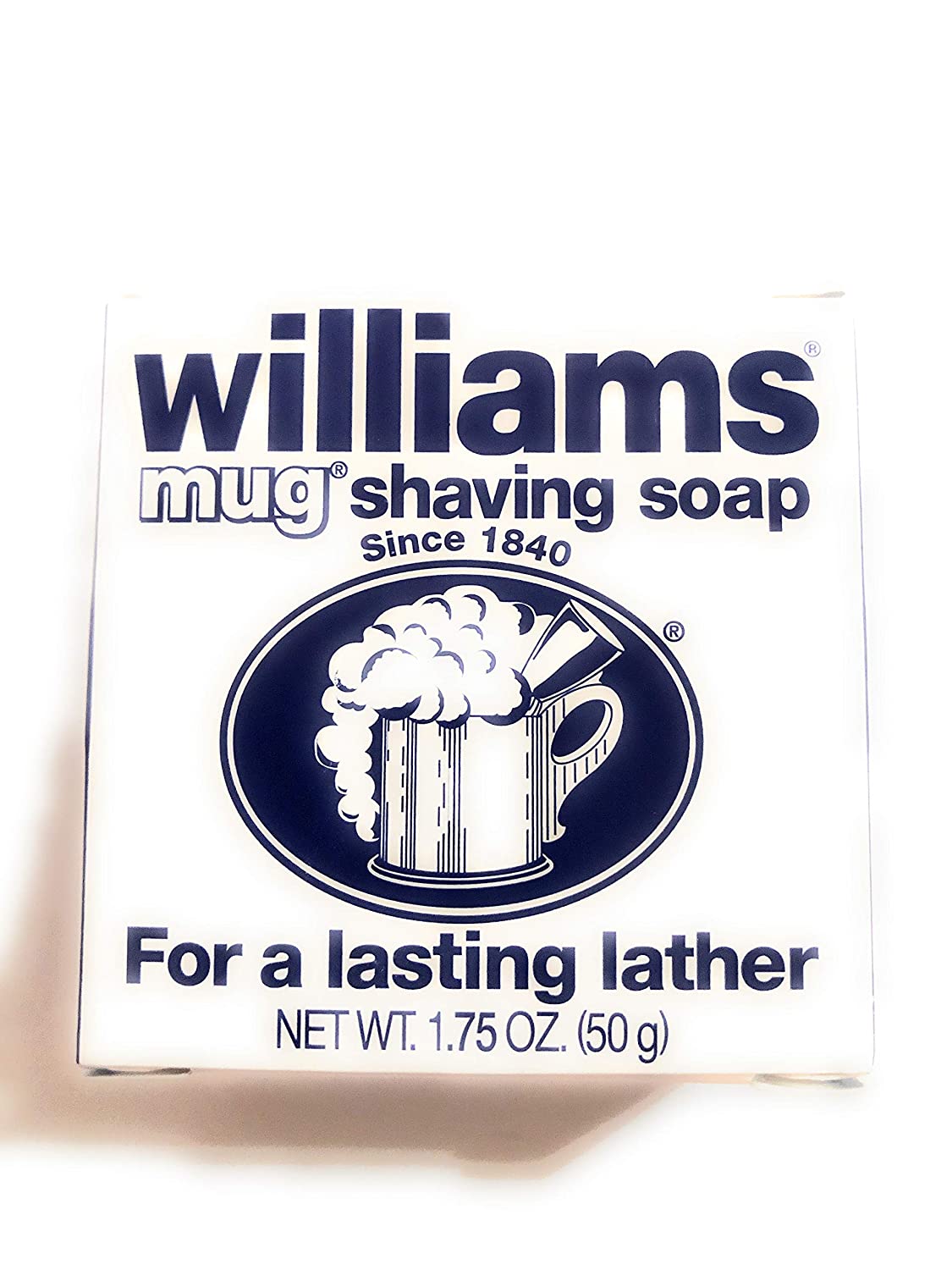
Williams Mug Soap (Combe Inc.)


If we must continue to live under pandemic conditions, I am officially switching from shaving with pedestrian "canned goo," like Barbasol and Gillette, to a synthetic brush and shave soap. One can offset life's big impositions by embracing its small luxuries. There is no better way to do that than by dropping a puck of Williams shave soap into a shave mug and whipping up a stiff lather. 

Except, as gentlemen on B&B point out, lathering is tricky with Williams. Considered to be one of the cheapest standard no-frills soaps a bloke can buy, Williams is notorious for being difficult to whip, even with rigorous brushwork. To succeed you must (a) Use soft water, and (b) "Bloom" the puck before attempting use. I do the following: buy Poland Spring water, and boil some in a kettle. Then I pour it over the puck and wait about twenty minutes. By that point it has absorbed all the water and created a layer of solid fattiness over it, which then needs only a bit of brushwork to resurrect. 

It takes serious motion in my Fendrihan mug to get something like the consistency of whipped cream, but it gets there. I can brush it on my face, and it holds long enough for my razor to do its magic. I have oily skin, so the drying nature of Williams is a plus for me (and a significant minus for anyone with naturally dry skin). The scent? It is identical to the original Ivory bar soap, the one which famously floats. This makes sense, as Williams is the creator of Ivory soap.

At a buck per puck, this is a true bargain. There are pricier soaps that I'm sure I'll try, but for a guy like me who just wants a quick scratch, Williams is fine, and for the price it's impossible to beat.