3/28/22

What Fragrantica (And Everyone) Gets Wrong About Creed's Success Story

Ghost Perfume

I've been fairly tight-lipped about Gabe Oppenheim's new "tell-all" book, The Ghost Perfumer, a light exposé of the true geniuses behind Creed's perfumes, and the strategic commercial underpinnings of the brand's questionable marketing tactics. 

To be frank, I find the subject boring. It's no mystery that Olivier and Erwin Creed aren't the real noses for the brand. It's no mystery that Pierre Bourdon and people associated with him are the real noses for the brand. And it's really no mystery, and no surprise, that Creed uses blatantly exaggerated historical claims to sell their wares. The topic of The Ghost Perfumer is a bit of a bland non-starter for me. 

What I do find interesting is Elena Vosnaki's recent editorial on Oppenheim's book, and on Creed. She pursues a line of reasoning about Creed that I've seen everywhere, one that has become a pet peeve of mine when lurking around protracted internet discussions about the brand. Vosnaki acknowledges that Oppenheim's contentions are well vetted, and she does well in casting herself as fervently opposed to and skeptical of the brand's ongoing practice of associating its perfumes with historical figures. But her article crafts a narrative that I find to be just as dubious as Creed's. 

In order to contextualize my sentiments about her sentiments, you should know that I find it distasteful when an attempt to discredit something brings little more than cynical language to the party. For example, in describing Creed's historical lineage, Vosnaki fails to connect Creed's commercial image to any perceived lies, and sidesteps the familiar "Creed started in the seventies" argument: 
"Creed has always claimed to hail from 1760, 'from father to son,' but there is only factual evidence of a tailoring business under the name, and not as far back as that. In fact, Olivier Creed burst onto the fragrance scene in the 1970s . . . It was in a Lille shop called Soleil d'Or where Olivier is said, going by the memoir of the daughter of the shop's founders, to have introduced his line in the 1960s. On page 41, she claims the first three perfumes 'he [Olivier] had them made to his own specification,' clearly alluding to outsourcing." 

Her suggestion that Creed's heritage is "only" a tailoring business that doesn't really date back to 1760 is directly contradicted here by professors Daniel James Cole and Nancy Deihl, who wrote in their 2015 book The History of Modern Fashion:

"Both [Queen] Victoria and [Empress] Eugénie favored riding apparel from the British tailoring firm of Creed, which had served men since 1710." 

I'll give both Oppenheim and Vosnaki the benefit of the doubt in their casual dismissal of the brand's provenance, and chalk it up to the forceful tide of social media sentiments, but I'm bothered by the obvious lack of research on Creed. Surely experts in fashion, now holding respectable posts at an American university, are trustworthy sources on the topic? Creed served Queen Victoria and the wife of Emperor Napoleon III. Who believes there weren't perfumes offered by Creed to such clientele? Sports apparel of the time was often associated with the trappings of country-clubby hygienic products, and fashionable riding tack connects pretty neatly to something like Royal English Leather. 

That a family member associated with Soleil d'Or said that Olivier "outsourced" his perfume line in the 1960s isn't news. Should we believe that Olivier created a bunch of niche frags by himself? Does anyone know how difficult it is to source materials? Long before the internet, and before social media, this relatively unknown fashion maverick mustered the funds to pay third party perfumers. They followed his "specifications" and handed over the results to Olivier so he could parlay them into a perfume brand.

How does this dent his credibility, exactly? 

Vosnaki goes on to assert many other things about Creed, but eventually lands on the main point of contention for me, something that I'm likely guilty of purveying myself at some time or another in the not-so-distant past:

"The timing was crucial, because despite Creed's claims to historical heritage, and the unhistoric claims of famous patronages wearing what is olfactorily surely modern stuff, realistically it was Aventus that catapulted their skyrocketing fame to the average perfume buyers with a (seeming) penchant for showing off." 

To which I say, well, no - I sigh. What can I say to this? Aventus isn't what brought up Creed, nor is it what let them sell out to BlackRock Private Capital. Green Irish Tweed was what put the brand on everyone's map. I was wearing GIT long before Aventus. My college friends were wearing GIT long before Aventus. Here in Connecticut, the "nutmeg state," whenever I mention Creed to anyone I know who has an interest in perfume, the words "Green Irish Tweed" are inevitably what they say. 

Men worshipped GIT. From the mid-eighties onward, GIT was the cult favorite. Cool Water was the affordable EDT version, the alternative that most men preferred to drop coin on, but twenty-five years of GIT on the market bought Creed the wherewithal to create Aventus. It's true that Aventus was the biggest thing after GIT, and it's also true that Aventus, released when social media was really taking off, was a huge sensation, but we shouldn't get too absorbed by the narrative here. Let's remember what really happened with Aventus when it was released - it was lambasted.

I was there in 2010 when it was released, a member of basenotes avidly reading the forums. I was there to see member after member call it all kinds of names - it was "designer," "mall juice," "generic," "fruity," and "disappointing." Basenoters only changed their tune on Aventus when the fragrance was appropriated by an army of immature guys who claimed (immaturely) that Creed was a sexual good-luck charm.

The same army then pretended to know a thing or two about perfume by obsessing over "batch variations" of Aventus, which led to YouTubers getting in on the conversation, and before you knew it, a bunch of people were experts on Aventus. Mind you, these early YouTubers weren't buying their bottles. They were given their bottles. Much of their discourse led to a backlash, by which the troops were given to retracting and recanting. Merely five years after its release, Aventus was overexposed in the newly-formed social media bubble of the fragcomm, and people were eager to distance themselves from all the silliness, the Aventus "hype machine," and any suggestion that this was their favorite fragrance, or even their favorite Creed. 

My point is that Aventus has had a convoluted reputation in the world of fragrance enthusiasts, and drawing a straight line from the first bottle to Creed's BlackRock sale is ill advised, in my opinion. Sure, the fragrance has benefitted from a wider market of more buyers at untethered prices, which is simply a sign of the times. But Creed was building that success slowly, over many decades, and with many earlier and better releases. 


3/27/22

The Archeological Endeavor of Excavating My "Deep Vintage" Old Spice Cologne


I recently bought a bottle of "deep vintage" Old Spice cologne, a bottle with stopper #2 made between 1950 and 1955. To be clear, I consider any bottle with stopper #1 or #2 to be "deep vintage." My bottle is about 60% full (a light test reveals the level to be almost exactly where the taper of the buoy begins), and is in fair cosmetic shape - faded but legible graphics, a small dent on an otherwise pristine metal stopper cowl - yet it arrived with a problem. The kind of problem I only encounter with things as old as early 1950s Old Spice: the stopper top snapped off in transit, and the rest of it is lodged flush in the spout, completely blocking the removal of fluid. 

This sounds like a major setback, but in reality it's no big deal. It delays the experience of wearing and reviewing the stuff, but it's merely a delay - I have other bottles I can decant the cologne into. This situation demands some "excavating" be done to access the cologne, which is sequestered by a seventy year-old chunk of broken polyethylene, so I made a plan. When my 1955-1963 bottle is empty, I'll use a small nail to tap the stopper down into the bottle, and then use a decanting pipette to transfer the cologne (now with a piece of plastic floating in it) into the available container. I'll then use what is left of the stopper to reseal the older empty bottle, and simply use it for display. Issue resolved. 

This situation does have me reflecting on how vintage Old Spice is the only vintage fragrance that feels archeological in nature. The picture above is of an empty 1940s Hull Pottery bottle on eBay, and just take a look at it. Doesn't it look like something recovered from the wreck of the Titanic? It's a product of twentieth century America, and there are still plenty of people walking around today who were alive when it was made, yet it looks like it was recovered from the bottom of the ocean. Its glaze is cracked, there are oxidation marks everywhere, and its hand-painted graphics, likely stenciled on mere moments before the pottery was fired, are primitive in nature. It's Indiana Jones fare. 

My bottle, made by the Wheaton Glass Company, is not nearly as rustic looking, but it bears a similar overall design. The base is embossed with the words Early American Old Spice, which hearkens back to the days when Shulton pitched this fragrance to women. Old Spice is America's only true wartime cologne, released a year before the start of World War II, and issued in smaller, simpler bottles to troops abroad. It survived the war, and the intervening eighty years, and is a testament to American masculinity. My bottle stirs echoes of that time, and all of its mythical archetypes, and when I shake it and hear liquid sloshing around, I wonder how a pedestrian drugstore cologne managed to survive. It's amazing to me that it wasn't used up and discarded decades ago.

It leaves me wondering what is possible in the quest for deep vintage Old Spice. Are there pristine Hull Pottery bottles out there? (When I say 'pristine,' I mean bottles that still contain original fluid.) How many might exist? Ten? Twenty? What fractional percentage of vintages precede the Vietnam War? Of that small number, how many zeros go before the decimal point for extant Korean War bottles, i.e. bottles like the one sitting on my desk as I write this? And of those, how many more zeros must be added to the decimal to accurately convey the number of surviving WWII bottles? And of those, how many are original Hull Pottery bottles with rust-free stopper #1? A full four-ounce bottle of Hull Pottery Old Spice is, without exaggeration, the Holy Grail of wetshaver deep vintages.

3/13/22

Peony & Peppercorn (Banana Republic)


I find it interesting that Banana Republic markets its Icon Collection fragrances as entirely unisex, even when the packaging is pink and the name suggests "spiced floral." Such is the case with Peony & Peppercorn, which comes in a pallid pink box and bottle, and broadcasts to the world that this is a peony fragrance - peony, the most feminine-smelling flower in existence. Yet it is aimed at either sex. It's definitely 2022. 

A few things I've noticed: P&P has no peppercorn, and is mislabeled. It should be called White Tea & Peony, or even something more abstract, like Cameo Pink. The top note is a wan, sour, leafy smell, reminiscent of extra fine tea buds blended with a whiff of a metal spoon stirring them in warm water. Pepper notes are hard to do well, but fresh florals are another story; peony is the most common floral note in modern perfumery. It ranges from awful to excellent, and it's academic for a skilled nose to throw a good one into a fragrance. Vincent Kuczinski orchestrated everything, and he did a nice job.

Yet the peony is a conceit in this fragrance. Banana Republic's "peony" is the same as the blackcurrant notes in my SMW knockoffs! When I say "blackcurrant notes," I'm referring to the chemical(s) responsible for creating the feminine, berry-sweet effect in those frags. Kuczinski extended the fruitiness into a floral direction, finessing the palette (possibly a combination of dimethyl benzyl carbinyl butyrate and alpha damascone) into fragile petals, and an obvious fruity-floral feel. Fragrantica mentions plum as the only sweet fruit in the pyramid, but if we're being honest, it should be identified as "red berries." Side by side with Silver Shade, Sun Java White, and Al-Wisam Day, it's identical. Although there's no pepper note here, what I like about Peony & Peppercorn is that the execution of the peony shows how pretty it can smell in something composed by a talented perfumer.  

In a conventional mindset, it's hard to argue this isn't a feminine fragrance. It's perfect for women. That the company behind it is trying to snag both markets is fascinating, but I don't think men are on board. I am, because I'm a weirdo, and I appreciate a realistic fruity-floral scent, especially when it eschews sugar and shampoo effects and goes in a more natural and grounded direction. Nonexistent pepper aside, I'd guess in a blind test that Peony & Peppercorn is worth well over $100. Get it before it's discontinued. 

3/1/22

Friendship Garden (Shulton)


Released in 1939 and discontinued in the early seventies, Early American Friendship Garden by Shulton was the brand's "green" floral springtime splash. (How's that for alliteration?) I happened across two interesting things at an antique store last week, a stone head of Buddha that could be worth thousands and was only priced in the hundreds, and a four ounce bottle of this stuff, which I sampled. I didn't buy either, but they were the only items that piqued my interest and have me thinking of returning for purchases. 

Friendship Garden comes in an eau de cologne concentration; it only lasts about two hours and doesn't project beyond a couple of inches. It's an aldehydic floral that reminds me of the current iteration of Wind Song by Prince Matchabelli. The differences to my nose are its bitterness and the absence of stone fruit notes like peach and plum. Wind Song has the character of a typical fifties fruity-floral, with a sweet and powdery aura that grows woodier as it dries, but Friendship Garden remains fairly cool, green, and bitter from top to bottom. There's a lick of crisp bergamot and galbanum on top, followed five minutes later by a gauzy haze of geranium, dandelion, lavender, and the cut-grass generalized aroma of wildflowers, whatever they might be. Think the tart and very light smell of some random colorful bouquet you can buy for fifteen dollars at your local supermarket, and you have an idea of FG's heart. Green, vaguely floral and herbal, a bit flat, and totally forgettable.

The far drydown is a rather sour lemony musk, with just the faintest hint of woodiness, and little to no charm beyond a memory of what preceded it. Friendship Garden isn't really a great fragrance in my opinion, but it was a significant release for its time. I found a bottle advertised for $3 in a December, 1942 issue of Life Magazine. Adjusting for inflation to today's dollar, and that comes to fifty bucks. Not cheap. If you find a bottle for a few dollars, grab it, but this isn't anything an avid collector should lose sleep over.

2/14/22

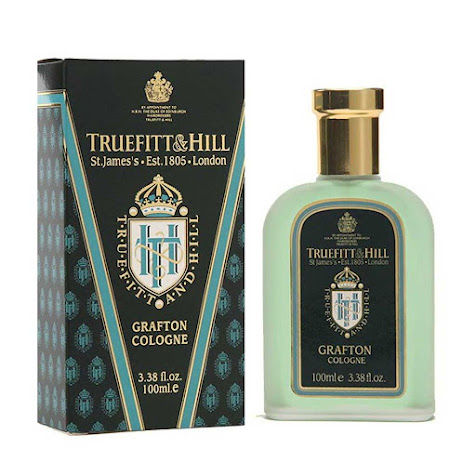
Grafton (Truefitt & Hill)

Everyone's nose is different, and while some smell Grafton cologne as being similar to things like Rive Gauche and Égoïste, I smell a clumsy reinterpretation of YSL Jazz in this quiet little aromatic fougère. The funny thing about Jazz is that it used to cost less than Grafton, but since it's been discontinued, reissued, and discontinued again, the more stalwart Grafton is now the bargain of the two. Go figure.

The differences are obvious, however. Where Jazz is tighter, more lucid, and more closely focused on the aromatics that comprise its crisp fougère accord, Grafton inhabits the laid-back mould of barbershop fougère, with brighter green notes of citrus and stemmy florals on top, followed by a dustier coriander-spice midsection, before it settles on an extremely dry woody amber that acts like a snooty glorified aftershave rather than a properly realized upscale fragrance. Longevity is middling, note separation is just okay, and the whole affair makes me want to reach for Jazz to energize things. 

Between Grafton and JF, I've come to think of the Brits as being relatively clueless about perfumery compared to the French. British compositions seem unoriginal, and the quality isn't where it should be. Geo F. Trumper's colognes are an exception, although even those could be better. Perhaps it's why Luca Turin had nary a good thing to say about English perfumes in The Guide. Genius in perfumery is clearly not found in London. 

2/12/22

A Brief Note on Decanting Pinaud's Lilac Vegetal


About a year ago I decanted my entire supply of Lilac Vegetal into a glass bottle I'd purchased from Home Goods, in an attempt to eliminate the funky plastic off-notes that haunt its otherwise-pristine beauty. I'd had pretty good luck doing this with Clubman, which goes from a cheap-smelling powdery fougere to a beautifully soft and elegant citrus musk within two months of decanting. I figured it was worth a try with Lilac Vegetal, which suffers much more than Clubman does in regards to off-gassing (the unfortunate leeching of plastic odorants into alcohol-based fragrances). 

I shaved the other day, and found myself with a choice between two lilac waters. Bear in mind that I also own a full vintage 1960s glass bottle of LV, which contains mostly unused fragrance that smells as new as the day it was made. The differences between the vintage and new stuff are unmistakable, as the former possesses a sweet and powdery ambergris aura that is entirely missing from the plastic-bottled version. Now that I've decanted and let sit, I was eager to see if the newer formula's pesky urine-like plastic problem had dissipated, or if it is as die-hard as the internet chatter says it is. 

To my surprise, the result is inconclusive. I figured it would hew one way or the other, but it's entirely possible that I haven't given it enough time. While it smells significantly better than it did in plastic, with a fresher and more floral profile, and much more of that powdery ambergris-like base, there's still a hint of plastic tainting the lilac note. It's fainter and far less intrusive than it used to be, and I'm hoping that another six months in glass (with air in the bottle) will improve things further. One can certainly make the argument that Lilac Vegetal improves when decanted into glass. 

Even if the plastic note doesn't disappear entirely, it has diminished down to a far less noticeable degree. The trick with Pinaud's products is to decant them into quality glass that allows aeration without evaporation - a tight seal is necessary. My bottle came with a pretty good cork. You could experiment and mix with witch hazel to see if that cuts the plastic note, but I'll wait on that. Lilac Vegetal is a delicate floral scent with a powder-puff cushiony drydown, pure heaven for a wetshaver, and it should be decanted if it's to be enjoyed at its best. I'll update on this later in the year.

2/1/22

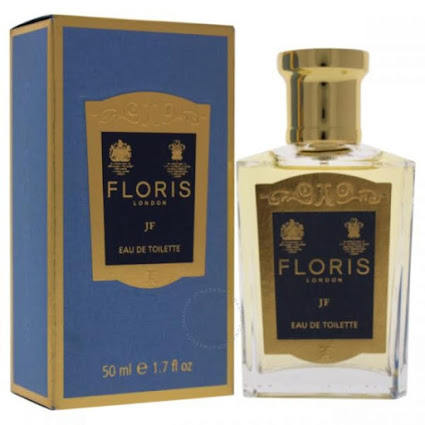
JF (Floris)


Floris is one of those oddball brands that are nearly impossible to purchase, not for scarcity, but for value. Here in Connecticut there aren't any brick and mortar stores with a Floris counter. Can't sample 'em. This makes Floris a blind buy by default (unless you pay Luckyscent), which brings me to price: eighty for a 1.7 oz, and over a hundred (well over) for a 3.4 oz. Their reputation is stale, with little in the way of accolades or press beyond fond memories of older guys championing No. 89 in the days when brands like Czech & Speake and Maître Parfumeur et Gantier were all the rage.

For the hefty dollar it commands, I expected JF, one of their aged masculines, to smell a few leagues better than its competition. I chose a 1.7 oz bottle because it's a familiar brief aimed at stealing a slice of Cool Water's pie. I also had the edge of a gift card from Neiman Marcus, and forked over a small fraction of the price for my bottle - the only way I'd ever buy one. I've been wanting to write about a Floris frag for ten years, making this post past-due. So what's my opinion of JF? I'll keep it simple: it's overpriced and nothing special. Hold out for a gift card to buy it, or else just forget it. It's a disappointment. 

Ingredient quality? Designer, albeit high-end designer. Strength? Average. Longevity? Decent. Compositional prowess? Eh. Here's the shocking truth about JF: it smells like vintage Aspen (1998 Aspen) for about five minutes, then shuffles sleepily into vintage Cool Water (1993 Cool Water) in the twenty-five minute drydown. If you're familiar with the aforementioned, you know exactly how JF smells, which is to say it's fine, but it's nothing new and interesting. Only vintage Davidoff fanatics could love it. Still, I appreciate the novelty of hearing "Rule, Britannia!" every time I depress the atomizer.

1/16/22

I Ran Out of Vintage Old Spice, So I Replaced It With New Juice. Then This Happened . . .


Back in August, I chucked the remainder of my European Old Spice Original aftershave and refilled the bottle with the new American formula by P&G. My thinking was that I would run out of vintage Shulton by mid-fall, and by that time I wanted the newer formula to be sitting in glass for three or four months, so it would be mellowed and ready for use when I transferred it to the milk glass vintage bottle.

The three months went by with me thinking the transfer would be seamless, but would be marked by a distinct difference in the two formulas. I figured the change from the smooth vanilla powder of vintage to the crisp, clove-laden P&G formula would be stark. Yesterday I transferred the liquid from the European Original glass bottle to the newly-emptied Shulton bottle, and topped it off with about a quarter of a four-ounce plastic spray I purchased at Walmart. I filled the Shulton bottle up to the top, stuck the little grey stopper into it, and let it sit overnight.

When I came back to it today, I braced myself for a disappointing change. I'd grown used to the vintage formula, and wasn't really looking forward to switching back to the stronger "butch" formula P&G sells today. At noon I showered, changed, and splashed the vintage bottle's new contents into my palms, rubbing the liquid across my neck and chest. To my surprise, I found it smelled a lot like the vintage cologne! I stopped and sniffed the bottle, then added a bit more splashed it across my arms. Another few sniffs later, I realized something had happened to the formula.

Either it changed a bit in glass, or it leeched whatever oils were clinging to the Shulton bottle and blended them into the new formula, but somehow the new stuff smells soft and powdery and sweet, with a distinctly musky vanilla note, much like vintage. Perhaps it's a combination of the time spent stored in glass and the vintage oils caked into the Shulton bottle, but the overall smell is very, very close to the Shulton formula. I don't get the sharp spicy accents that I usually get from the plastic spray bottle, I don't get the slight plastic undertone, and there's no harsh clove. Honestly, if I didn't know better, I might not notice any change from the 1970s formula to the new stuff.

My advice to any guy who buys vintage Shulton on eBay is this: buy a glass bottle and decant the plastic spray formula of OS "Classic" into it, and let it sit in the glass for however long it takes you to use the vintage juice. When your vintage is empty, transfer the cologne from the glass to the Shulton bottle, let it sit in there a day or two, and see if there's a big difference in the scent. You may find that the new formula has somehow morphed into something very, very close to the vintage.

1/15/22

Is Van Cleef & Arpels Pour Homme Worth It?


Van Cleef & Arpels Pour Homme was recently discontinued, and predictably the many unicorn breeders on eBay had a field day with it. The picture above is just one example of what a seller is currently asking for a 50 ml bottle (that's right, the 1.7 ounce itty-bitty bottle). You should feel privileged to spend three hundred dollars on a relatively obscure bitter-rose chypre from 1978, because Captain Random Price in his grungy grey market janitor's closet stock room says so. 

Should you, though? Let's break down what it means to buy a bottle of VC&A PH. Then let's consider whether it's unique enough, well made enough, relevant enough, and desirable enough to warrant spending cheese on it. Usually I would consider vintage and discontinued eBay fragrances a rip-off if they're priced beyond an inflation-adjusted amount, but VC&A's signature masculine is just oddball enough to make me stop for a moment and consider it in context. It isn't your usual forty year-old moth-baller. 

Is it unique enough? This is the easiest question to answer: Yes. Having smelled six hundred fragrances, I can say without any exaggeration that I have never encountered anything that smells like VC&A PH. There is an asterisk to this, however, for there's a common drugstore bar soap that does smell like it - Dial Gold. That presents a problem for anyone looking to high-roll a clever buyer. When I put my nose on VC&A PH for the first time, back about nine years ago, my very first thought was this is exactly and very weirdly like Dial Gold antibacterial soap! 

There are two ways to think about VC&A PH. You can buy into the internet mythologies people have built up around it - it's a gothic rose, it's a "powerhouse," it's testosterone in a bottle - and all of these notions lend it immense popularity among connoisseurs of fine fragrance. But you could also get your nose on a bar of Dial Gold and compare them both, and decide it's just a soapy chypre with vague floral flourishes. Over the years I've found myself leaning more and more to the latter sentiment. Still, aside from the bar soap comparison, it's strange that no other proper perfume even comes close to the scent profile. Its brusquely bitter juniper berry and uncured tobacco medley should be replicated a dozen times over in the pantheon of late seventies masculines, yet most travel a significantly different path. VC&A PH travels alone. 

Is it well made? This one's a little bit tougher. The easier way to state the answer is to discreetly point out that the fragrance is congruous, balanced, and totally wearable. You won't find yourself sitting down to lunch and regretting that you reached for it. There's no time spent wishing this note were toned down, or that note were more successful, or wondering what in god's name that note is. Sure, you'll probably experience the rose crisis that everyone eventually goes through with VC&A PH. As in, where the hell's the rose? Everyone keeps going on about it, yet I struggle to smell it in the composition. There's some floral notes, yes, but it's hard to say what they are, exactly. I often think it's carnation. Then I'll waffle and think, okay, yes, there it is: the rose. Roses or not, the fragrance doesn't smell like a near miss. It smells quite good. 

But it also smells very, very soapy, and herein lies another set of divergent paths to take in one's understanding of this stuff. Anything that smells overwhelmingly soapy is going to smell cheap. The trick is to smell luxuriously cheap. Luxurious is Irish Spring shower gel. That fizzy burst of crisp evergreen and mossy earth with a lick of sweetness, and all coming to life in water. Cheap is Dial Gold soap. Take a wild guess where the danger zone is for Van Cleef & Arpels. The problem with the fragrance is it attempts a soapy formula that also smells perpetually dry. Smart soapy masculines inject the illusion of moisture into their drydowns to better animate their complexities, and breathe life into notes that might otherwise be unrealized. Think Sung Homme and Z-14. But VC&A made the crucial mistake of keeping their chypre bone dry, which parches the fidelity of its constituents, keeping it overly blended, a little too tight, and not as luxurious as it should be. This is why it frequently disappoints me.

Add to that its reliance on mid-shelf designer-grade materials, and the issue is compounded. The fragrance doesn't smell natural enough, nor is it lucid enough at any stage to warrant Creed prices. And that brings me to the next question - is VC&A PH relevant enough? Is this a fragrance that every collector MUST have? The answer is decidedly no. Its uniqueness is a double-edged sword; the astute collector may value its rare character, but might also interpret its one-off nature as something not apt to inspire imitation. Where things like Drakkar Noir, Polo, Le Male, and 1 Million have each carved out their legions of clones, many of them disguised as original designer releases competing for marketshare, VC&A isn't setting the world on fire. Both of their signature masculines have been discontinued. Many of their ancillary releases have been minor hits, or have gone unnoticed. This isn't the world's most relevant brand.

All of this brings us to that final daunting question: Is VC&A PH desirable enough? Would you default on the month's heating bill for a bottle? Would you defer a car payment for it? Cash out on those political science textbooks and risk failing a course? At what point do people decide a fragrance isn't worth it? Or harder yet, when do they decide it never was? I think the answer lies in parsing the answers of all the previous queries. It's unique as a fine fragrance, but stick your nose in the soap aisle at Walmart and you'll find something for $1.79 that smells as close as possible to an exact match. It's competently made, but perhaps there were a few key miscalculations made in the design of its formula. Nineteen seventy-eight was forty-four years ago, and the glitzy jewelers image of VC&A has since lost its shine, at least as far as the perfume brand is concerned. Thus the desirability of this fragrance is limited to the achingly curious, or the die-hard fan, and neither party would be wise to spend more than $120 for a bottle - a large bottle. Sentimental value isn't as volatile as grey market prices. Its fixed nature means even the most devoted and ardent admirers would be stymied by a $300 tag. 

So where does that position this one in the wild west world of internet auctioneering? VC&A PH is eclipsed in both beauty and versatility by its younger brother, Tsar. I blew through my bottle of final-formula Tsar. It was, quite literally, the smell of an emerald. Thick, lush, green, kinetic, a perfume of shimmering woody and floral proportions that bloomed into a veritable garden party on my skin, Tsar was far and away the better of the two legacy perfumes by this house, and frankly I'd consider spending two hundred for it. (Three hundred isn't happening.) You can lead a unicorn to water, but it can't drink because its horn has a nasty habit of getting in the way.


1/1/22

French Lilac (Pacifica)


The copy on the box for Pacifica's French Lilac perfume reads, All of our perfumes are hand-poured in micro-batches using the best grain alcohol. Made in the USA with the best globally sourced ingredients. It's called a micro-batch, presumably because there are changeable aspects inherent to the production method for French Lilac, a fragrance that isn't mass-produced with cheap synthetics. At first glance, this might seem dubious, given its wide availability in Whole Foods grocery stores for twenty bucks a bottle. 

But looking at things more closely, it makes sense. It's twenty bucks for one ounce of French Lilac, which is actually a bit pricy. Also, there appears to be a limited number of bottles per store (I counted six at mine), which at an ounce a pop equals two 3-ounce bottles, which is about $120 worth of fragrance. With these eensy-weensy bottles and their restricted distribution (who else sells these?), it's probably not such a stretch to suppose the Pacifica production method incorporates variable natural materials, albeit in limited quantities, all used in relatively small commercial batches. Maybe the brand values a certain degree of quality after all. The perfume speaks for itself in this regard.

French Lilac is the best lilac perfume I've encountered. It's a rich and heady lilac accord, and it's nuanced with green sap notes, fruits, and inedible vanilla. It is to lilac fragrances what Perfumer's Workshop Tea Rose is to rose perfumes: a cheaper alternative to the less-compelling and far more expensive niche variants on this kind of floral theme. What impresses me about French Lilac is its layers; the fragrance opens with a green wreath of magnolia and hyacinth, which settles against a lilac-centric spring floral bouquet. There's a hint of peach to lift the honeyed florals above their woody leaves and balance them against the sacchariferous warmth of heliotrope, which is in turn counterweighted by unsweetened vanilla. This isn't a soliflore. This is a pyramid. 

An hour in, and the bouquet coalesces, its distinct floral tones merging with that sturdy vanilla foundation to form a lilac note. This lilac effect is full, rich, rounded. It escapes sliding into that slightly plasticky off-note that lilac reconstructions often fall victim to (I'm looking at you, Demeter), and thanks to the strength of the underlying peach and vanilla notes, never strays into air freshener territory. To be clear, room sprays tend to smell overly harsh and strident to fill large spaces. French Lilac maintains a few degrees of smoothness and subtlety to keep its usage within the scope of personal fragrance, at least to my nose, although any perfume can double as room spray. 

Five hours after application, French Lilac's warmth cools and its lilac note thins a bit, becoming sweeter and fruitier, until I'm left with a simple peach base, which itself smells remarkably crisp and realistic, especially for something that's been simmering on skin all day. This far drydown tells me Pacifica's formula is something well thought out and executed, not corner-cut or trite. Unfortunately it has its share of internet detractors who annoyingly elevate Highland Lilac of Rochester's perfume over it at every opportunity, with some even claiming FL doesn't smell anything like lilac at all. I guess if you spray it on paper and give up on it after three minutes, you'd reach that opinion, as the other fruity floral notes smell like things other than lilac. But if you spend an hour with French Lilac and say it isn't a good lilac, your nose is broken. 

Every guy who is into old-school lilac water aftershaves should try French Lilac. Shave, splash some Lilac Veg, or whatever lilac water is in your den, and then give French Lilac a spritz or two, and it will top off the retro experience. This is exactly the kind of robust nineteenth century floral scent that was in vogue among well groomed dandies. In 2021, women owned the lilac fragrance space. In 2022, it's time for men to reclaim it. 


12/26/21

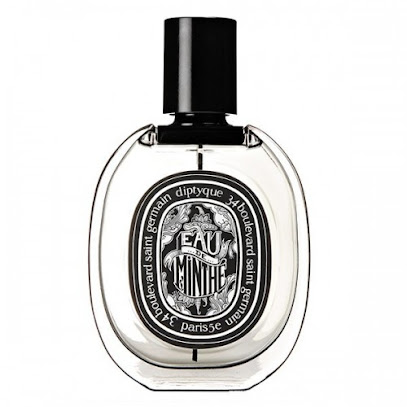
Eau de Minthé (Diptyque)


This fragrance was released shortly before this awful pandemic began, and I almost wonder if the world would know what to do if something this bright and fresh and happy were released in our grim times. Diptyque's 2019 eau de parfum is a clean, green little entry in their growing catalogue of exclusive EDPs (kaa-chiing!!) 

When it comes to mint notes, perfume houses usually stray into a distinct danger zone. Many fragheads are criminally unaware of what the government gold standard for mint is in contemporary perfumery, a pricy aftershave by Myrsol called Formula K. Now granted, there are several different types of mint, and no one fragrance can corner the market on all of them, nor can one represent a fair standard for each type. Formula K is the most lucid peppermint note you could ever hope to smell in a fragrance, and there's no doubt that at least some natural peppermint oil was used in its making. Paired with a healthy dose of added menthol, the overall effect is incredibly crisp, lucid, and natural, and because it's so realistic it doesn't fall victim to the thematic danger of smelling like toothpaste. It's just a beautiful herbal aroma that goes far beyond the call of duty. 

Formula K is about six dollars an ounce, making it expensive for aftershave, but a good value for 180 ml. When I turn to a European niche perfume brand like Diptyque, which asks seventy-five dollars an ounce, I expect at the very least that something called Eau de Minthé will be on par with Myrsol's peppermint. All considerations are made here - the mint note in Eau de Minthé is supposedly Oregonian spearmint (whatever that is), the concentration is EDP, hard to manage with mint, and there's no telling which stylistic direction they're aiming for - yet to my nose, the mint note falls short. This isn't a lucid herbal spearmint. This is drugstore aftershave mint, in the same league as Skin Bracer and Aqua Velva. It's a nondescript, mentholated, mint-like spearmint note. It's okay, but disappointing. But, to be fair, it smells serviceable and works in the composition. 

Diptyque was going for a mentholated patchouli here, an interesting choice. The top is a fizz of menthol, spearmint, and what feels like a drop of green apple, but the patchouli note steps quickly to the fore, and maintains a central stance for the three to four hour duration. Ghosted into the background are supporting notes of lavender, geranium, and nutmeg, all lending a familiar wet-shaver fougère thing to Eau de Minthé's midsection, and I think it's safe to call the fragrance a fougère. While the lo-fi mint note is annoying, the menthol effect is dynamic enough to elevate the proceedings into what smells like a niche-budget luxury version of some proletariat splash at the dollar store. Its Australian sandalwood drydown, which is subtle and lightly tinged with smoky patchouli, saves this fragrance for me. I might complain about the mint, but I can't deny that the woody structure underlying it is well made and smells great.

There's a hundred reasons to avoid spending big bucks on something that postures as glorified drugstore aftershave, but then again if you're like me, a total weirdo who loves drugstore aftershave, Eau de Minthé tugs at heartstrings in all the right ways. It's complex enough to be interesting, luxurious enough to smell great in all circumstances, and conceptually sound for something priced near the $200 mark. If it sells well enough, they might even reformulate it and upgrade that spearmint note, which would be the sort of bitch move that would force me to buy a full bottle.