10/9/22

Patchouli Perfume (Maroma)


"Patchouli" is as much a concept in perfumery as it is a note. Translated from Tamil, it means "green leaf," and has a rich cross-cultural heritage. It found its way to Europe via the eighteenth-century "silk road," wherein it was commonly employed as a bug repellant that protected pricy silks and other textiles from hungry little mouths. When aristocratic European women received their extravagant linens, they noticed the beautiful smell, and asked for more. Patchouli was adopted as an olfactory luxury for those who were fortunate enough to have its beautiful earthy aroma baked into their pantaloons. 

Maroma's take on patchouli is interesting. First, the frag price-point: 10 milliliters of perfume concentration fragrance costs fifteen dollars. That means a 3.4 ounce bottle would run about $145. I think a bottle that size would last me thirty years, because this stuff is pretty potent, in a good way. The box states three notes, a simple pyramid of patchouli, Himalayan cedar, and amyris (usually elemi), but I smell only patchouli and cedar. The duo is slightly unbalanced by a more dominant cedar note, but the patchouli is always there, adding a camphoraceous sweetness. I find the quality of ingredients to be very high here, with a distinct evolution to the star note, starting as a chocolate mustiness that rapidly segues into a more expansive musky wood, from which the cedar emerges. It's quite legible, and radiant beyond belief; a mere dab of Maroma Patchouli will announce your presence from twenty feet away and last for days.

With that said, the company is a bit of a mystery. It appears to be an Indian concern, until you visit its website, which partially explains Maroma's legacy. The brand was created sometime in the seventies by Paul Pinthon, a Frenchman, and his American partner, Laura Reddy. Pinthon was "trained in the field of pharmacy," while Reddy had "training in aromatherapy in France." The site suggests the perfumes are all-natural, which I find a bit dubious, but it's not impossible. Their patchouli is simple, but it holds two crystalline notes in a steady timbre, the sort of thing only the best materials can achieve. 

10/1/22

Polo Earth? A Quick Thought on the Natural Perfumery Trend


Recently I read an article by Ítalo Pereira, in which he discusses the differences between "synthetic" and "natural" perfumes. Synthetic perfumery boils down to two things: formula stability and olfactory clarity. Natural perfumery boils down to one thing: murky instability. 

I've noticed the recent trend of natural perfumes hitting the market over the last two years, and find myself wondering what's behind the commercial push to "natural." It's clear that natural perfumery is a thing, but how much of it is tied to a cause? I happen to like the idea of my fragrances containing more natural materials, because "natural" has positive connotations. Want a neroli fragrance? Which would you prefer, the one that contains synthetics, or the one made with real neroli distillate? The latter is obviously preferable!

But what if a fragrance is more complex than that? What if we're smelling a composition with several tiers of floral materials, blended with woods and spices? Is it beneficial to go all-natural? As Pereira points out, not really. Synthetics are usually isolates of molecules that occur in nature. If you want a rich sandalwood note, you must examine what molecular components of sandalwood smell good, and which smell interesting, but not exactly desirable. It is then beneficial to separate out the best components, study their molecular structure, and convene in a lab to replicate them. 

The pushback against Pereira's article is notable. The comments are pretty rigidly on the side of "natural is better." But I notice that most of the commenters are posturing. They claim to be capable of discerning the differences between synthetic and natural materials, but can they? One person says, 
"I just don't like synthetic notes. I find they flatten the scent, make it dull and sort of 'expired,' meaning a weak, plasticky vibe . . . Naturals give depth, sillage, and staying power. Synthetics smell kinda trashy and not refined to me."

The opinion is written as if its author can actually smell the differences between these two worlds, but I have my doubts, as no specifics are offered. The same person reviews Bvlgari Jasmin Noir, which is clearly a synthetic fragrance, with the following:

"Very elegant and sophisticated. Smells expensive. It has character and depth which is captivating. Perfect for a gala or late night event." 

This individual also fawns over Dior's Hypnotic Poison. So clearly the whole "natural is better" schtick is just baloney. But there were many reviewers with similar hypocritical stances, by parsing their comments and reviews. Why is the public's perception of "natural" materials so biased, when they clearly prefer synthetics? What drives this overwhelming urge to ditch the lab and just use rough distillates and extractions, with all their un-sanded edges and off-notes? 

Polo Earth is probably the kind of product that gives this demand a voice. It's not really a fully natural product, and it's produced by a major conglomerate superpower with scads of synthetic frags in its portfolio. But it looks mighty chaste! Its simple, clear bottle. Its simple, clear name. The reliance on some degree of natural neroli oil, which gives it street cred. But if I buy it and wear it, am I making a statement, or just indulging in a chemically minimalist experiment? 

I tend to think I'm just being a tool. Regular Polo has been popular for almost fifty years, and never once has anyone asked that it be reformulated to be one-hundred percent natural. A "natural" flanker popping up in 2022 isn't going to change my view of Ralph Lauren, or its legacy. It shouldn't change yours, either.  

9/13/22

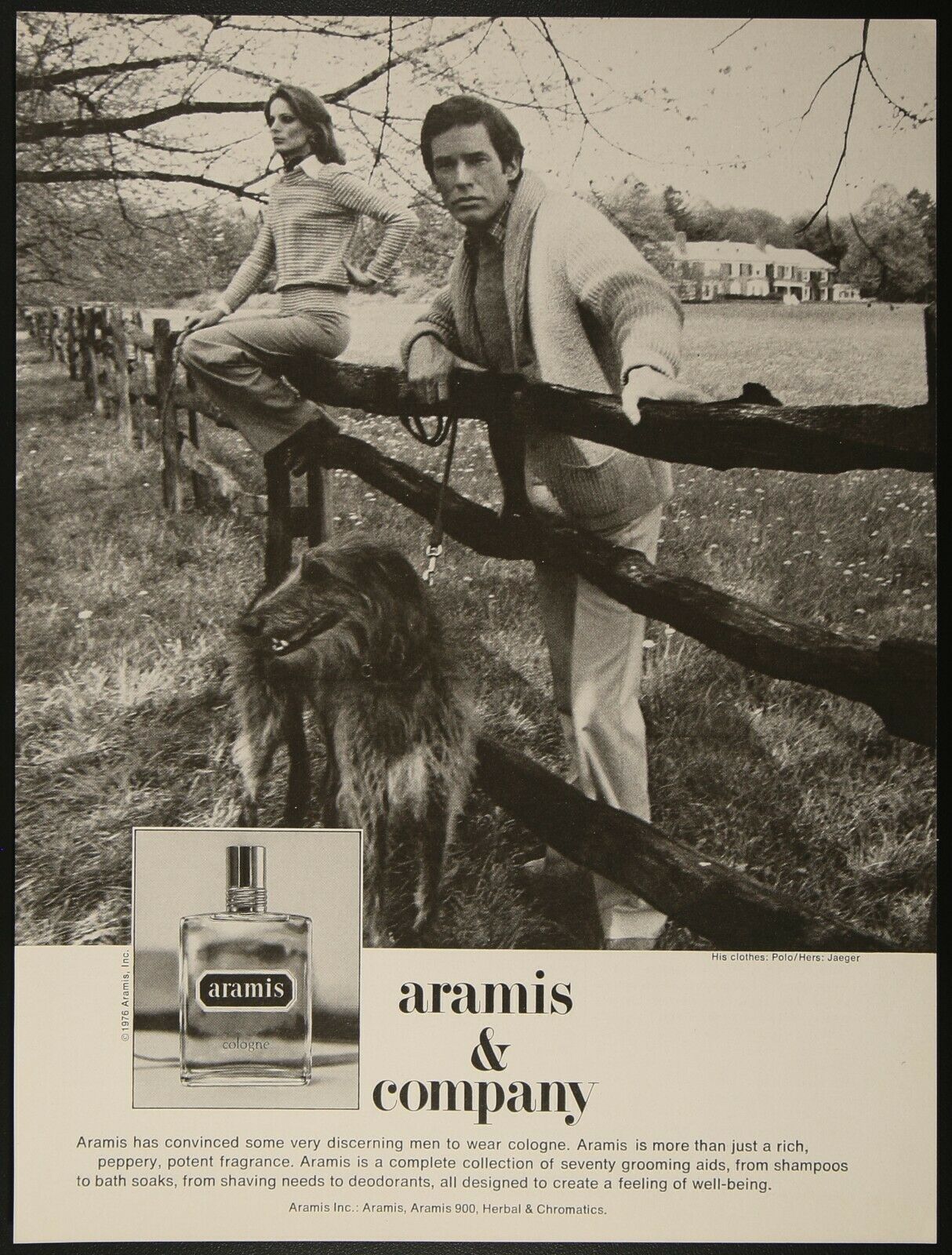
Does Aramis Have a Future?


In a recent Fragantica article by Eddie Bulliqi, he questions in pointed language whether the original masculine Aramis scent will be discontinued, and says,
"Aramis is not a 'believable' scent in the sense of evoking the personality or character of real people. It doesn't aim at verity or verisimilitude, neither in the presentation of its materials nor its subject matter. What you get instead is the pomp, drama, and theatre of olfactory allegory, in which the symbolic man of supreme might and unparalleled competence is represented by austere, almost aggressive component parts that convey harshness, aloofness, vitality, force, standoffishness, almost danger. 2020s perfumery, by contrast, can largely be thought of under the larger umbrella of the inviting and candour with its main branches of the delectable (sugary, edible), safe (clean, citrus), comfortable (musks, creams), and natural (green, field-fresh)."

I noticed a bit of sarcasm in his description of the "symbolic man" with terms like "supreme might" and "unparalleled competence," and that he ascribes negative traits to the scent itself, things like "harshness" and "aloofness." Positive traits like "vitality" are buttressed by negatives like "force" and "standoffishness," and he even takes "danger," the one thing that is often sexually exciting, and neuters it with "almost danger." According to Eddie, who sounds like he harbors some "almost danger" himself, Aramis tries to be exciting, but doesn't quite make it.  

His pairing of Lauder's scent to American Westerns, which he says (in an over-generalization) suffer from "stilted dialogue and farcical action," suggests his bias against Hollywood's romanticization of the West also feeds his opinion of the saddle-soap and chapped-leather scent by Estée Lauder, which is a bizarre comparison. He never mentions that Aramis was named after one of the heroes in The Three Musketeers by Alexandre Dumas, and conspicuously excludes any reference to how the fragrance's leathery nature alludes to the swashbuckling and horseback-riding done by Aramis in those novels. That would pin the origins and appeal of Lauder's concept for the fragrance on something European, and we can't have that! Better to shift the focus to twentieth century Westerns, which have nothing to do with the Aramis name. 

It seems the author decided to test the waters and see how far he could push the idea that a classic masculine chypre should go extinct for the great sins of being classic and masculine. One could argue that it's a legitimate viewpoint, and if it had been posed with less obvious disdain, I would entertain it on its merits. But Aramis exists because men still buy it. Perhaps some day it will be discontinued, as all things are eventually, but many of the feminines in the same cast have been dc'd for many years now. The extinctions of global trends always follow their own lines of capitalistic reasoning, and invariably boil down to dollars and cents. Brands yield only to their bean-counters. 

Aramis will, in my estimation, continue to enjoy production for at least a few more years, and will likely survive on the market even if it's discontinued, much like Zino does (dc'd for twenty years, and still dirt cheap and readily available).♰ Leather scents, dry citrus chypres, and any combination of those genres has always harbored fans and detractors, and I see the argument that they're somewhat timeless in style -- maybe dated, but not out-dated. Sure, when I smell Aramis, it conjures up images of Alain Delon (must be the Western thing) and sixties malaise, but then again I generate olfactory parallels with traditional riding materials, leather saddles, oils and soaps, and the weirdly dirty-clean world of those in the distant past who used only horses for transportation. Time only outdates itself as far back as yesterday, not the day before. 

Aramis is a product of its time, first and foremost, and the sixties in America was a period in the country's history when the gender roles of men and women were under new strain, thanks in part to the invention of the birth control pill. In a push against any cultural perception of unseated male virility, companies like Lauder catered to the Alphas in the pack. So rather than ask, "Will Aramis Be Discontinued," the author might instead pose the question, "Will Classic Masculines Be Discontinued?" I have no problem with that question, phrased honestly. Just be straight about asking it. 


♰ Update 6/24/25 -- It turns out Zino was never discontinued. It's cheap and readily available because it's in production for the mass market, remarkable after 39 years. 

8/27/22

Cabochard Eau de Toilette (Grès)


Few fragrances have endured more criticism than Bernard Chant's Cabochard (1959). It's a midcentury animalic chypre that has seen sixty-three years of shifting social values and cultural norms, yet it remains on shelves. In my opinion, it still smells good. 

Cabochard sits somewhere between Balmain's Jolie Madame (1953) and Guerlain's Chant d'Arômes (1962), but it's most compared to Chant's own Aramis for Men (1966). What do I think it smells like? To me it resembles Jacomo's 1978 feminine, Silences, a super-green floral chypre, but mixed with a hefty splash of Aramis. Silences is largely forgotten, which surprises me because there aren't many perfumes that are greener or eerier. It's evocative of a foggy lakeside morning in April, full of green tall grasses, mosses, and bittersweet wildflowers poking through the verdant murk. Cabochard is suprisingly green and ever-so-slightly more floral, but it's brightened with a massive bergamot, lime rind, and lemon juice accord brushed with Chant's signature fizzy aldehydes. It's nice stuff, and in keeping with the unofficial tradition of old-school feminines, it's eminently wearable for men. 

Has reformulation ruined it? Well, I haven't smelled the original (few people have), but I find little fault with this bowtie EDT version that I'm reviewing. Sure, longevity is brief (five hours), and it's no longer de rigueur to wear it, but it smells like it was made in 1959, and that's good enough for me. Look for either the EDT or the EDP. 

8/9/22

Introducing My New Blog!

Photo as taken by DRs Kulturarvsprojekt
In the past few months I've been tackling a project concerning what is truly my first love in this world, movies! I would like to introduce my new blog of movie reviews, Fontaine's Film Wipe, link here. I will maintain both blogs in the years to come. Spread the word: I also review movies now, both new and old. 


8/3/22

Deauville pour Homme (Michel Germain)


Deauville pour Homme is one of those inexpensive fragrances I've seen a million times on discount shelves, and never thought to buy because it just seemed too cheap to bother with. But the fragrance has seen a revival in popularity in the last few years, due in no small part to The Scented Devil's review, which is an interesting essay on the historical context of Michel Germain's 1999 masculine release. People have come around to DpH, and I join them in finding it to be a sleeper hit. Customers must be buying it in fair numbers for it to remain in production, with exclusive flankers, twenty three years on.

This fragrance is a remarkably beautiful composition for appreciators of powdery-soapy barbershop masculines in the Le 3ème Homme and Chanel Pour Monsieur Concentrée tradition, i.e., dandified floral fougères with orientalist touches. Its brisk lavender and clementine citrus salvo greets the nose in a rush of astringent freshness, tempered by a warmer undercurrent of sage, nutmeg, and cinnamon on the outermost fringes of perceptibility. These notes coalesce around a thyme-like creaminess that gradually gets airier and grayer, until the overall aura emits an abstraction of iris and tobacco, with the sweeter accents of the latter elevating the somber propensities of the former. Lavender survives the opening melee, as it is wont to do in compositions built on fougère accords, and retains a peripheral presence into the far dry-down, as hints of coumarinic duskiness undergird the scent's iris heart. It's all very smooth and easy to read. Deauville never feels abrasive or synthetic, and keeps its expensive shaving foam feel through to the woody-tobacco and talc base five hours down the line.

While I largely agree with SD's review, I diverge a bit in my perception of Deauville's pedigree relative to its competition in the designer realm: I don't find it to be "entry-level" in the least. Quality of materials is as high as those in my Carons, and while the composition is simple, it's just as deft as anything I've smelled by Jacques or Olivier Polge (and better than something like Platinum Égoïste), while the durability of the scent over a day's wear is admirable, with nothing "fuzzing out" into vanilla-crème cliché. I don't find the use of synthetics objectionable if they manage a coherent message. The one Deauville sends says, "I'm a clean-shaven man, and I'm ready to get to work." 


8/1/22

Hummer (Formerly Riviera Concepts, now by AB Diversified Fragrances)


I bought Hummer on the basis of Luca Turin's review in The Guide. He gave it three stars and wrote it's "not bad," and "the random gods of perfumery struck again." He describes it as "a sweet woody lavender," which is exactly what it smells like to me. This is one of the simplest fragrances I've smelled in a while, composed of three discernible notes: lavender, sweet amber, and oakmoss. The amber smells like an extension of the caramellic-grade lavender being used here, and takes the toasted biscuit end of the herb into a sugary direction, without straying into gourmand territory. Whatever moss is in the mix (real or synthetic) gives it a powdery and woody dry-down. 

The most surprising thing about Hummer is how classy it smells. The lavender is reasonably natural, although it's obviously bolstered with synthetics. It isn't loud at all, and wavers in and out of perceptibility, with moments where I smell it on the exhale after failing to detect it on my skin. There's no sclarene or other amplifiers involved. The note is soft, dry, rounded, and warm. Its sweetness gives it a Skin Bracer and Brut-like feel, and overall I associate the profile of Hummer with "barbershop." The nearest thing to it in my collection is Ungaro pour L'Homme II. Avon Tribute is in the same neighborhood, as is Jovan Sex Appeal. They're all more complicated, however. Hummer is far more basic, but this makes it more appealing to me. Good lavender scents are hard to find. 

7/22/22

What Does a 280 Year-Old Book Smell Like?


One of my
great passions is antiquing. I enjoy finding new shops and poking around forgotten treasures in search of that one thing that is actually worth something, and genuinely "antique" (100+ yrs old). 

Last Sunday I was at a massive indoor market in Bridgeport, and happened across a bookseller's stall, way in the back. It was manned by a middle-aged British woman but stocked by a guy who was likely enjoying his weekend on a yacht somewhere. I scanned the shelves quickly, my eyes programmed to find one thing: calfskin binding. They had a hit in under a minute, but it proved to be a nineteenth-century book, which is a big thumbs-down for me. Nineteenth century books, though real antiques, aren't old enough. I kept scanning, scanning, and ten seconds later, hit number two. This one was entirely calfskin, not just a partial with bare boards like its Victorian neighbor, and I knew as soon as I pulled it that I'd hit the jackpot. The Brit didn't know how to read Roman numerals (a little weird), and when she called the owner, he didn't know what she was talking about, and just threw a generic $100 price tag on it. Sold!

The book is an original Dublin edition of Jonathan Swift's letters to the people of Ireland, compiled by George Faulkner in 1742 (several letters in the book are separately dated as having been published a year earlier.) It contains his famous protest against William Wood's copper half-pence, penned under the pseudonym, M.B. Drapier. Faulkner was a friend of Swift's, and had several editions of his letters published over the course of the eighteenth century, but few are as ornate as mine, which is full of intricate wood cuts of bucolic scenes gracing the chapter pages. Although the title is worn off the spine, the condition of the binding and pages is otherwise flawless. Holding the book, it almost feels like it's brand new, which is bizarre, given its age. The only things suggestive of antiquity are the shape of its spine and the light scuffing of its leather. Someone told me it might have been recently rebound, but its front cover has a library stamp bearing the name and family crest of Jonathan Lovett, Esq., of Liscombe Park, Buckinghamshire. It was in his collection, and still bears his crest -- and he died in 1770!

Aside from its condition, the thing I love most about the book is its smell. Its calfskin cover is gamey and a little sweet, its note of barnyard mixed with something like dry leather, and its laid-paper pages are so musty that I catch whiffs without even opening them. Part them ever so slightly and rest your nose in the valley, and it's just heavenly old paper and woodblock ink, an aroma that I doubt could be replicated in a lab. The unique smell of an eighteenth century book is one that predates the Industrial Revolution, and conjures images of men in small shops with panel after panel of woodcuts, and with letters shuffling everywhere as they align text by hand. My 1792 edition of Hugh Blair's sermons, which was published in America (different spine and binding technique) looks its age, but smells equally good, save for the chemical leather glue the idiot that sold it to me used in a rushed patch-up job. These books smell of the sands of time, and it takes a seasoned nose to appreciate that. To many folks they probably just smell of mold.

My aspiration is to find a seventeenth or sixteenth century book for a reasonable price. Once you pass the 300 year point, it gets significantly harder to find quality. Most of the books that predate 1701 are in rough shape, with loose pages, loose and detached cover boards, and god knows what going on in their spines. Ebay is a surprisingly good place to look, with a few obvious counterfeits here and there, but also a significant number of real articles in varying states of decay. Schilb Antiquarian is another (much pricier) place to browse. If and when I get lucky, I'll keep you all informed.

7/21/22

Nicole Miller for Men (Nicole Miller)

There are a few versions of this fragrance floating around out there. That's the bad news. The good news is that people generally feel the same way about all of them. The funny news is that nobody feels any iteration of Nicole Miller for Men is any great shakes. 

My bottle is a four-ouncer I grabbed at Burlington for ten dollars, and at that price I don't expect much. Released in 1994, NMfM has been through at least five formulas, from the original (presumably under Miller's brand), to Riviera Concepts, to Parlux, to Luxury Brands, to the bottle I have by Sheralven Enterprises, distributed by Kobra International. Naturally everyone calls Sheralven's version junk, which would mean something if you ignore the reviews of the last thirteen years.

People have been complaining about this one as far back as 2009, claiming its longevity stinks and its notes collapse into a cheap blur. I think going back that far takes you to the Parlux formula, and complicating matters further, it was manufactured in both the USA and Canada. The USA version gets lambasted, while the Canadian stuff is praised. This all falls in line with expectations of how old (and relatively outdated) "vintage" masculines should be discussed in the wider fragcomm. 

Anyway, my bottle is brand new, and how does it smell? It's surprisingly good. I get a sharp burst of honeyed red apple in the top note, which quickly mellows into a highly-blended woody-amber, through which are bits of dry lavender and wood notes, vaguely similar to sandalwood and very stale pine. There's a hint of sweetness, which I guess is the vanilla note, but I get the familiar hay-like buzz of coumarin in there as well. 

It smells like a fruity "fougeriental," graced with a deceptively simple structure: a lucid apple note on top, a basic and very dry woody-amber with a subtle lavender anchor, and a musky/woody foundation. I get whiffs of a pleasant, woody-sweet base a couple hours after application, so I'm happy. It reminds me most of Cigarillo by Remy Latour, although that one is richer and noticeably better. Still, I've encountered pricier frags that are less agreeable than this.  

Nicole Miller's signature masculine was released at a time when trends for the men's market were shifting away from the eighties tradition of woody orientals, but it smells like a holdover from that era. Sniff it, and be instantly transported back to a decade when people still used rotary phones and lunched at Sbarro. 

7/1/22

Wildbloom Vert (Banana Republic)

Some "green" fragrances evoke another color, something like flamingo pink, or a cross between an equally flamboyant pink and chartreuse. Wildbloom Vert's packaging suggests the fragrance is a bitter-green wildflower affair, when in fact it's a very fruity shampoo floral with a couple of juicy, borderline gourmand notes, and a handful of soapy pink floral whatever-ness. Given this, you'd think I'd be pretty "meh" about it. Not so: I like it.

Wildbloom Vert is the second flanker of the original Wildbloom, and was released in 2012, a year after the debut. I haven't smelled the other Wildblooms, but assume they're all a variation on this pedestrian theme of artificial froot-flavor notes. This fragrance reminds me of Cabotine, almost as if that scent were updated, and is almost a pass, yet for some reason its crisp delicious red apple note and the whole rosy bushel of chemical nonsense under it wins me over. The sweetness of the apple, which is mated to a massive pear note, and with a bow of vaguely green sappy notes around them, just feels happy and approachable. It's by far the least impressive Banana Republic fragrance I've encountered, but it still hits the mark it aims for and smells comfortably familiar and forgettable.

That said, this is a feminine I'm not inclined to wear. If I want pink and grey floral tones, I can wear Peony & Peppercorn or Chelsea Flowers. Those are a bit more focused on the floral, and less so on the fruit. But consider this the perfect gift perfume, something so mainstream and attractive that few women would reject it, and most would probably enjoy it and seek out more bottles. There's plenty of room in the world for challenging frags, but likable fruity-florals like this one have their place, too.

6/22/22

Cool Water Sea Rose (Davidoff)


Davidoff is a quality brand with several masterpieces under its belt, many of which are on the masculine side of the aisle. Most of their feminine offerings are simply not as good. Cool Water Woman was a tepid fruity-floral that was amiable enough in 1996, but now smells a little cheap and flat. That it garnered many flankers is unsurprising, but Sea Rose (2013) is arguably the most banal of them all. 

It smells rather like the original CWW in the first minute, an overexposed and very shrill accord of sour citrus and super-synth pear, which is blended into the familiar "aqua" notes of Calone-like nineties molecules that no longer interest people. Think of any shampoo. It takes about five minutes for the off-notes to dissipate, and then the fruitiness resolves into something akin to rosy peony. Frankly, I find it a bit weak, dry, and nondescript, like a unisex sport fragrance. But heck, the pink packaging is as girly as it gets. 

At the eight hour mark the floral element vanishes, and all that remains is a laundry musk that leaves your shirt and skin smelling clean. So, yeah . . . boring. I can appreciate what Aurelien Guichard was going for here, and imagine his perfumery brief had a very limited budget. But Sea Rose is the olfactory equivalent of an airplane movie: mindlessly amusing, forgotten immediately upon landing.