1/1/23

Apple Tabac (Pineward)


Good perfumery transports
me to a different time and place via my nose. It is January 1st, 2023, and I'm in the dullest part of the year. January is a month with few associations other than disappointment that the holidays are over and the chagrined acknowledgement that work must resume. But what if I could turn back the clock to a point where all the holidays are ahead again? Is there a time-travel device that would let me do that?

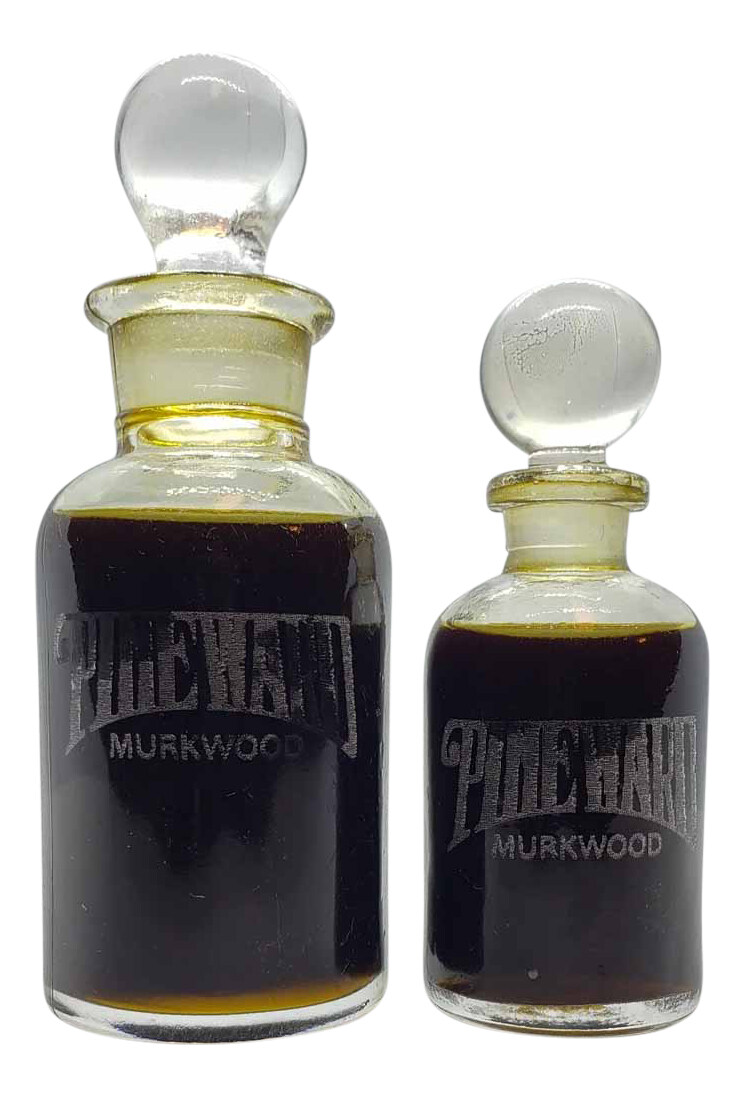
Turns out there is, and it comes in the form of a fragrance. It's by Nicholas Nilsson, an indie perfumer who heads a brand of woodsy, pine-focused perfumes, only this one isn't about pine. It's called Apple Tabac, and it's about the salubrious smells of apple orchards in October. One spray sends me back to early autumn, before Halloween, Thanksgiving, Christmas. I'm standing in an orchard on a cool day. A breeze sends ripples of fifty-eight degree air through row after row of apple trees, and carries the sublime aroma of fresh red and green fruits, a bouquet of leaves, dried hay bales, and fermented cores nestled in the soil underfoot. It's a dry and semisweet smell, smoother than silicon and as ethereal as choir music drifting past a cathedral gallery to the heavens.  

This is the simplest of Pineward's fragrances, which is what I like most about it. Its easy timbre of tree apples and fresh air is so pure and affecting that any other note would be disruptive. Prior batches had a maple note which has since been removed, and Apple Tabac is all the better for it. Maple would conflict and add unnecessary sweetness, and I hope Nilsson keeps it out of future bottles. There's only the mildest hint of tobacco, which is also a good thing. But would I spend $200 for this? Nicole Miller for Men achieves a similar effect for $10 per bottle, albeit at lower quality. The fact that I'm even considering the price says something. Apple Tabac is a gorgeous perfume, and if you enjoy the smell of orchards in autumn, it might be your last stop. 

12/31/22

2023: Every Pineward Perfume To Be Reviewed


This post will give you a bit of a pre-game for what lies ahead in 2023. If you follow me on Fragrantica (username: karlovonamesti) you've seen that I've reviewed about half of the perfumes offered by Nicholas Nilsson's company, Pineward. Those are just snapshots of my impressions of these fragrances, and there are many other fragrances not included in Fragrantica's database that I'll be reviewing. Essentially I'll be rendering my opinion on every perfume offered by the brand, including one or two that are not yet available. 

With this in mind, I want to clarify the parameters and linguistic terms I'll be using. I view Nilsson's range as a product of the times. He's an independent ("indie") perfumer and I assume he's self-taught. He reminds me of John Pegg, a YouTuber who eventually self-taught his way into creating a perfume line that exists and thrives today, although I don't think Nilsson has a YouTube channel. He simply has an enthusiasm for perfumery, with a commendable focus on green-woody pine fragrances. Generally I find his fragrances to be well made and quite interesting, so my overview opinion of Pineward is that it's a worthy brand with several excellent perfumes. My one general critique would be that he offers too many perfumes, but he's not alone in that; nearly all the niche brands are crowding their boutiques with unnecessary and redundant offerings these days. 

With that in mind, I think it's only fair that I explain myself here. Every serious house has its own "house note" or "house accord" that is distinctly recognizable in nearly every fragrance it offers. Classic Guerlains contain "Guerlinade." Creeds dry down to "Creed Water," i.e., ambergris. Pineward has a "house accord" as well, but here it gets a little dicey: I don't particularly care for it. That doesn't mean the brand is a wash, because there are several in the line that deviate from this olfactory connective tissue, and most of them are Nilsson's greatest achievements by my lights. It just means that many of the fragrances that feature Pineward's unifying theme aren't scents I'd drop $200 on. It's hard to describe this "house accord" without sounding churlish, so I'll just say that it's a sweet woody amber, and for whatever reason it reminds me of Yankee Candles. Whenever I address this effect in Nilsson's perfumes, I'll dub it "candle amber," i.e., room-spray material.  

Having said that, I want to point out that there are two perfumes in the range that I want to bump past "good" and "great" to "transcendent." One I would wear on a daily basis and gladly fork over the big bucks for. The other is less my style, but still worthy of high praise and deserving of accolades across the fragrance community. They're so good that if Nilsson axed every other fragrance in his line and just offered the two, he would have the makings of a brand that could unseat some of the LVMH behemoths. He's clearly capable of replicating his successes. If I were his evaluator (if he had an evaluator) I'd recommend he do this and use his best work to develop a smaller product line.

I'll end by acknowledging that Pineward is a new Basenotes favorite, with a dedicated thread that at the date of writing is fully twenty-one pages long. I discovered this after penning my thoughts on every fragrance, and was not influenced at all by the contents of the thread. But I did find it interesting that a few members had impressions of the perfumes that were identical to mine, sometimes down to the exact same reference point (This one smells like *fill in the blank*). I find it mind boggling that there are guys out there who will drop thousands of dollars to own every full bottle Pineward sells, but it doesn't really surprise me. The love of perfume is an addiction, and I expect that in ten or fifteen years we'll see the emergence of therapists who specialize in perfume addiction counseling. Amazon accounts will be locked by court order, perfumers will be sued, and the first of twelve steps will involve dumping your niche purchases down the toilet. 

12/27/22

My (Very Late) Quick Take on the 2018 Guide


I was thumbing through Luca Turin and Tania Sanchez's Perfumes: The Guide 2018, and I was struck by a few oddities. What really leaps out at me is the fact that the review breakdown is pretty asymmetrical compared to their previous guides. The 2008 edition featured a fifty-fifty balance of reviews by both Turin and Sanchez, with nearly every review alternating between the two. This is also true of their 2009 update, which was the same book with some additional fragrances that were previously overlooked. 

The 2018 edition is 90% Luca Turin. Sanchez barely contributes, which suggests she wasn't as enthusiastic about diving headfirst into another perfume guide. The new book departs from its predecessors by focusing entirely on expensive niche fragrances, and if memory serves me, Sanchez's impressions in the previous books weren't all that snobby. One gets the sense that while Turin sneers at anything under $30 an ounce, Sanchez is open-minded and prone to enjoying something as long as it smells good. She wrote the greatest line I've ever read in perfume writing: "The great secret of the nonluxury perfumes is that the only allure they have for the buyer is their smell." 

Another interesting thing is that many of Turin's reviews in the 2018 book were pulled from his column for Vogue Arabia, so I wonder how much work Turin actually put into writing it. He tweaked his thoughts and editorialized at length, but it's unclear as to which reviews are exclusive to the book (I am not an avid reader of Vogue Arabia). 

Some things of interest to me:
  • Roja Dove is the new Creed. Turin rates every Roja Parfums entry as "routine," and says little else about them. Reading between these sparse lines, it seems he's annoyed by the brand's pretenses and its price-to-quality ratio. As with Creed, I wonder how much of his opinion is fueled by personal bias instead of an actual distaste for the perfumes. 
  • Turin makes an interesting observation about several niche brands and what he suspects are perfumes made by A.I. (Artificial Intelligence). He concludes that some of these newer fragrance lines, which smell "samey" and bland, are being formulated by computer algorithms instead of people, and he points out that most of them don't even smell finished. If true, this is disturbing. 
  • Inexplicably, Turin rates Kerosene frags highly. This poses a credibility problem, especially when considering his history of trashing Creed. I've only tried two Kerosene frags, and they were both so indescribably awful that I remain rueful about trying any others. To call them "amateur" would be an insult to amateur perfumers everywhere. Copper Skies is an unwearable blotch of terpenic foulness, and Creature was a degraded version of Crest toothpaste. I'd rather bathe in a vat of Love in White than wear a single spritz of Copper Skies. Reading Turin's reviews of this house were the biggest WTF moments.
  • Perfumery has become perfunctory. Edmond Roudnitska, great historical perfumer, has thirteen perfumes to his name, while Alberto Morillas has over four hundred. People are just churning them out these days, and it's impossible to see how this degree of output could be worth it. The perfumery explosion has proven to be a supernova, and when it started back in the 2000s, people had no idea that it would continue into the twenties unabated. At this point the question of "newness" is worth a look, because how much of what we smell is innovative and interesting and not superfluous and conformist? 
Ultimately this new Guide is as fun to read as it is well-written, and I appreciate the new edition to my library. But I go forth wondering how much of what I've read is honest opinion, and how much is Turin trying to steer the ship, so to speak. By uptalking Kerosene and browbeating Roja, is he attempting to persuade us into exploring indie micro-brands and dissuade us from buying from larger and flashier "luxe" houses? If so, why? The folks who like niche perfumes tend to enjoy both worlds. Me? I think that a good designer, especially a vintage designer, is probably leagues better than a new niche frag any day. 

12/11/22

Revisiting Nautica Voyage After Ten Years


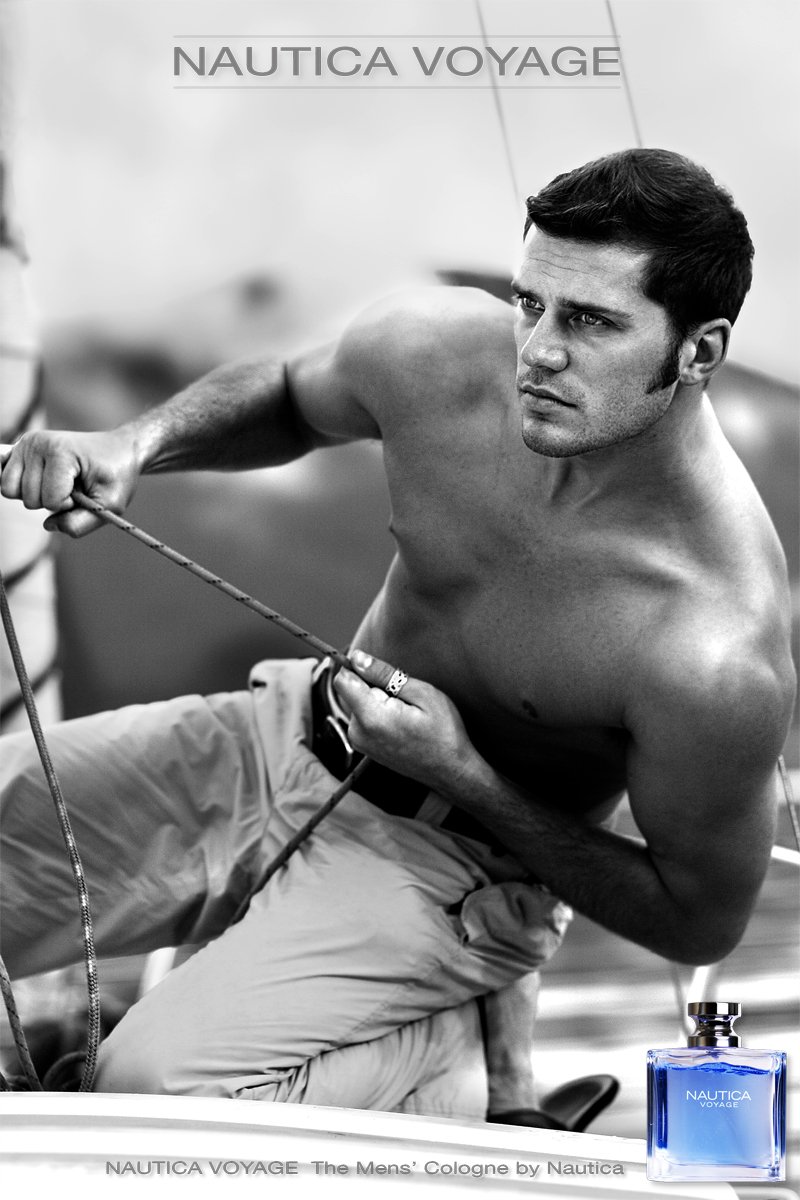
It's been ten years since I visited this one, and a lot has changed in that time. I used to think Nautica Voyage was a generic hum-drum thing, and to some degree my assessment hasn't changed. But there are degrees of prosaism, and Voyage inhabits a realm where ordinary components are made new again. Here Maurice Roucel's clever arrangement of pedestrian aroma chemicals resembles a grand floral aquatic fougère. 

The funniest review for Voyage on Fragrantica is written by "sebastiang071": "Amazing freshie for the price as long as you don't mind smelling like everyone's ex." And that's the trouble with run-of-the-mill aquatics. They usually wind up smelling more like someone instead of something. And what if that someone isn't so great? Do the unpleasant associations attributed to that person rub off on you? Can a fragrance steal your identity? Voyage has been worn to death in the last fifteen years, and at this point people will too-easily recognize its blustery array of aromatic florals and musks as a familiar trail through the sea of people. I recognize it as a thing, namely a rehash of Cool Water.

I get the same dihydromyrcenol twang, with a very similar cold-pressed bouquet of lavender, neroli, muguet, jasmine, and violet, intermingled with green apple and hints of woodiness, a requisite in a masculine. This wasn't novel in 2006, but it took the Cool Water model a few steps further into Millennial gender-bender territory. Roucel's use of crisp cucumber and sea-salty aquatic notes served to push and pull the corners of mediocrity into something that resembles "interesting." Luca Turin labels Voyage as a "floral masculine," presumably because there are recognizable florals filtered through its aquatic haze, but I struggle with the idea that it is unusually floral. Sure, it has florals, but with such a basic dihydromyrcenol accord undergirding everything, what else should anyone expect from this? It isn't going to be an earthy-woody patchouli, a spicy oriental, or a rugged chypre, so all that's left are fruity-floral and watery tones.

I'd recommend Nautica Voyage to anyone who laments Coty's reformulation of Cool Water. Roucel picked up where Bourdon left off, and used a bright cucumber note to make this segue. Cucumber notes were once unconventional, but now they're pretty commonplace, varying from smelling semi-sweet to sour-green. Voyage uses the former approach (see Paris Hilton for Men for the latter), but I like how it adds a touch of beachside highball cooler to its sea-side atmosphere. 

12/2/22

Ungaro Pour L'Homme III (Emanuel Ungaro)


For the full
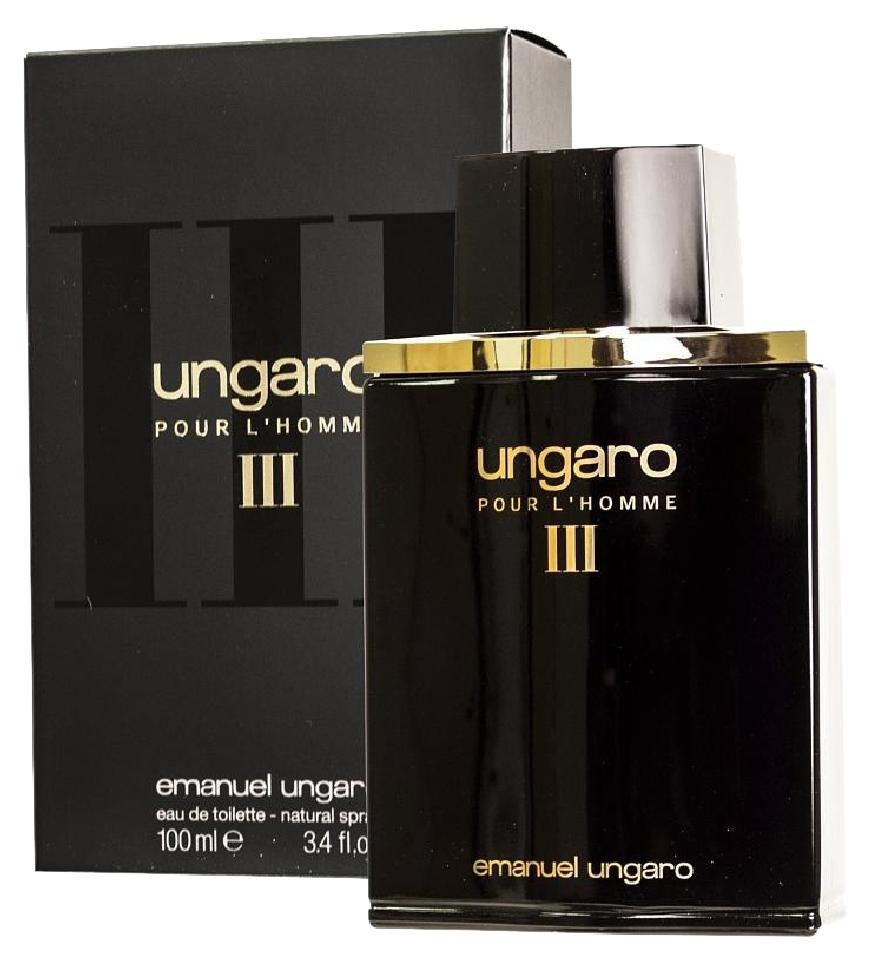
rundown on exactly what the Ungaro fragrances are, read my review of Ungaro Pour L'Homme II, which explains that this house issues re-badged Chanels. Ungaro pour L'Homme I and II were both discontinued years ago, but III is still produced and distributed via Interparfums. I've always believed that III was the brand's bestseller, because why else would it live on? The first two fragrances were familiar throwbacks, aromatic lavenders with robust Italianate flourishes of woods, herbs, and musks. But III was the only one of the bunch that was truly weird, and it has continued to captivate imaginations since its release in 1993. 

Ungaro pour L'Homme III's top note is vodka. I'm skeptical when a brand cites booze as a note. Cheap materials that are lazily rendered are often stand-ins for a broad spectrum of liquors, with whatever green or floral notes they were meant to convey made hopelessly muddled by inchoate sweetness. Still, the poison of choice is usually some form of whisky. But vodka? Yeah, that's a twist. Adding to the spectacle is my suspicion that the house might go so far as to simply put actual vodka in the formula, just to lend the note some extra clarity (pardon the pun). Indeed, it does smell as if III is pure vodka for the first ten seconds of wear, although that effect is rapidly embellished by a gentle wave of woody citrus and soft herbal accents that quickly grow in intensity. The weirdness is tamed. 

Within fifteen minutes it becomes clear that III is an exercise in nineties camp: a linear citronellol that one or two reviewers out there have accurately pegged as "the smell of eighties off-label bug spray." We could be accommodating to Ungaro's vision and pretend this is a "gothic rose" or something, but why bother? Anyone with five minutes of experience in this game knows a good citronella/dihydrogeraniol accord when they smell it. This one is the loudest and most obvious I've ever encountered, and it behaves like an image in a Magic Eye book. At a glance it looks like backyard candles. But stare hard enough, and a neon rose appears in 3-D. This one is wine-like, fruity, spicy, and rather fun. A Martian merlot on a box wine budget? Brilliant! 

11/17/22

Paris Hilton for Men (Parlux)


I remember Paris
Hilton in her day. Reality TV shows. D-Movie roles. Fashion Week. Filthy rich Hilton Hotel heiress who has never worked a day in her life. She did nothing (and still does nothing), yet she's famous simply for existing. Here's a toast to Paris: thank you, Madam Hilton. Thank you for existing. 

And yet her signature 2005 masculine smells great, and highly original. Is there more to her than meets the eye? This could've been a disaster. There was nothing stopping it from being a mutant apple shampoo, or some salty-synthetic bodywash aquatic. Instead it's a carefully measured non-aquatic (but still watery and aqua-based), a quietly fruity aromatic that you'd expect to smell in a Japanese duty-free shop. It smells like a sophisticated European feminine from, say, 1999. It opens with a polyphonic fig leaf and mango effect, green and juicy, and segues into a linear accord of cucumber water tinged with mango. 

Fragrantica user "Alces Alces" put it best:
"The fig leaf note is my favorite part of the scent, and it complements the sage and mango well. This is fresh but not sweet, aromatic but not weirdly herbal. Gives you a fresh feeling without being soapy. It's unusual in that it feels like a cologne yet has no citrus notes." 

This is exactly right. I suspect there's a smidge of Nonadienal/Nonadienol in the formula, potent violet leaf materials that impart a cucumber smell when used judiciously. As several reviewers note, this fragrance's fruity character is rendered in a style that is decidedly unisex in nature, and could easily be worn by either gender. Its greenness prevents it from veering too far into feminine territory, while its fruitiness and the absence of any overtly woody notes keep it from being obviously masculine. 

The weirdly sour-green cucumber water drydown of this stuff is unique, and I'm glad I happened across Paris Hilton for Men. Her idea of a man is a figgy mango explosion, followed by a brisk glass of iced cucumber water. That's hot.


11/15/22

Why I Don't Believe In High-End Niche Vs. "Cheapie Frag" Economics


Image courtesy of CFCAI

YouTube has become the premier place for perfume reviews and commentary, having unseated fragrance blogs like this one several years ago. A good friend of mine has suggested I switch to a Vlog format, but I resist because I enjoy writing so much. Vloggers do plenty of writing, but I'm not ready to script my reactions to things, and will simply continue to jot my thoughts here.

I've noticed that several YouTubers tout specific financial approaches to how they manage their fragrance-collecting "addiction." Many mention that they sell unwanted fragrances to finance buying new things, and use this "rotating door" method to keep a collection size and bank account mutually balanced. I find this to be a clever way to discard something you don't want anymore, but it raises the obvious question: If you don't want it, why is it in your collection to begin with? 

The answer is that this method of managing fragrance finances only works if I'm frivolous to begin with. And indeed, the YouTubers who do this are doing it with expensive fragrances, things that are well over $100 per 100ml. This only makes sense if I've fallen out of love with something that I was once enamored with. Let's say I bought a bottle of Amouage's Figment for Men, and was wild about it. Then, a year later, I'm tired of it. Whatever wowed me twelve months ago is now the thing that puts me to sleep. So I sell my 70%-full bottle of Figment for $80 on eBay, and immediately spend the remaining $60 (after listing and shipping fees) on a bottle of Vetiver by Etro. I've halved the price-point of the new entry (Figment was $120), but having used $40 worth of Figment, I haven't lost money. It's an even flip. 

Sometimes you can make an even better flip by barely using any of the frag, and after three or four wears you sell it for the same price as retail, which facilitates purchasing something else at nearly the exact same price-point. Based on what I've seen on YouTube, it seems the heavy-hitting collectors do this all the time. But again, it makes me wonder, why? Why spend on something you're only going to wear for three or four days? Why go through all the trouble of then listing it, mailing it to someone, and buying something else? While it can work out just fine, it's an awful lot of trouble. 

It's also not really feasible for all fragrances. Some frags are in higher demand than others. You can flip a bottle of Aventus easily. It's practically a currency fragrance. But can you flip a bottle of something by Hiram Green as easily? What about an extrait by Faviol Seferi? Or something by Pekji? The deeper you go into high-end niche territory, the more resounding the phrase, "buyer beware." 

Another tactic that I've heard at least one YouTuber espouse (Justin Copeland) is even more interesting to me, because it challenges the concept of price-versus-value in perfume economics. First, let me clarify what my view is on this, so that Justin's makes sense in contrast. I believe that price is never correlative to value in perfumery writ-large. There are individual products where it is true -- a Playboy scent from fifteen years ago that sells for eight bucks on Fragrancenet is worth exactly eight bucks, and not a penny more -- but I've encountered dozens of fragrances for less than thirty dollars that smell like they could easily cost more than eighty dollars. Malizia Uomo Vetyver employs many of the same chems as Creed's Original Vetiver, and it sells for around the cost of a deli sandwich. 

So I am a staunch believer that the landscape is littered with fragrances that are a tremendous value. This landscape shifts; Van Cleef & Arpels Pour Homme used to be a thirty-dollar fragrance. It is now listed online for prices that exceed $400, with even the aftershave commanding $200+ tags. But generally there are fragrances that cost less than they're worth, and weeding through the milieu turns them up in regular fashion. You don't need to know how to swim well to step into this pool, you just need to know that the shallow end gets deep fast. 

Since I believe in this, I see little need to dive into the deep end. Why should I build a collection where every bottle is roughly $200? When I see a Parfums de Marly perfume, I think that I could buy eight or nine very good fragrances for its price. If I'm looking to explore the landscape to the fullest, ideally I should be incorporating fragrances that are at PdM's level with things that are a fraction of the cost. I admit that in recent years I've strayed from that, as I no longer purchase Creeds. I haven't bought anything that costs more than $100 since 2020. So the collection is firmly in the average range of $40-$100. And in this regard, I think my collection could expand. I could look at higher-end niche frags and consider saving hundreds of dollars for that one bottle of something "special." But right now it isn't a priority, and I don't consider it a worthy way of spending my money. 

Several YouTubers, Justin included, have a different perspective. They talk about having done what I do. They used to look at "cheapies" that were under fifty bucks, and spend on brands like Franck Olivier and Jacques Bogart. But they claim they experienced a philosophical sea-change to their buying habits. They realized that instead of "wasting money" on "cheapies," fragrances that they feel aren't really of the quality that is worth extended use, they "saved" for things that are "well made." Things that are niche and high-end designer. Why spend $200 on twelve cheap frags made with cheaper materials when you can save that cash for something super expensive but high quality?

This is a valid way of looking at it. It bears mentioning that there are expensive perfumes that are expensive for a reason. Some of them were formulated by very talented perfumers who were given relatively unlimited budgets to use incredible materials, i.e., captive molecules, distilled essences of uncommon naturals, etc. The combined advantages of good materials composed by gifted noses can make some high-end niche frags smell like religious experiences. There's no denying that. If you can appreciate the rose in Perfumer's Workshop Tea Rose, you can really get lost in Tauer's Incense Rose. When the point of the perfume is for the nose to experience the very height of something, then its price, however high it may be, is justified. 

But I don't believe in the high-end niche vs. "cheapie frag" theory of economics. Yes, it's true that I could wait a year and save up $185 to buy Tauer's Incense Rose. But then again, I could save the same $185 and buy several rose fragrances that are just as interesting as Incense Rose. The interest lies not in finding niche-level quality for cheap. The interest lies in finding inexpensive fragrances that are not held back by their lower price tag. Here's an example: Maurice Roucel's original Voyage for Nautica (which I'll be reviewing afresh in short order). Voyage had a limited production budget and yet was in the hands of a very talented perfumer. He knew the materials and lab tricks that enabled Nautica to put out a bestseller that persists nearly twenty years later. And it only costs $18 for 100ml -- and here's the best part -- you could see Roucel switch out one or two materials for a niche brand that releases the exact same scent for $180. 

Another example is Cool Water. Pierre Bourdon basically gave Davidoff an EDT version of Creed's Green Irish Tweed when he made CW. Creed's scent still costs over $300 for 100ml. It's denser, simpler, and often a little harder to wear than Davidoff's $20 scent. Same perfumer, too! This makes Cool Water (and several of its flankers) even more interesting to me than GIT. Let's face it, when the money is right and the materials are unlimited, a success story isn't exactly surprising. But when a perfumer is given a limited budget, the chances of releasing something great decrease. When it happens, it's even more remarkable than anything super expensive. Innovations occur when there are fewer variables to work with. 

I approach perfume the way I approach food. Sure, I could splurge on a steak house that charges $80 for a slab of beef, and maybe it'll taste like it's worth it. But I could drop $8 on a burger at Shake Shack and get a greasy thing with all the fixings that really does taste great, and do that ten times instead. The expensive steak is fine, but is it going to satisfy my hunger AND my taste buds? Or will one of those two get short-changed? With expensive perfumes, there are hang-ups. 

The biggest one is you don't want to wear them as often. If you make them daily drivers, they'll get used up faster, which makes spending on them seem pointless. But the longer you hang on to them, the greater chance of in-bottle maceration, and if you're not careful and cling to something for years, you could wind up with a totally different fragrance. 

Another problem with niche is wearability. A strange thing happens when you surpass the $150 price-point. Suddenly the value ratio comes dangerously close to reversing itself, almost by default (there are some houses that can maintain value beyond this point, but you need to know them). Now the question becomes, is this worth less than what I paid for it? The answer is usually "maybe." Other questions are where and when can I wear this appropriately? Should I be wearing an oud extrait with barnyard and indolic floral notes to work? Will my partner be turned off by this kaleidoscopic rendition of patchouli? Is this aquatic "clean," or will people at the barbecue think I smell like low-tide? Remember, by definition, niche perfumery is made to appeal to a niche audience. Many fragrances in the niche realm lack "mass appeal." This puts their viability in public settings in question. 

I don't want to overstate this. Let's be honest: even the weirdest niche perfume will smell good to at least several other people that you regularly come in contact with. But the fact that you have to ask yourself about that makes the price to value thing look a little more tenuous. Why should I stress about Tauer's Incense Rose at the Christmas Party? I can wear one spritz of Tea Rose and everyone will recognize that I'm wearing a rose fragrance that smells very clean and green and "rosy." No questions asked, other than maybe "Hey, that smells good, what is it?" 

So I don't think the current YouTube mentality of eschewing a bunch of "cheapies" for fewer expensive niche frags is the way to look at this hobby. I think it's better to recognize that in perfumery the price-to-value ratio doesn't follow conventional wisdom. Thus it's better to explore things at every price point, and to cover as much ground as possible in the "cheap" realm of sub-$100 fragrances, because that's where the bulk of the iceberg is. Your chances of finding a hidden gem in a discount rack store are slim if you don't know what you're doing. But if you read, if you understand fragrance families of chypre, oriental, etc., and you're familiar with at least a few of the commonly-seen downmarket brands, you stand a better chance of finding something interesting and easily wearable for not much money, which makes the perfume a terrific value on top of its interest, and you a smart buyer for not being sucked into the maelstrom of ivory-tower stuff. 

As Tania Sanchez pointed out, the secret of the non-luxury perfumes is that the only appeal they have for the buyer is their smell. This gets to the other problem with YouTubers who point to niche as being "where it's at" -- how much of their perception is being manipulated by price? A lot of these guys fawn over packaging. They even say things like, "Unfortunately they cheaped-out on this plastic cap," as if the cap actually matters. But a lot of the pricing for niche compensates for packaging. You can't smell packaging. Putting a perfume in a blown-glass bottle with an eight-ounce metal cap covered in gold flake and studded with flawed diamonds is flashy and aesthetically intriguing, but do I want to be paying for it? How do I know how the value breaks down here? 

It's almost impossible to determine how much of the price is based on the actual perfume in the bottle, vs. the bottle itself. If you're buying expensive niche, it might make sense to aim for brands that use simple, monochrome boxes and unexciting bottles. At least then you can see that the price tag reflects the contents more than their bottle, and the brand values contents more than cheap aesthetics. Perfume is about smell, and while visual aesthetics are an unavoidable aspect of selling things, we need to prioritize products that emphasize olfactory perception more than visual perception. There's an irony here, in that many cheaper brands also splurge on flashy bottles, yet they keep their prices low. What are they doing differently? It's not unreasonable to think that they're just spending money more wisely. If they can etch something into plastic instead of chrome and it still sells, all the better!

11/11/22

Alfa Romeo Black (Alfa Romeo)

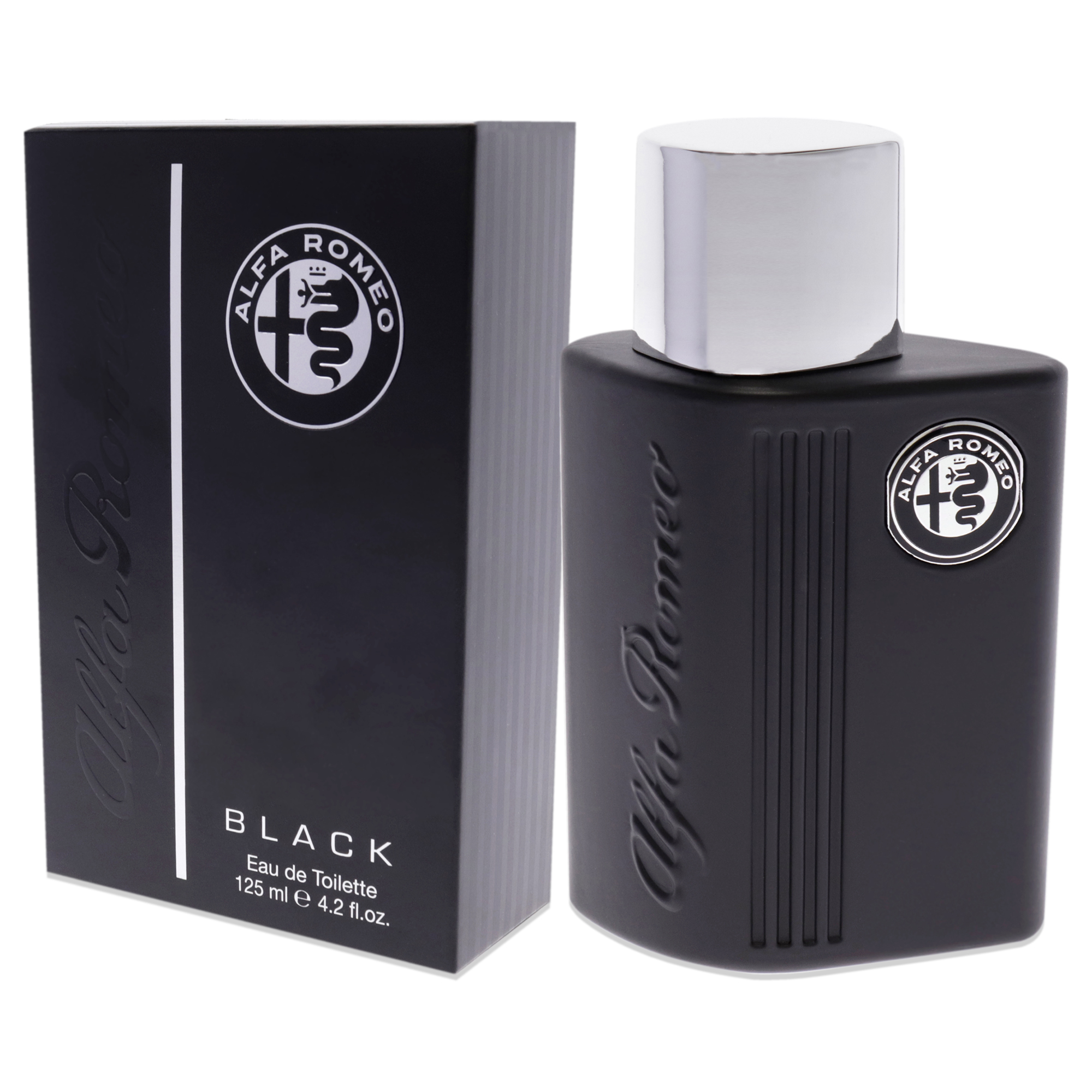
Here's a fragrance that should be getting far more attention than it is. I suspect that its brand, its name, and its relative commercial obscurity are all to blame for people having never heard of it, but Alfa Romeo Black should be on Bergdorf Goodman counters for $150 a bottle. This isn't a crumby cash-grab. It's incredible stuff.

Instead it's being sold at discount rack stores for abysmal prices, which gives the impression that it's cheap junk. I must admit, seeing its box wedged between Guess and Hollister fragrances nearly biased me away from buying it. But then I took a good look at it there, in its 4.2 ounce bottle, with a beautifully embossed Alfa Romeo logo scrolling in a dual finish on the left side of its box, and it occurred to me that car brand colognes have enjoyed a renaissance in the last ten years. Think Jaguar. Bentley for Men and its flankers. Mercedes has seen some success, as has Ferrari. Why not Alfa Romeo? 

My first impression of it was immediate and vocal: "Whoah." The experience launches with the speed and travels in the arc of a well-placed curveball. For fifteen seconds, there's an intense and unique citrus, red apple, and pink pepper top note that smells juicy, clear, and fresh, with just the right balance of tartness, sweetness, and tingle. I expected a cheap lavender note, given that this is yet another "black" frag, which are known for attempting some overly sweet iteration of lavender after Drakkar Noir. But no, this is a fruity-spicy opening that smells more like a summer morning in Urbino. 

The sunny freshness quickly overcasts into an ashy and very dusky accord, and adopts a serious feel. A casual sniff gives the impression of luxury textile (Alcantara, perhaps?), a powdery, smoky, cool evolution that grows stranger with a bit of the patchouli-driven tarriness of Thierry Mugler's A*Men. This stage lasts, and I'm drawn into it. It smells expensive, but more importantly, it smells like a classically-composed perfume, with discernible notes arranged like Tetris blocks into a new shape. There's patchouli, nutmeg, cardamom, unsweetened vanilla, rose, apple, and a lick of raspberry all tied into a heart that beats with life. It's here that AR Black becomes a fresher (less chypre, more fruity-floral) version of Tom Ford's 2018 Ombré Leather.

Let's give credit where credit is due. Cristiano Canali doesn't have a million famous perfumes under his belt. He's a young man who won Colognoisseur.com's 2019 Perfumer of the Year, and has only Rubini's Tambour Sacre and Zoologist's Bee to his name, neither of which became game-changers. His style appears to be that of cleverly layering notes, which he's inherited from the likes of Olivier Cresp, Jacques Huclier, Yves de Chirin, and Pierre Bourdon. His work for Alfa Romeo is clearly inspired, and he cites behemoths like Aprée L'Ondee, Rochas Femme, and Opium as favorites. That he was able to produce a masculine this lovely and complex without being noticed says more about the state of perfume culture than it does about him. People need to notice this perfume. 

11/1/22

No. 6 Cedarwood & Geranium and No. 7 Spiced Ginger & Rum (Goodfellow & Co)


Target has its own in-store brand of fragrances and toiletries called Goodfellow & Co, after the store's original name from over a century ago, Goodfellow Dry Goods. Usually store brands of anything are of spotty quality, and one would think perfumes are no exception, but in this case the two I've tried are actually pretty good!

I'm not sure I understand the system Target employs for their perfume line. Each fragrance is numbered, but I only see four fragrances, with two labeled No. 1 and No. 2, and two as No. 6 and No. 7. Where's numbers 3,4,5? Anyway, No. 6 is Cedarwood & Geranium, and it's basically a clone of Oscar de la Renta's Oscar for Men from 1999. There are some differences, mainly in the lack of citrus and jasmine notes in No. 6, which focuses more on geranium leaf. But the main similarity between these fragrances is their shared focus on pepper, in this case the peppery side of geranium. I only smell a hint of cedar in the top accord, along with some sage and lavender, and then Goodfellow' scent is pretty much a linear peppery geranium for five or six hours. Longevity is good, it's fairly loud, and it's not bad. If you already have Oscar for Men, you don't need Target's take, but if you missed out on it and want something that smells about 90% similar, here you go. 

No. 7 is called Spiced Ginger & Rum, and this is the weaker of the two projection-wise. Right at first spray, I have to push my nose into my skin to smell it. It opens with a watery ginger and citrus accord, and the ginger hangs around for about ten minutes. It gets just a touch spicy and a little warmer (and stronger) with time, and eventually a bay note appears, but to my nose there isn't much rum. There is, however, a clear birch note, with a synthetic oakmoss undergirding it. I think No. 7 is a type of bay rum idea, and the woody bay lends it a wet-shaver vibe that I find very attractive. I'm going to keep this one in mind for future reference. If I want a replacement for my Trumper Bay Rum, but something a little softer and more durable, Goodfellow & Co's Spiced Ginger & Rum is perfect for the job. It lasts about four hours before becoming very faint, and would follow Pinaud's Bay Rum perfectly on shave day. 

Many fragheads turn their noses up at commercial fragrances like these. When discussing them, basenotes member "Hednic" made the comment about Goodfellow & Co fragrances: 
"If they are a Target in house brand (not familiar with name) would be a pass for me."
This is the worst way to approach fragrances. Reader, let me give you advice: if you're looking for fragrances that you can wear every day and enjoy without worrying about breaking the bank on follow-up bottles, you should try as much as you can, wherever you can, from whoever is out there. Don't scoff at company brands and discount rack items simply because they're not high-end designer or niche. Don't ignore something because you're not familiar with it. Good items are out there. An open mind finds them. 

10/28/22

Why BlackRock Should Bring Back Green Valley, Creed's 1999 Sleeper Hit (And Keep It)

Lately, probably due to acquiring Banana Republic's Grassland (I needed a lot of grassy land for growing my bananas), I've been thinking a lot about Green Valley by Creed. I'm going to make a bold statement here: I think GV is my favorite Creed. 

I have only ever owned two bottles, back in 2010 and 2011. I bought one directly from Creed. They had briefly "un-vaulted" GV, and I was lucky enough to score a still-fresh four-ouncer. I'm convinced the company refrigerated GV in storage, because I've seen several people say their bottles changed for the worse with age, with a couple even mentioning full blown spoilage. I bought my other bottle at a mall kiosk, and man, oh man, was it spoiled.  

Rumors abound as to why Creed discontinued this one. Some people figure that it wasn't really the right fragrance at the right time. The late nineties were moving away from "green-earthy" and veering toward "fruity-transparent." Others have suggested that it was a mash-up of other Creeds, and was superfluous in a range that already offered Green Irish Tweed, Sélection Verte, Silver Mountain Water, and Royal Water (GV containing elements of all of them). The implication is that Olivier axed it for being the one extra "green" perfume that was leeching sales off of the older and more established products. 

Others postulate that Creed deleted Green Valley because its formula wasn't reliably stable in "mass-produced" batches. I put that in quotation marks because Creed wasn't really mass-producing their frags in the late nineties. But to put it up as a Millésime meant the general public was buying it, which also meant the company would have to keep churning it out. I recall one basenotes member, someone who seemed qualified to make the statement, saying that a Creed insider admitted that Green Valley could not survive IFRA restrictions. But built into that tidbit was an admission that (a) Creed couldn't reformulate, and (b) surviving bottles wouldn't keep long enough for reference. 

I find the IFRA restrictions of the 2000s to be the most convincing reason for the discontinuation, along with the slightly more embarrassing (but less compelling) spoilage aspect. Digging into memory, I recall someone discussing that the use of oakmoss in the formula was offset by something else, something more volatile that didn't keep as well as it should have, but for the life of me I can't remember exactly what these materials supposedly were, or where that discussion ended up. It's possible Green Valley had a stability issue, but it's also possible that Creed could have reformulated it, and just chose not to, for reasons that will forever remain unknown. 

I think it was the wrong choice. Green Valley was a great fragrance, because it did something nothing else has ever done: it smelled like a living place. When people discuss perfume, they speak of notes and accords, and how they begin and end. The assumption is that a perfume is something that moves through resolute stages, each being relatively static, until it fades away. This places perfume on a different hemisphere from daily life and the smells of the world around us. We carry a perfume with us, whereas the smells of nature are moving essences through which we pass. These streams of motion create a sense of awareness that relies on a fluid interpretation of olfactory stimuli. When walking through a meadow at eight in the morning, we smell the dewey grasses, and when a breeze blows through the green blades, it lifts the wildflower essences, only for as long as its momentum allows. That breeze, along with our stride, creates a brief sense of an increase in these smells, which then diminishes a bit with the deadening air. 

Green Valley captured more than just the smell of green grass and wildflowers - it also captured the breeze rippling through. I recall over-spraying it one day. I really doused myself in it. Then I sat on my front stoop and focused on what I was smelling. I closed my eyes. The air around me was still. Yet it wasn't: it was in motion, as if a crisp wind had whipped through a field. Wave after wave of this luscious bitter green beauty wafted through my senses, lending little snatches of notes that separated like the wings of butterflies before collapsing again into congruent accords. A touch of basil here. A hint of ginger there. And over there, some blackcurrant and honeysuckle. This hallucinogenic experience stayed with me, and I think I wore the entire bottle in two months. I just couldn't get enough of it. I wanted an endless supply. 

And then Creed "vaulted" it again, only letting it out once or twice after that. Oddly, it never appeared on any of the discount sites. I had purchased it at the start of a very demanding and ultimately unsuccessful relationship, and was distracted by that (I wore Chevrefeuille through the rest of 2011). It didn't occur to me to pull my head out of my ass and invest in another bottle, and by the time it did, it was too late. But I can only blame myself so much for that. Creed should shoulder most of the blame here. After all, if the IFRA regs were the reason for killing Green Valley, then that means the other supposed reasons for its extinction were bunk. Was it the wrong frag at the wrong time? No, not at all. Original Vetiver, the only other Creed to give me a full-blown hallucinogenic "green" experience, was released several years later, and was just as earthy and "nineties" in style. I think 1999 was the perfect time to issue GV.

I also never bought the whole "Creed mash-up" reason. People compared GV to GIT. GV doesn't smell anything like GIT. In fact, if I were to blind smell them for the first time, I might guess they were made by two completely different brands! There may be some credence to the suggestion that there are elements of GIT and SMW thrown into GV. There's certainly a degree of shared grassiness, and also that same blackcurrant note. But the only fragrance I could kinda-sorta see a comparison to is Dior's Fahrenheit. If someone took Fahrenheit and just improved it, made it smell like the softest, freshest meadow on the planet, and got rid of the petrol effect, I guess you'd have Green Valley. 

But the reason BlackRock should resurrect this lost Creed has nothing to do with where it falls on the cloning spectrum. They should bring it back because it's a direct representation of verdant nature. It isn't a refined composition. The overwhelming bitter greenness of its opening salvo lasts a while, and is followed by lashings of twinkling ginger, bergamot, blackcurrant, vetiver, and ambergris. It all smells very much like the greenest, soapiest iteration of Creed's Millésime base, without any premeditated dawdling on a central accord, i.e., the heavy-handed pineapple of Aventus, or the eucalyptus and rose of Windsor. Green Valley smells flawless, yet effortless, like the perfumer just threw together a bunch of herbal and fruity and floral notes, tossed in doses of ginger and vanilla, and brushed them with a dry-hay accent to keep things from getting too juvenile or sweet. 

It's the sort of fragrance that works in a t-shirt or a tux. It embodies the classical twentieth century male, all talc and crisp aftershave, and yet it also feels timelessly modern and unisex. Where GIT sometimes feels a bit too stodgy, Green Valley is always relaxed. Where Silver Mountain Water can get a bit cerebral and strange, GV is instinctive and familiar. It's something that could revive an interest in nineties fashion, all while reinvigorating the market for green fragrances. At this point, could it really steal the thunder of other Creeds? Well, maybe. When you withdraw something from the market for fifteen years and then throw it back in, one might expect a bit of unbalanced enthusiasm from deprived customers. But Green Valley was a beautiful perfume, a true work of art, if perfumery ever was an art form. Bring it back!

10/22/22

Grassland (Banana Republic)


Grassland. A perfume. Imagine you are a seasoned fragrance writer with an affinity for "green" scents, and you happen across the rarest Banana Republic Icon fragrance, Grassland. There isn't much written about it on the internet, so you're really squinting to discern what you're in for if you blind buy. The box is seafoam green. This is all you see, but it's enough. It turns out to be a clue. 

I remember smelling a deep vintage of Jacques Fath's Green Water years ago. It was the frosted glass bottle version, probably the formula sold in the late eighties and early nineties. Its juice was the same color as Grassland's packaging. Green Water smelled like crushed mint leaves, a medley of grass clippings and floral stems, a bright but very bitter citrus accord of lemon and bergamot, moss, and quite a bit of geranium behind all the turf. It was essentially a rough green gemstone of all the crisp, fresh, masculine elements of twentieth century "green" colognes, its un-sanded edges foisting its rich earthy notes into my face. Its longevity was abysmal, but its scent was unforgettable. I wanted it, but in a different iteration. Its 1950s vibe needed a good lapidary treatment. 

Banana Republic's scent smells to me like what vintage Green Water would be after that sort of polishing. We're talking very heavy industrial polishing here, with many hours of smoothing out the raw elements of Fath's idea, until nothing but a polite sparkle of abstract greenness remains. Grassland's opening accord is a very brief but realistic burst of bitter grassiness, which rapidly segues into a translucent sheet of lavender, petitgrain, spearmint, and geranium. Each note is recognizable, but rendered as very sheer and pastel, with a soapy feel that erases the earthy connotations of its predecessor. There's a bit of citrus, a bit of Granny Smith apple juice tinging the grass blades, and ultimately the fragrance is 1950s men's cologne meets contemporary unisex shampoo.

The Icon Collection is entirely unisex, despite having some entries that are more overtly masculine and feminine. They seem to have been designed to appeal to everyone in some way. Grassland will probably hold more appeal for men, but I could see women liking its cool, gentle style as well. I find it pleasant, sort of an evolutionary end point to the European colognes of yore.